
Barren Ground
Ellen Anderson Gholson Glasgow
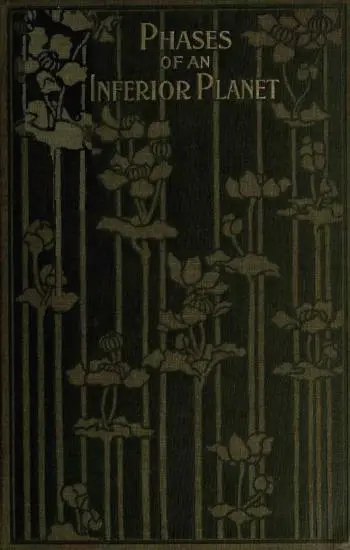
THE CLASSIC COLLECTION · 1898
"Phases of an Inferior Planet" by Ellen Glasgow is a novel written in the late 19th century. The narrative centers on a young woman named Mariana Musin, who navigates her aspirations to sing in opera while living in the bustling and indifferent environment of New York City. The book explores themes of ambition, societal expectations, and the struggles of artistic identity. At the start of the novel, the reader is introduced to the atmospheric setting of Broadway, a gray city day transitioning into a mist-filled evening as pedestrians move briskly about. Mariana, characterized by her graceful demeanor, is revealed to be a budding artist faced with the harsh realities of her dreams. She is depicted as a yearning soul, longing for recognition and success in her singing career, yet grappling with feelings of insignificance and the burdens of her uncertain future. Despite her struggles, she maintains a delicate balance of hope and vulnerability that captivates both the reader and the characters around her.
Introduction adapted from the source catalogue; source summaries may be automatically generated.
Free to read · English · 89,459 words · No account needed
MAKE TIME FOR A GOOD BOOK
On by default. Untick to stop anonymous reading totals. Each page counts after 10 seconds in view. How this works.
Anonymous counting is on unless you have switched it off.
Then she sealed it and gave it to the servant to mail, after which she went up-stairs and talked to Miss Ramsey until dinner.
The next day she went to Mrs. Ryder's, and they sat down to luncheon at a small round table and talked as women talk in whom feeling is predominant over thought, and to whom life represents a rhythmic series of emotions rather than waves of mental evolution.
They spoke in low, almost affectionate voices, conscious of one of those sudden outreaches of sympathy to which women are subject. When luncheon was over they went up to the nursery, and Mariana knelt upon the floor and romped with the child, who pulled her loosened hair, uttering shrill shrieks of delight. At last she rose hurriedly, and Mrs. Ryder saw that a tear trembled on her lashes.
The elder woman's heart expanded.
"You have had a child?" she asked, softly.
"Yes."
"And lost it?"
"Yes, I lost it."
Mrs. Ryder's eyes grew soft.
"I am so sorry for you," she said. The tear on Mariana's lashes fell
upon her hand.
"It was eight years ago," she said. "That is a long time, but I suppose one never entirely forgets."
"No," answered the other, "one never forgets."
She stooped suddenly, and, lifting her child, kissed it passionately.
Several mornings after this Mariana's carriage stopped before Nevins's studio, and Mariana got out and ascended the long flight of stairs. In response to the fall of the brass knocker, the door was opened and Nevins greeted her reproachfully. "Are you aware," he demanded, gravely, "that there has been sufficient time for the appearance of a wrinkle since your last sitting?"
"Portraits don't have wrinkles," returned Mariana, cheerfully, entering and unfastening her coat; "nor do I."
She removed her hat and gave an impatient little fluff to her hair.
"Do I look well?" she asked.
"Were you ever otherwise to me?" rejoined Nevins, in impassioned
protest.
Mariana turned from him with a slight shrug of her shoulders.
"For the last week," she said, "I have had a horrible cold. It made my eyes red and my nose also. That is why I stayed away."
"And plunged me into a seven days' despair--for a cold."
"Oh, but such a cold!"
She seated herself on a low chair between two large curtained easels. Then she rose to examine the portrait.
"I suppose the touching-up makes a great deal of difference," she
remarked.
"A great deal," assented Nevins; "but don't you like it?"
She hesitated, her head first on one side, then on the other.
"Oh yes," she said, "but I should like it to be ideal, you know."
Your reading position is saved on this browser. Take it to another device with a library code. Reading pages adapt to text, rather than matching a printed edition.
Ellen Anderson Gholson Glasgow

Ellen Anderson Gholson Glasgow

Ellen Anderson Gholson Glasgow

Ellen Anderson Gholson Glasgow
BEHIND THE BOOK
This eBook is for the use of anyone anywhere in the United States and most other parts of the world at no cost and with almost no restrictions whatsoever. You may copy it, give it away or re-use it under the terms of the Project Gutenberg License included with this eBook or online at www.gutenberg.org. If you are not located in the United States, you will have to check the laws of the country where you are located before using this eBook. Read the source licence.
The original source file, including credits and licence, is retained by this library. Request an original-format copy at no charge. Please include the book title and Project Gutenberg identifier #34402.
KEEP YOUR CURIOSITY GOING
Coulson Kernahan

Maurice Baring
Frances Wright
Cécile Tormay

Frederic Jesup Stimson

W. H. P. (William Henry Pope) Jarvis