
Barren Ground
Ellen Anderson Gholson Glasgow
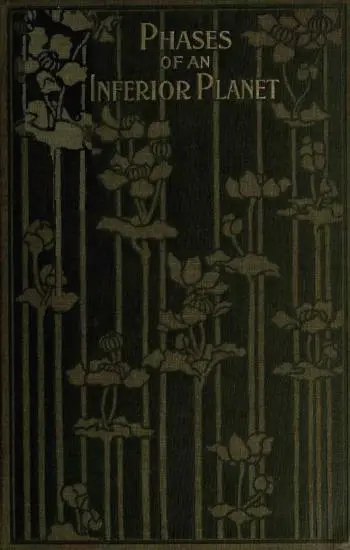
THE CLASSIC COLLECTION · 1898
"Phases of an Inferior Planet" by Ellen Glasgow is a novel written in the late 19th century. The narrative centers on a young woman named Mariana Musin, who navigates her aspirations to sing in opera while living in the bustling and indifferent environment of New York City. The book explores themes of ambition, societal expectations, and the struggles of artistic identity. At the start of the novel, the reader is introduced to the atmospheric setting of Broadway, a gray city day transitioning into a mist-filled evening as pedestrians move briskly about. Mariana, characterized by her graceful demeanor, is revealed to be a budding artist faced with the harsh realities of her dreams. She is depicted as a yearning soul, longing for recognition and success in her singing career, yet grappling with feelings of insignificance and the burdens of her uncertain future. Despite her struggles, she maintains a delicate balance of hope and vulnerability that captivates both the reader and the characters around her.
Introduction adapted from the source catalogue; source summaries may be automatically generated.
Free to read · English · 89,459 words · No account needed
MAKE TIME FOR A GOOD BOOK
On by default. Untick to stop anonymous reading totals. Each page counts after 10 seconds in view. How this works.
Anonymous counting is on unless you have switched it off.
"Neither do I," responded Nevins, with dignity.
"How did you know, then?"
"It just came to me."
"Humph!" retorted Ardly, suspiciously.
Nevins squeezed a trifle of white-lead on his palette. Then he rose and drew the cord attached to the shade beneath the skylight. After which he stood to one side, studying the canvas with half-closed eyes, and shaking his dissatisfied head. As he returned to his seat he brushed the mouth of a tube of paint with his trousers, and swore softly. At last he spoke.
"I know something else," he volunteered, cautiously.
"About Mariana?"
"Yes."
"Let's have it, man."
Nevins laid his palette aside, and, seating himself astride the back of a chair, surveyed Ardly impressively.
"I can't see that there is any use," he remarked.
Ardly threw the end of a cigar at him and squared up wrathfully. "Are you a damned fool or a utilitarian?" he demanded.
"She left the Honorable somebody," said Nevins, slowly.
"By Jove! what a woman!"
"She came to America."
"You don't say so!"
"She is in New York."
"What!"
Ardly left his chair and straightened himself against the mantel.
"How do you know?" he asked.
"I have seen her."
"Seen her!"
"Her photograph," concluded Nevins, suavely.
"Where?"
"In Ponsonby's show-case, on Fifth Avenue, near Thirtieth Street."
"How do you know it is she?"
"Well, I'll be damned! Don't I know Mariana?"
"Is it like her?"
"It is a gem; but you know she always photographed well. She knew how to
pose."
"Has she changed?"
"Fatter, a trifle; fairer, a trifle; better groomed, a great deal--older
and graver, I fancy."
"Well, I never!" said Ardly, and he whistled a street song between
half-closed lips.
Nevins spoke again.
"She is a kind of rage with a lot of club-men," he said, "but the women haven't taken her up. I heard Mrs. Ryder call her an adventuress. But Layton told me Ryder was mad about her."
"Queer creatures, women," said Ardly. "They have a margin of morality, and a woman's virtue is determined by its difference in degree from the lowest stage worth cultivating. They imagine her not worth cultivating, I suppose."
"Oh, Mariana is all right," rejoined Nevins. Then he went on, reflectively: "Odd thing about it is her reputation for beauty. Judge her calmly, and she isn't even pretty."
"But who could judge her calmly?" responded Ardly. He picked up his hat and moved towards the door. "Well, I'll be off," he said.
"To the club?"
"No, just a little stroll down the avenue."
Nevins smiled broadly.
"Don't forget that Ponsonby's window-case is on the avenue," he
remarked, placidly.
"Oh; so it is!"
Your reading position is saved on this browser. Take it to another device with a library code. Reading pages adapt to text, rather than matching a printed edition.
Ellen Anderson Gholson Glasgow

Ellen Anderson Gholson Glasgow

Ellen Anderson Gholson Glasgow

Ellen Anderson Gholson Glasgow
BEHIND THE BOOK
This eBook is for the use of anyone anywhere in the United States and most other parts of the world at no cost and with almost no restrictions whatsoever. You may copy it, give it away or re-use it under the terms of the Project Gutenberg License included with this eBook or online at www.gutenberg.org. If you are not located in the United States, you will have to check the laws of the country where you are located before using this eBook. Read the source licence.
The original source file, including credits and licence, is retained by this library. Request an original-format copy at no charge. Please include the book title and Project Gutenberg identifier #34402.
KEEP YOUR CURIOSITY GOING
Coulson Kernahan

Maurice Baring
Frances Wright
Cécile Tormay

Frederic Jesup Stimson

W. H. P. (William Henry Pope) Jarvis