
Barren Ground
Ellen Anderson Gholson Glasgow
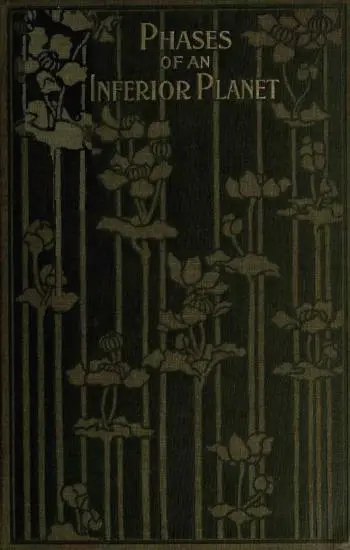
THE CLASSIC COLLECTION · 1898
"Phases of an Inferior Planet" by Ellen Glasgow is a novel written in the late 19th century. The narrative centers on a young woman named Mariana Musin, who navigates her aspirations to sing in opera while living in the bustling and indifferent environment of New York City. The book explores themes of ambition, societal expectations, and the struggles of artistic identity. At the start of the novel, the reader is introduced to the atmospheric setting of Broadway, a gray city day transitioning into a mist-filled evening as pedestrians move briskly about. Mariana, characterized by her graceful demeanor, is revealed to be a budding artist faced with the harsh realities of her dreams. She is depicted as a yearning soul, longing for recognition and success in her singing career, yet grappling with feelings of insignificance and the burdens of her uncertain future. Despite her struggles, she maintains a delicate balance of hope and vulnerability that captivates both the reader and the characters around her.
Introduction adapted from the source catalogue; source summaries may be automatically generated.
Free to read · English · 89,459 words · No account needed
MAKE TIME FOR A GOOD BOOK
On by default. Untick to stop anonymous reading totals. Each page counts after 10 seconds in view. How this works.
Anonymous counting is on unless you have switched it off.
"I am late," she said one day in September, coming in with more brightness than usual. "Have you had luncheon?"
"I waited for you," responded Anthony.
As she laid aside a roll of music she carried, he saw that it was the
score of a light opera.
"You have been to Signor Morani's?" he asked.
"Yes, I have been taking lessons again."
Anthony glanced dubiously round.
"And you have no piano," he said. "You will miss it."
Mariana shook her head, and pushed away her tea with a gesture of
disgust. "But I practise at Signor Morani's. He lets me use one of his
rooms."
He noticed that she spoke cheerfully, and that a wave of her lost freshness had returned to her face. The instantaneous effect of her moods upon her appearance was an ever-recurring surprise to him. It was as if, by the play of her features, she unconsciously translated feeling into expression.
In a moment she spoke again.
"It is a part that I have been studying," she continued, "and I must commit the words to memory."
He picked it up. It was a serio-comic opera, entitled, "La Sorciere."
"Morani says that my voice has developed during the long rest. He was
surprised when I sang."
"Was he?" asked Anthony, absently. He was wondering dully what would be the end of Mariana's ambitions--if there was any end for ambitions other than obliteration. Had fate anything to offer more durable than dust and ashes?
Mariana glanced about her and her face clouded. "It is that horrible cabbage again," she complained. "I believe those people down-stairs do nothing but fry cabbage. It makes me ill."
Anthony was recalled from his abstraction with a sense of annoyance.
"It seems to me," he retorted, sharply, "that, in our condition, to worry over a grievance of that order would be refreshing--when one's heels are hanging over the verge of starvation, it is a relief to be allowed to smell some one else's dinner."
"That depends upon what the dinner consists of," Mariana rejoined. "I may be reduced to living on dry bread, but I hope you will spare me the fried cabbage."
"You speak as if I had reduced you to this state for my own gratification." His temper was getting the better of him, and, with a snap, he set his teeth and was silent.
The mental distress, the stimulants he had used to spur a jaded brain into action, and his failing health had left him a prey to anger. An unexpected interruption, a jarring sound, a trivial mishap, were sufficient to cause him an outburst from which he often saved himself by flight.
Mariana replied tartly.
Your reading position is saved on this browser. Take it to another device with a library code. Reading pages adapt to text, rather than matching a printed edition.
Ellen Anderson Gholson Glasgow

Ellen Anderson Gholson Glasgow

Ellen Anderson Gholson Glasgow

Ellen Anderson Gholson Glasgow
BEHIND THE BOOK
This eBook is for the use of anyone anywhere in the United States and most other parts of the world at no cost and with almost no restrictions whatsoever. You may copy it, give it away or re-use it under the terms of the Project Gutenberg License included with this eBook or online at www.gutenberg.org. If you are not located in the United States, you will have to check the laws of the country where you are located before using this eBook. Read the source licence.
The original source file, including credits and licence, is retained by this library. Request an original-format copy at no charge. Please include the book title and Project Gutenberg identifier #34402.
KEEP YOUR CURIOSITY GOING
Coulson Kernahan

Maurice Baring
Frances Wright
Cécile Tormay

Frederic Jesup Stimson

W. H. P. (William Henry Pope) Jarvis