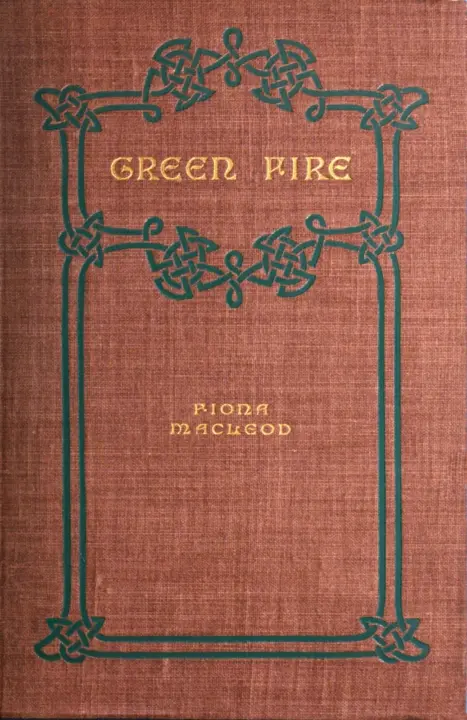
Green Fire: A Romance
William Sharp
THE CLASSIC COLLECTION · 1895
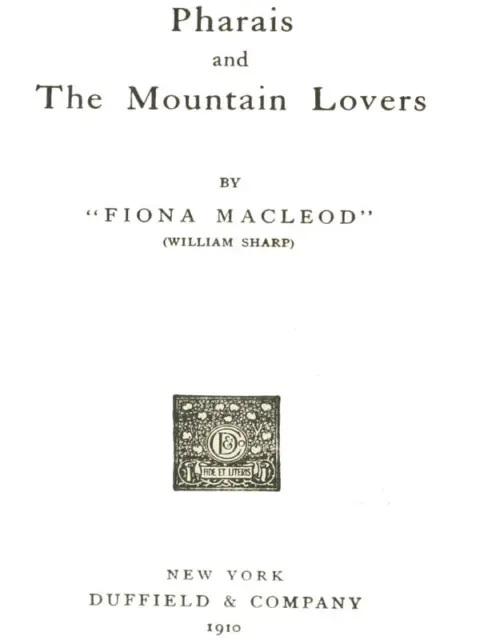
"Pharais and The Mountain Lovers" by "Fiona Macleod" (William Sharp) is a romance written in the late 19th century. The work captures the ethereal beauty of Celtic mythology and the complex emotional landscape of its characters. The story begins to unfold on the fictional island of Innisròn, following Lora, a woman deeply in love, who anxiously awaits the return of her beloved Alastair while grappling with omens of sorrow. The opening of the text introduces readers to Lora, who is imbued with joy as she eagerly anticipates Alastair's return from an urgent medical visit. This anticipation, however, is shadowed by the mysterious sight of a seer, Ian, who foresees trouble linked to Alastair's fate. As Lora's thoughts traverse between hope and foreboding, she captures a blend of the island’s serene beauty and the looming dread of loss. Her emotional turmoil crescendos when Alastair returns, but he comes enveloped in a pall of ominous foreboding that hints at deeper struggles and challenges to their love, setting the stage for a poignant exploration of passion, mysticism, and imminent tragedy.
Introduction adapted from the source catalogue; source summaries may be automatically generated.
Free to read · English · 84,358 words · No account needed
MAKE TIME FOR A GOOD BOOK
On by default. Untick to stop anonymous reading totals. Each page counts after 10 seconds in view. How this works.
Anonymous counting is on unless you have switched it off.
Though the two mountain-buttresses at the head of the pass are so close that the legend of a stag having taken the intervening space at a bound is not wholly incredible, it was impossible for one hid in the mist on Maol-Gorm of Iolair to see any one or anything on Maol-dubh of Tornideon. But through the mist, here suffused with a pale golden light, was audible on both spurs the bleating of travelling sheep and the barking of a dog, with, now and again, the lowing of cows.
Suddenly a voice rang out, strong, clear, and blithe:
"Mo rùn geal, dìleas,
Dìleas, dìleas,
Mo rùn geal, dìleas
Nach till thunall!"
Upon the spring of the last word came back from Iolair a voice as blithe and more sweet, the voice of a woman, with the lilt of a bird in it and all the joy of the sunshine:
"I go where the sheep go,
With the sheep are my feet:
I go where the kye go,
Their breath is so sweet:
O lover who loves me,
Art thou half so fleet?
Where the sheep climb, the kye go,
There shall we meet!"
There was something so penetratingly sweet and joyous in the song that it stirred every bird on the hillside. The larks rose through the mist till they swam into the sunflood; the linties and shilfas and yellow-yites sent thrilling notes from gorse-bush to gorse-bush and from rowan to rowan. In the birk-shaws, the cries of the merles sounded like shrill flutes.
To and fro went the sweet voices. Now the man's on Tornideon would ring blithely, now the woman's on Iolair respond.
At last, as the cattle moved up the slopes, with the spreading sheep in advance, the shepherding voices fell further apart. Instinct led the kye to the sunlight, for all living things have their joy through the eyes.
"Sorcha, Sorcha, Sorcha!" came ringing through the mist:
"Sorcha-mo-ciatach-nio-nag!"
"Tha, Ailean-a-ghaolach!" came back, with a ripple of laughter, the
laughter of joy.[3]
[3] "Sorcha, my bonnie lassie," "Yes, Alan, my darling."
"Ah mo cailin geal, mo nighean donn, duit ciat mhor!"
"Duit cíat, no runach!"[4]
[4] "Ah, my fair one, my dark-haired lass, joy be on you!"--"And joy on you, my loved-in-secret."
Infra: Domnuill-dubh instead of Donncha-dubh: i.e. "should be called Black Donald instead of Black Duncan." It is a play upon words: for "Black Donald" is the Highland colloquialism for Satan.
"The sheep and the kye don't know love, Sorcha, or they would stay here till the mists go, and then we would see each other."
"Let us cry deasiul, and turn thrice sunways!"
Your reading position is saved on this browser. Take it to another device with a library code. Reading pages adapt to text, rather than matching a printed edition.
William Sharp
BEHIND THE BOOK
This eBook is for the use of anyone anywhere in the United States and most other parts of the world at no cost and with almost no restrictions whatsoever. You may copy it, give it away or re-use it under the terms of the Project Gutenberg License included with this eBook or online at www.gutenberg.org. If you are not located in the United States, you will have to check the laws of the country where you are located before using this eBook. Read the source licence.
The original source file, including credits and licence, is retained by this library. Request an original-format copy at no charge. Please include the book title and Project Gutenberg identifier #43485.
KEEP YOUR CURIOSITY GOING
Coulson Kernahan

Maurice Baring
Frances Wright
Cécile Tormay
Francis Greenleaf Allinson & Anne C. E. (Anne Crosby Emery) Allinson

Frederic Jesup Stimson