THE CLASSIC COLLECTION✦An outlaw’s diary: the CommuneCLASSIC FREE BOOKS
An outlaw’s diary: the Commune
Cécile Tormay
THE CLASSIC COLLECTION · 1900
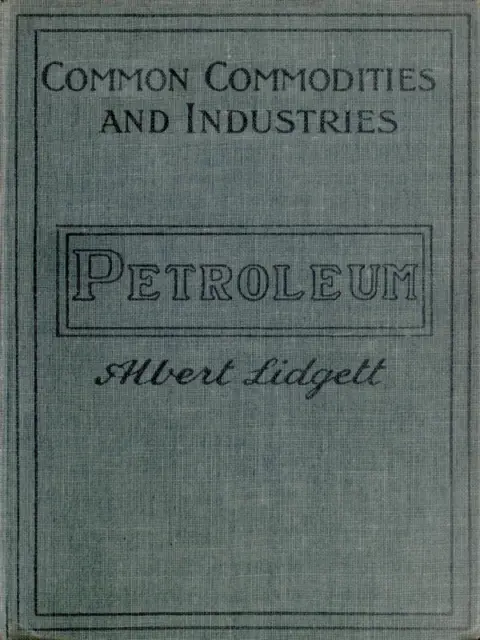
"Petroleum" by Albert Lidgett is a comprehensive account of the petroleum industry written in the early 20th century. This publication aims to provide a thorough overview of petroleum, its origins, extraction, and refining processes, intended for a general readership rather than a specialized audience. The text reflects on the significance of petroleum in contemporary society, noting its vital role in fuel, lubrication, and various industries. The opening of the book serves to contextualize petroleum's importance, beginning with the etymology of the term and a discussion of the mineral's origins, debating both organic and inorganic theories. Lidgett highlights the historical references to oil, tracing its usage back to Biblical times and ancient civilizations, before discussing the geological distribution of petroleum reservoirs around the world. The chapter effectively sets the stage for a deeper exploration into the various facets of the petroleum industry, including its exploration, extraction, and refineries, emphasizing the significant advancements made in these areas over the preceding decades.
Introduction adapted from the source catalogue; source summaries may be automatically generated.
Free to read · English · 42,656 words · No account needed
MAKE TIME FOR A GOOD BOOK
On by default. Untick to stop anonymous reading totals. Each page counts after 10 seconds in view. How this works.
Anonymous counting is on unless you have switched it off.
The advantages attendant upon the use of fuel oil for naval vessels are, in the main, also strikingly apparent when oil is adopted for the mercantile marine. It is many years ago since the oil tankers of the “Shell” Transport and Trading Company, Ltd., commenced to do the voyage regularly from the Far East to this country and back without an intermediate port of call. To-day, practically every oil tanker afloat burns fuel oil. But, of recent date, fuel oil has reached wider application by reason of its being adopted on many cargo and passenger vessels, and, had the European War not considerably hampered ordinary shipbuilding construction, we should have seen ere this a number of the largest vessels crossing the Atlantic exclusively running on oil. In fact, arrangements have been made whereby many of our Transatlantic lines will operate exclusively on fuel oil, which will be taken on board in the United States.
My friend, Mr. J. J. Kermode, of Liverpool--the well-known fuel oil expert--has taken the most prominent part in calling general attention to the immense superiority of fuel oil over coal, and it is due to this gentleman’s untiring energies that not only does our Navy to-day use fuel oil to such an extent, but that those responsible for ocean passenger transport have taken the matter up so seriously. There are three general headings under which fuel oil use will affect transport costs. They are as follow: (a) by increased passenger or cargo capacity, (b) by increased speed, and (c) by a great reduction in running costs. As to the increased capacity, I have already shown that fuel oil can be stored in considerably less space than coal, and the simplicity of both bunkering fuel oil, and using it on vessels, has also been touched upon. With reference to the increased speed which vessels utilizing fuel oil can attain over those running on coal, I have a concrete example in front of me. Two sister ships of the Eagle Oil Transport Company--the San Dunstano and the San Eduardo--each of 9,000 tons deadweight capacity, are fitted to burn coal and fuel oil respectively. Upon a trip carried out under careful observation, the weight of fuel consumed worked out as two to three in favour of fuel oil, while the indicated horse-power developed showed an 18 per cent. improvement in the case of the oil-fired vessel. But the striking fact of the comparison is that the San Eduardo made the round voyage to Mexico--out and home--eight days quicker than the other, this additional speed being solely due to the fact that with fuel oil it was possible to maintain consistent speed throughout the voyage--an impossible matter when coal is consumed. If space permitted, I could enumerate many cases where the results in favour of fuel oil are even more strikingly apparent, but I will content myself by briefly referring to calculations made by Mr. Kermode, based upon voyages of our largest liners: they are sufficiently interesting and suggestive to record here. On an average, says Mr. Kermode, to maintain a speed of 25 knots, 5,500 tons of coal are consumed upon the voyage between Liverpool and New York by one of the mammoth liners; or 11,000 tons for the round trip. Some 3,300 tons of fuel oil--which could be stored if necessary (and as will frequently be done in the future) in the double bottom of the vessel--would, by automatic stoking, do even more work than 5,500 tons of coal. Calculating the daily consumption of 600 tons of coal now used for 24 hours, this represents about 2,000 tons less fuel on a five days’ trip, land to land run, or 4,000 tons less, out and home. The utilizing of the vacant space thus saved for merchandise would bring in a very handsome income. Of the 312 firemen and trimmers now employed for a coal-fired liner, 285 might be dispensed with, and occupation found for them under healthier conditions ashore, say in handling the additional cargo which would be carried. The saved accommodation in this respect could be allotted to third-class passengers, of whom at least another 250 could be carried. Our mammoth liners are fitted with 192 furnaces in order to produce 68,000 horse-power (as was the case of the Mauretania and the Lusitania), and, on the assumption that thirty-two fires are cleaned every watch, 10,000 indicated horse-power is lost every four hours through burning down and cleaning, a quite unnecessary operation with fuel oil. Figures such as these show the startling possibilities of fuel oil for marine purposes.
Your reading position is saved on this browser. Take it to another device with a library code. Reading pages adapt to text, rather than matching a printed edition.
BEHIND THE BOOK
This eBook is for the use of anyone anywhere in the United States and most other parts of the world at no cost and with almost no restrictions whatsoever. You may copy it, give it away or re-use it under the terms of the Project Gutenberg License included with this eBook or online at www.gutenberg.org. If you are not located in the United States, you will have to check the laws of the country where you are located before using this eBook. Read the source licence.
The original source file, including credits and licence, is retained by this library. Request an original-format copy at no charge. Please include the book title and Project Gutenberg identifier #52825.
KEEP YOUR CURIOSITY GOING
Cécile Tormay

Moritz Busch
John L. Ransom
Frances Wright
Cécile Tormay

Mabel Potter Daggett