THE CLASSIC COLLECTION✦Poems and translationsCLASSIC FREE BOOKS
Poems and translations
J. M. (John Millington) Synge & Francesco Petrarca
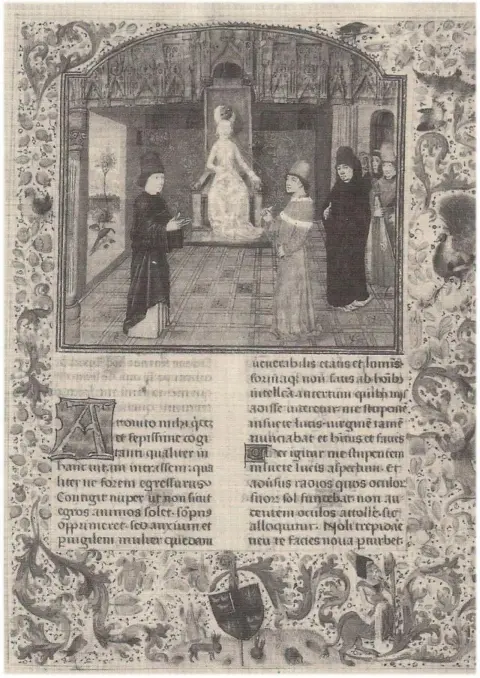
THE CLASSIC COLLECTION · 1835
"Petrarch's Secret; or, the Soul's Conflict with Passion" by Francesco Petrarca is a trilogy of dialogues in Latin written between 1342 and 1353. In this deeply personal work, Petrarch examines his faith through imagined conversations with Saint Augustine, who challenges him on his devotion to earthly love and poetic fame. Augustine argues these passions bind Petrarch's will and prevent him from embracing God fully. The work reflects Petrarch's struggle to reconcile his Renaissance humanism with Christian faith.
Introduction adapted from the source catalogue; source summaries may be automatically generated.
Free to read · English · 50,916 words · No account needed
MAKE TIME FOR A GOOD BOOK
On by default. Untick to stop anonymous reading totals. Each page counts after 10 seconds in view. How this works.
Anonymous counting is on unless you have switched it off.
S. Augustine. As from what I can understand the evil is so deep-seated, it will do no good to heal it slightly, for it will soon throw out more shoots. It must be entirely rooted up. Yet I know not where to begin, so many complications alarm me. But to make the task of dividing the matter easier, I will examine each point in detail. Tell me, then, what is it that has hurt you most?
Petrarch. Whatever I see, or hear, or feel.
S. Augustine. Come, come, does nothing please you?
Petrarch. Nothing, or almost nothing.
S. Augustine. Would to God that at least the better things in your life might be dear, to you. But tell me what is it that is to you the most displeasing of all? I beg you give me an answer.
Petrarch. I have already answered.
S. Augustine. It is this melancholy I spoke of which is the true cause of all your displeasure with yourself.
Petrarch. I am just as displeased with what I see in others as with
what I see in myself.
S. Augustine. That too comes from the same source. But to get a little order into our discourse, does what you see in yourself truly displease you as much as you say?
Petrarch. Stop worrying me with your petty questions, that are more than I know how to reply to.
S. Augustine. I see, then, that those things which make many other people envy you are nevertheless in your own eyes of no account at all?
Petrarch. Any one who envies a wretch like me must indeed himself be
wretched.
S. Augustine. But now please tell me what is it that most displeases
you?
Petrarch. I am sure I do not know.
S. Augustine. If I guess right will you acknowledge it?
Petrarch. Yes, I will, quite freely.
S. Augustine. You are vexed with Fortune.
Petrarch. And am I not right to hate her? Proud, violent, blind, she
makes a mock of mankind.
S. Augustine. It is an idle complaint. Let us look now at your own troubles. If I prove you have complained unjustly, will you consent to retract?
Petrarch. You will find it very hard to convince me. If, however, you prove me in the wrong, I will give in.
S. Augustine. You find that Fortune is to you too unkind.
Petrarch. Not too unkind; too unjust, too proud, too cruel.
Your reading position is saved on this browser. Take it to another device with a library code. Reading pages adapt to text, rather than matching a printed edition.
J. M. (John Millington) Synge & Francesco Petrarca
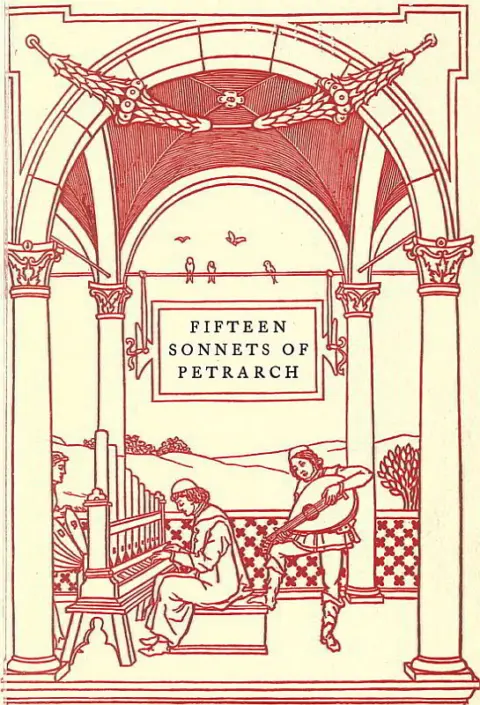
Francesco Petrarca
BEHIND THE BOOK
This eBook is for the use of anyone anywhere in the United States and most other parts of the world at no cost and with almost no restrictions whatsoever. You may copy it, give it away or re-use it under the terms of the Project Gutenberg License included with this eBook or online at www.gutenberg.org. If you are not located in the United States, you will have to check the laws of the country where you are located before using this eBook. Read the source licence.
The original source file, including credits and licence, is retained by this library. Request an original-format copy at no charge. Please include the book title and Project Gutenberg identifier #49450.
KEEP YOUR CURIOSITY GOING

David Patterson (Spirit) Hatch
Coulson Kernahan

Ralph Waldo Emerson

Maurice Baring
Frances Wright
Cécile Tormay