THE CLASSIC COLLECTION✦Poems and translationsCLASSIC FREE BOOKS
Poems and translations
J. M. (John Millington) Synge & Francesco Petrarca
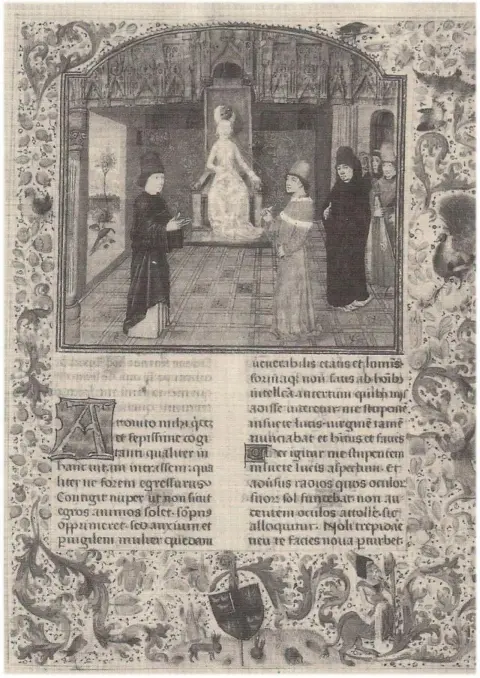
THE CLASSIC COLLECTION · 1835
"Petrarch's Secret; or, the Soul's Conflict with Passion" by Francesco Petrarca is a trilogy of dialogues in Latin written between 1342 and 1353. In this deeply personal work, Petrarch examines his faith through imagined conversations with Saint Augustine, who challenges him on his devotion to earthly love and poetic fame. Augustine argues these passions bind Petrarch's will and prevent him from embracing God fully. The work reflects Petrarch's struggle to reconcile his Renaissance humanism with Christian faith.
Introduction adapted from the source catalogue; source summaries may be automatically generated.
Free to read · English · 50,916 words · No account needed
MAKE TIME FOR A GOOD BOOK
On by default. Untick to stop anonymous reading totals. Each page counts after 10 seconds in view. How this works.
Anonymous counting is on unless you have switched it off.
Petrarch. Well, I will believe so.
S. Augustine. To make your belief certain, examine your own conscience. Conscience is the best judge of virtue. It is a guide, true and unerring, that weighs every thought and deed. It will tell you that you have never longed for spiritual health as you ought, but that, considering what great dangers beset you, your wishes were but feeble and ineffective.
Petrarch. I have been examining my conscience, as you suggested.
S. Augustine. What do you find?
Petrarch. That what you say is true.
S. Augustine. We have made a little progress, if you are beginning to be awake. It will soon be better with you now you acknowledge it was not well hitherto.
Petrarch. If it is enough to acknowledge, I hope to be able to be not only well but quite well, for never have I understood more clearly that my wishes for liberty and for an end to my misery have been too lukewarm. But can it be enough to desire only?
S. Augustine. Why do you ask?
Petrarch. I mean, to desire without doing anything.
S. Augustine. What you propose is an impossibility. No one desires
ardently and goes to sleep.
Petrarch. Of what use is desire, then?
S. Augustine. Doubtless the path leads through many difficulties, but the desire of virtue is itself a great part of virtue.
Petrarch. There you give me ground for good hope.
S. Augustine. All my discourse is just to teach you how to hope and
to fear.
Petrarch. Why to fear?
S. Augustine. Then tell me why to hope?
Petrarch. Because whereas so far I have striven, and with much tribulation, merely not to become worse, you now open a way to me whereby I may become better and better, even to perfection.
S. Augustine. But maybe you do not think how toilsome that way is.
Petrarch. Have you some now terror in store for me?
S. Augustine. To desire is but one word, but how many things go to
make it up!
Petrarch. Your words make me tremble.
S. Augustine. Not to mention the positive elements in desire, it involves the destruction of many other objects.
Petrarch. I do not quite take in your meaning.
S. Augustine. The desire of all good cannot exist without thrusting out every lower wish. You know how many different objects one longs for in life. All these you must first learn to count as nothing before you can rise to the desire for the chief good; which a man loves less when along with it he loves something else that does not minister to it.
Petrarch. I recognise the thought.
Your reading position is saved on this browser. Take it to another device with a library code. Reading pages adapt to text, rather than matching a printed edition.
J. M. (John Millington) Synge & Francesco Petrarca
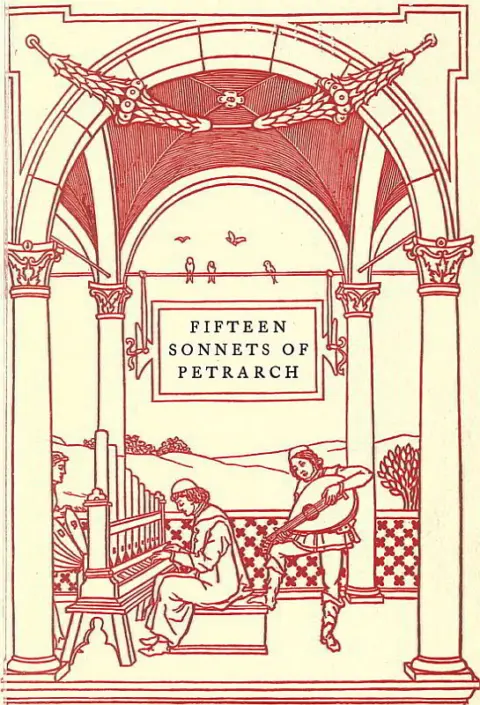
Francesco Petrarca
BEHIND THE BOOK
This eBook is for the use of anyone anywhere in the United States and most other parts of the world at no cost and with almost no restrictions whatsoever. You may copy it, give it away or re-use it under the terms of the Project Gutenberg License included with this eBook or online at www.gutenberg.org. If you are not located in the United States, you will have to check the laws of the country where you are located before using this eBook. Read the source licence.
The original source file, including credits and licence, is retained by this library. Request an original-format copy at no charge. Please include the book title and Project Gutenberg identifier #49450.
KEEP YOUR CURIOSITY GOING

David Patterson (Spirit) Hatch
Coulson Kernahan

Ralph Waldo Emerson

Maurice Baring
Frances Wright
Cécile Tormay