
Trilby
George Du Maurier
THE CLASSIC COLLECTION · 1846
"Peter Ibbetson" by George Du Maurier is a semi-autobiographical novel written during the late 19th century. The narrative presents the life story of its protagonist, Peter Ibbetson, a man sentenced to life imprisonment for murder, who later finds himself in a lunatic asylum, where he writes his memoirs. The book intricately explores themes of memory, love, and the haunting nature of past experiences, focusing on Ibbetson's formative years in France and his deeply emotional connections to family and friendship. The opening of the narrative sets a somber tone as it introduces the context of Ibbetson's life: he serves a long sentence for a violent crime driven by provocation, leading to a period of insanity and eventual confinement. The author provides a retrospective insight into his childhood, filled with idyllic memories of a lush French garden, the charm of his parents, and significant figures in his early life, such as Madame Seraskier. Through vivid descriptions, the reader is drawn into his happy yet transient early years, emphasizing the beauty of his formative experiences while underscoring the tragic turn of events that leads to his harsh realities.
Introduction adapted from the source catalogue; source summaries may be automatically generated.
Free to read · English · 89,629 words · No account needed
MAKE TIME FOR A GOOD BOOK
On by default. Untick to stop anonymous reading totals. Each page counts after 10 seconds in view. How this works.
Anonymous counting is on unless you have switched it off.
What hells have we not invented for the afterlife! Indeed, what hells we have often made of this, both for ourselves and others, and at really such a very small cost of ingenuity, after all!
Perhaps the biggest and most benighted fools have been the best
hell-makers.
Whereas the best of our heavens is but a poor perfunctory conception, for all that the highest and cleverest among us have done their very utmost to decorate and embellish it, and make life there seem worth living. So impossible it is to imagine or invent beyond the sphere of our experience.
Now, these dreams of mine (common to many) of the false but ineffable joys, are they not a proof that there exist in the human brain hidden capacities, dormant potentialities of bliss, unsuspected hitherto, to be developed some day, perhaps, and placed within the reach of all, wakers and sleepers alike?
A sense of ineffable joy, attainable at will, and equal in intensity and duration to (let us say) an attack of sciatica, would go far to equalize the sorrowful, one-sided conditions under which we live.
But there is one thing which, as a school-boy, I never dreamed--namely, that I, and one other holding a torch, should one day, by common consent, find our happiness in exploring these mysterious caverns of the brain; and should lay the foundations of order where only misrule had been before: and out of all those unreal, waste, and transitory realms of illusion, evolve a real, stable, and habitable world, which all who run may reach.
At last I left school for good, and paid a visit to my Uncle Ibbetson in Hopshire, where he was building himself a lordly new pleasure-house on his own land, as the old one he had inherited a year or two ago was no longer good enough for him.
It was an uninteresting coast on the German Ocean, without a rock, or a cliff, or a pier, or a tree; even without cold gray stones for the sea to break on--nothing but sand!--a bourgeois kind of sea, charmless in its best moods, and not very terrible in its wrath, except to a few stray fishermen whom it employed, and did not seem to reward very munificently.
Inland it was much the same. One always thought of the country as gray, until one looked and found that it was green; and then, if one were old and wise, one thought no more about it, and turned one's gaze inward. Moreover, it seemed to rain incessantly.
But it was the country and the sea, after Bluefriars and the cloisters--after Newgate, St. Bartholomew, and Smithfield.
Your reading position is saved on this browser. Take it to another device with a library code. Reading pages adapt to text, rather than matching a printed edition.
George Du Maurier

George Du Maurier
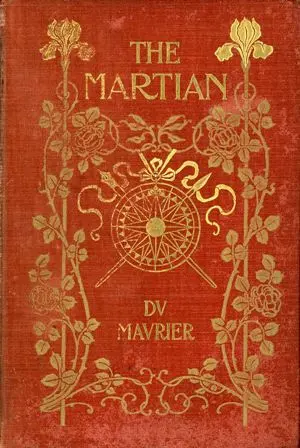
George Du Maurier
George Du Maurier
BEHIND THE BOOK
This eBook is for the use of anyone anywhere in the United States and most other parts of the world at no cost and with almost no restrictions whatsoever. You may copy it, give it away or re-use it under the terms of the Project Gutenberg License included with this eBook or online at www.gutenberg.org. If you are not located in the United States, you will have to check the laws of the country where you are located before using this eBook. Read the source licence.
The original source file, including credits and licence, is retained by this library. Request an original-format copy at no charge. Please include the book title and Project Gutenberg identifier #9817.
KEEP YOUR CURIOSITY GOING
Coulson Kernahan

Maurice Baring
Frances Wright
Cécile Tormay
Francis Greenleaf Allinson & Anne C. E. (Anne Crosby Emery) Allinson

Frederic Jesup Stimson