THE CLASSIC COLLECTION✦An outlaw’s diary: the CommuneCLASSIC FREE BOOKS
An outlaw’s diary: the Commune
Cécile Tormay
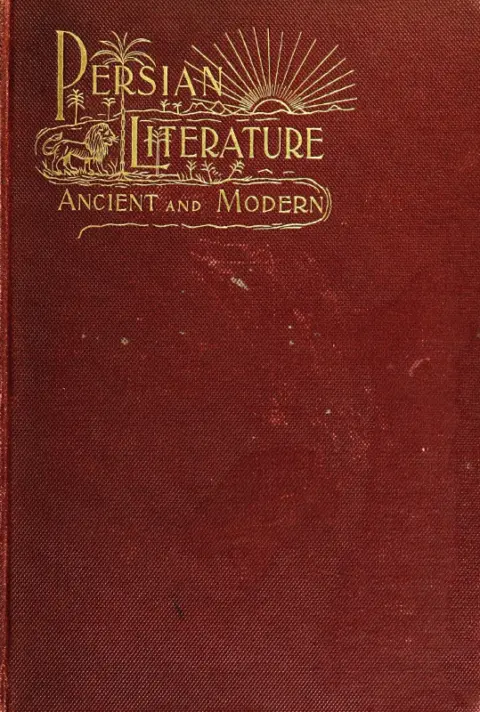
THE CLASSIC COLLECTION · 1893
"Persian Literature, Ancient and Modern" by Elizabeth A. Reed is a comprehensive historical account of Persian literature written in the late 19th century. The work explores the origins, evolution, and significant milestones of Persian literary traditions from ancient times through to modernity, delving into both poetry and prose. Reed organizes the content into chronological divisions, highlighting key periods, influential works, and notable figures in Persian literature. The opening of the book sets a scholarly tone, addressing the historical foundations of Persian literature. Reed speaks to how Persian literary culture developed from the influences of ancient civilizations, such as Babylon and Assyria, and describes the interplay between conquest and cultural assimilation that enriched the Persian literary landscape. She introduces the origins of early Persian texts, discusses the significance of the Zend-Avesta, and points out the role of mythology and epic narratives, emphasizing how these aspects continue to shape modern Persian literature.
Introduction adapted from the source catalogue; source summaries may be automatically generated.
Free to read · English · 110,591 words · No account needed
MAKE TIME FOR A GOOD BOOK
On by default. Untick to stop anonymous reading totals. Each page counts after 10 seconds in view. How this works.
Anonymous counting is on unless you have switched it off.
This portion of Nebuchadnezzar’s inscription is confirmed by the following statement in the book of Daniel: “And the Lord gave the King of Judah into his (Nebuchadnezzar’s) hand with part of the vessels of the house of God, which he carried into the land of Shinar to the house of his god.“ (Daniel i, 2.)
Footnote 82:
Col. 3. lines 43-45.
Footnote 83:
Nebo is alluded to as one of the heathen gods in Isaiah xlvi, 1, and
kindred passages.
Footnote 84:
Compare Judges xvi, 23; also 1 Samuel v.
Footnote 85:
Tablets of Tel-El-Armana, “Dispatches from Palestine in the century before the Exodus,” Rec. of P. Vol. I, p. 64.
Footnote 86:
Babylonian Literature, p. 64.
Footnote 87:
Compare Lev. xx, 2; Deut. xii, 31, and kindred passages.
Footnote 88:
The Moabite stone was about three feet and nine inches long, two feet and four inches in breadth and fourteen inches thick. The inscription contained many incidents concerning the wars of King Mesha with Israel; see also 2 Kings, 3d chap. The literature connected with this stone is very great, no less than forty-nine Orientalists having written in various languages upon this fascinating theme, and although many of these productions are merely papers or brochures, there are at least eight different volumes upon this subject.
The characters are Phœnician, and form a link between those of the Baal-Lebanon inscription of the tenth century B.C. and those of the Siloam text.
Footnote 89:
Chemosh, who is called “the abomination of the Moabites,” is alluded to in Numb. xxi, 29; also Jer. xlviii, 7, and various other passages.
Footnote 90:
Tablet K 4902 of the British Museum Collection, translated by Ernest
A. Budge.
Footnote 91:
“They have builded also the high places of Baal, to burn their sons with fire for burnt offerings unto Baal,” etc. (Jeremiah xix. 5. See also many kindred passages.)
Footnote 92:
This inscription was translated by Dr. Oppert, and Esmunazar is supposed to have lived in the fourth century B.C.
Footnote 93:
2 Kings xvii. 16, and kindred passages.
Footnote 94:
Western Asia Inscriptions, Vol. IV. p. 32.
Footnote 95:
The prophet Ezekiel speaks of the fact that “there sat women weeping for Tammuz,” as even a “greater abomination” than burning incense to idols. (See Ezekiel viii, 13-14.)
Footnote 96:
The worship of Ashtaroth, which represented the grossest licentiousness and demanded human sacrifices, is strongly condemned in Judges ii, 12-13, and many other passages.
Footnote 97:
Annals of Assur-bani-pal, Cylinder B, Column 5.
Footnote 98:
Pliny, Nat. Hist., Vol. II, p. 619.
Footnote 99:
Pausanius, III, 25.
Footnote 100:
Literally “blue stone;” it was a brilliant dark blue.
Footnote 101:
The eagle, the lion, the horse, the king and the workman are supposed to represent the numerous bridegrooms of this treacherous goddess.
Footnote 102:
Your reading position is saved on this browser. Take it to another device with a library code. Reading pages adapt to text, rather than matching a printed edition.
BEHIND THE BOOK
This eBook is for the use of anyone anywhere in the United States and most other parts of the world at no cost and with almost no restrictions whatsoever. You may copy it, give it away or re-use it under the terms of the Project Gutenberg License included with this eBook or online at www.gutenberg.org. If you are not located in the United States, you will have to check the laws of the country where you are located before using this eBook. Read the source licence.
The original source file, including credits and licence, is retained by this library. Request an original-format copy at no charge. Please include the book title and Project Gutenberg identifier #56248.
KEEP YOUR CURIOSITY GOING
Cécile Tormay

Moritz Busch
John L. Ransom
Frances Wright
Cécile Tormay

Mabel Potter Daggett