THE CLASSIC COLLECTION✦An outlaw’s diary: the CommuneCLASSIC FREE BOOKS
An outlaw’s diary: the Commune
Cécile Tormay
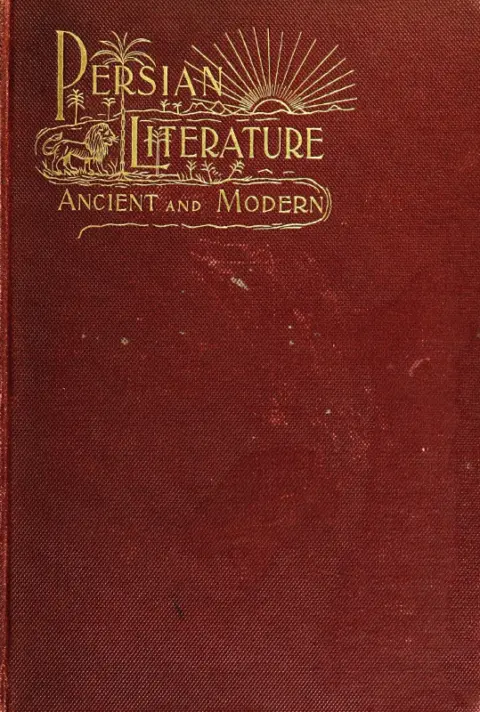
THE CLASSIC COLLECTION · 1893
"Persian Literature, Ancient and Modern" by Elizabeth A. Reed is a comprehensive historical account of Persian literature written in the late 19th century. The work explores the origins, evolution, and significant milestones of Persian literary traditions from ancient times through to modernity, delving into both poetry and prose. Reed organizes the content into chronological divisions, highlighting key periods, influential works, and notable figures in Persian literature. The opening of the book sets a scholarly tone, addressing the historical foundations of Persian literature. Reed speaks to how Persian literary culture developed from the influences of ancient civilizations, such as Babylon and Assyria, and describes the interplay between conquest and cultural assimilation that enriched the Persian literary landscape. She introduces the origins of early Persian texts, discusses the significance of the Zend-Avesta, and points out the role of mythology and epic narratives, emphasizing how these aspects continue to shape modern Persian literature.
Introduction adapted from the source catalogue; source summaries may be automatically generated.
Free to read · English · 110,591 words · No account needed
MAKE TIME FOR A GOOD BOOK
On by default. Untick to stop anonymous reading totals. Each page counts after 10 seconds in view. How this works.
Anonymous counting is on unless you have switched it off.
Concerning the statue of Bel, see Daniel, chap. iii; Herodotus, bk. I; Strabo, XIV; Pliny, VI, chap. xxvi; Q. Curtius, lib. V; Arrianus, lib. VII.
Footnote 36:
The mythology of Nebuchadnezzar’s inscriptions will be briefly treated in the following chapter.
Footnote 37:
This devastation was accomplished during Sennacherib’s campaign of 694
to 692 B.C.
Footnote 38:
The city of Babylon was founded in very early times. It became the capital under Khammuragas (about 1700 B.C., who built a temple to Merodach there), and held this position for twelve hundred years. It was conquered by Tukulti-Ninip, 1271 B. C.; by Tiglath-Pileser II, 731 B.C.; by Merodach Baladan, 722 B.C.; by Sargon, 721 B.C. It was sacked and destroyed by Sennacherib, 692 B.C.: restored by Esarhaddon, 675 B.C.; captured by Assur-bani-pal, 648 B.C.; rebuilt in great splendor by Nebuchadnezzar during his long reign, and taken at last by the Medes and Persians about 539 B.C.—Ernest A. Budge, Trans. Vic. Ins., V. 18, p. 147.
Footnote 39:
Nebuchadnezzar reigned from about 605 to 562 B.C.
Footnote 40:
2 Kings xxiv, 7. In the tablets the river Euphrates is called “the
river of Sippara.”
Footnote 41:
Dan. iv, 30.
Footnote 42:
Translated by Fox Talbot, F.R. S., Records of the Past, I, 69-73.
Footnote 43:
Translated by Fox Talbot, F.R. S., Records of the Past, 1-133.
Footnote 44:
Jerusalem captured 587 B.C. See also Jer. xxxix, 1, 2; 2 Kings xxv.
Footnote 45:
Footnote 46:
Jer. 1, 38.
Footnote 47:
Footnote 48:
Footnote 49:
W. St. Chad Boscawen, Trans. Vic. Ins., Vol. XVIII, No. 70, p. 117.
Footnote 50:
Western Asia Inscriptions, Vol. I, pl. 68, col. lines 19.
Footnote 51:
Jeremiah li, 39-57; also Daniel v, 1.
Footnote 52:
The newly acquired evidence of the tablets seems to indicate that Gobyras, who commanded the armies of Cyrus, was Darius the Median, who acted as the viceroy of Cyrus on the throne of Babylon. Gobyras, the Ugbaru of the inscriptions, being formerly prefect of Gutium, or Kurdistan, was ruler of a district which embraced Ecbatana, the Median capital, and the province of the Medes, and was also, as his name indicates, a Proto-Mede, or Kassite, by birth. Xenophon states that the capture of Babylon was effected by Gobyras, and that his division was the first to reach the palace. Cyrus himself did not enter Babylon until later in the year, namely, on the third day of Marchesvan, four months after, when he “proclaimed peace, to all Babylon, and Gobyras his governor, and governors, he appointed.”
Footnote 53:
W. St. Chad Boscawen, Trans. Vic. Ins., Vol. XVIII, page 131.
Footnote 54:
Herodotus, I, 107, 122.
Footnote 55:
Darius Hystaspes reigned from 549 to 486 B.C.
Footnote 56:
Your reading position is saved on this browser. Take it to another device with a library code. Reading pages adapt to text, rather than matching a printed edition.
BEHIND THE BOOK
This eBook is for the use of anyone anywhere in the United States and most other parts of the world at no cost and with almost no restrictions whatsoever. You may copy it, give it away or re-use it under the terms of the Project Gutenberg License included with this eBook or online at www.gutenberg.org. If you are not located in the United States, you will have to check the laws of the country where you are located before using this eBook. Read the source licence.
The original source file, including credits and licence, is retained by this library. Request an original-format copy at no charge. Please include the book title and Project Gutenberg identifier #56248.
KEEP YOUR CURIOSITY GOING
Cécile Tormay

Moritz Busch
John L. Ransom
Frances Wright
Cécile Tormay

Mabel Potter Daggett