THE CLASSIC COLLECTION✦Winefred: A Story of the Chalk CliffsCLASSIC FREE BOOKS
Winefred: A Story of the Chalk Cliffs
S. (Sabine) Baring-Gould
THE CLASSIC COLLECTION · 1897
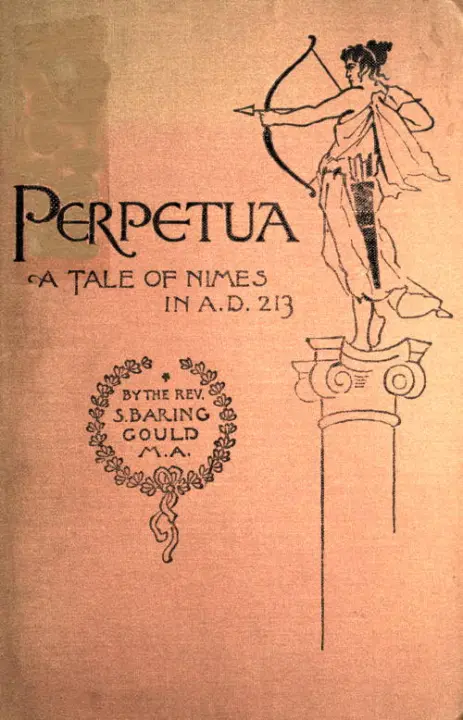
"Perpetua. A Tale of Nîmes in A.D. 213" by S. Baring-Gould is a historical novel written in the late 19th century. The story revolves around Perpetua, a young woman in the ancient city of Nîmes, as she faces a harrowing fate during a sacred festival that demands the sacrifice of a girl to the god Nemausus. The narrative delves into themes of faith, sacrifice, and the conflicts between emerging Christianity and traditional pagan beliefs. The opening of the novel sets a vibrant scene in Nîmes on the first day of March, where crowds gather near a sacred fountain to celebrate an ancient festival. Amidst the joy, there is a palpable undercurrent of fear among the spectators, as the horrific lottery of selecting a sacrificial virgin begins. Perpetua's character emerges as both innocent and strong-willed, ultimately becoming the chosen victim, much to the distress of her mother. The narrative not only hints at her struggle against this cruel fate but also introduces the young man Æmilius, who is captivated by her beauty and courage, foreshadowing his future involvement in her plight.
Introduction adapted from the source catalogue; source summaries may be automatically generated.
Free to read · English · 56,190 words · No account needed
MAKE TIME FOR A GOOD BOOK
On by default. Untick to stop anonymous reading totals. Each page counts after 10 seconds in view. How this works.
Anonymous counting is on unless you have switched it off.
Thou to the thirsty givest cool refreshment,
Thou to the herdsman yieldeth yearly increase,
Thou from the harvest wardest off diseases,
Father Nemausus.
Seven are the hills on which old Rome is founded,
Seven are the hills engirdling thy fountain,
Seven are the planets set in heaven ruling,
Father Nemausus.
Thou, the perennial, lovest tender virgins,
Do thou accept the sacrifice we offer;
May thy selection be the best and fittest,
Father Nemausus.”
Then the priests and priestesses drew up in lines between the people and the fountain, and the ædile of the city, standing forth, read out from a roll the names of seven times seven maidens; and as each name was called, a white‐robed, flower‐crowned child fluttered from among the crowd and was received by the priestly band.
When all forty‐nine were gathered together, then they were formed into a ring, holding hands, and round this ring passed the bearers of the silver image.
Now again rose the hymn:
“Hail, holy fountain, limpid and eternal,
Green as the sapphire, infinite, abundant,
Sweet, unpolluted, cold and clear as crystal,
Father Nemausus.”
And as the bearers carried the image round the circle, suddenly a golden apple held by the god, fell and touched a graceful girl who stood in the ring.
“Come forth, Lucilla,” said the chief priestess. “It is the will of the god that thou speak the words. Begin.”
Then the damsel loosed her hands from those she held, stepped into the midst of the circle and raised the golden pippin. At once the entire ring of children began to revolve, like a dance of white butterflies in early spring; and as they swung from right to left, the girl began to recite at a rapid pace a jingle of words in a Gallic dialect, that ran thus:
“One and two
Drops of dew,
Three and four
Shut the door.”
As she spoke she indicated a child at each numeral,
“Five and six
Pick up sticks,
Seven and eight
Thou must wait.”
Now there passed a thrill through the crowd, and the children whirled
quicker.
“Nine and ten
Pass again.
Golden pippin, lo! I cast,
Thou, Alcmene, touched at last.”
At the word “last” she threw the apple and struck a girl, and at once left the ring, cast her coronet of narcissus into the fountain and ran into the crowd. With a gasp of relief she was caught in the arms of her mother, who held her to her heart, and sobbed with joy that her child was spared. For her, the risk was past, as she would be over age when the next septennial sacrifice came round.
Your reading position is saved on this browser. Take it to another device with a library code. Reading pages adapt to text, rather than matching a printed edition.
S. (Sabine) Baring-Gould
S. (Sabine) Baring-Gould
S. (Sabine) Baring-Gould
S. (Sabine) Baring-Gould
BEHIND THE BOOK
This eBook is for the use of anyone anywhere in the United States and most other parts of the world at no cost and with almost no restrictions whatsoever. You may copy it, give it away or re-use it under the terms of the Project Gutenberg License included with this eBook or online at www.gutenberg.org. If you are not located in the United States, you will have to check the laws of the country where you are located before using this eBook. Read the source licence.
The original source file, including credits and licence, is retained by this library. Request an original-format copy at no charge. Please include the book title and Project Gutenberg identifier #47832.
KEEP YOUR CURIOSITY GOING
Cécile Tormay

Moritz Busch
Coulson Kernahan
John L. Ransom

Maurice Baring
Frances Wright