No. XIII; or, The Story of the Lost Vestal
Emma Marshall
THE CLASSIC COLLECTION · 1894
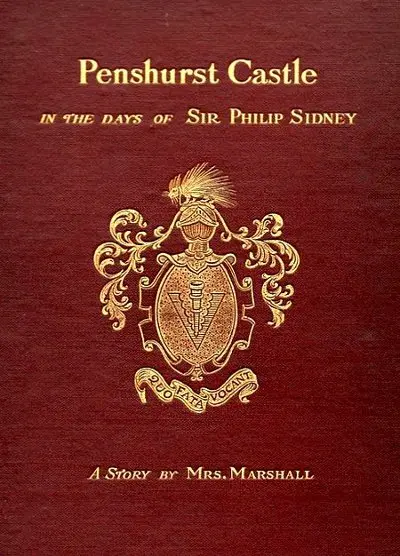
"Penshurst Castle in the Time of Sir Philip Sidney" by Emma Marshall is a historical account written in the late 19th century. This work delves into the life and times of Sir Philip Sidney, a revered poet, scholar, and soldier during the Elizabethan era. The narrative sets the scene at Penshurst Castle, exploring the events surrounding Sidney, while also introducing fictional characters such as Mary Gifford and her younger sister Lucy Forrester, who navigate the complexities of their lives amidst the backdrop of the time. The opening of the narrative presents a glimpse into the domestic life of Mary and Lucy Gifford, contrasting their sheltered existence with the lively events occurring in the world outside, such as the anticipated tournament at Whitehall. As Lucy dreams of attending the tournament and meeting Mr. Sidney, the sisters' relationship and family dynamics are explored, particularly the difficulties presented by their stepmother. The chapter not only foreshadows Lucy's desire for adventure but also hints at deeper tensions and secrets, as Mary reveals her protective instincts over her son Ambrose. The dialogue and interactions paint a vivid picture of the period and establish a foundation of character development that promises to unfold throughout the story.
Introduction adapted from the source catalogue; source summaries may be automatically generated.
Free to read · English · 80,337 words · No account needed
MAKE TIME FOR A GOOD BOOK
On by default. Untick to stop anonymous reading totals. Each page counts after 10 seconds in view. How this works.
Anonymous counting is on unless you have switched it off.
And this easy-going time-server, of whom there are a good many descendants in the present day, laughed a careless laugh, and then, as the sound of horses' feet was heard, and that of the crowd drawing near, he good-naturedly lifted Ambrose on his shoulder, and, planting his broad back against the trunk of the great overshadowing elm, he told the boy to sit steady, and he would carry him to the wall skirting the field, where he could see all that was going on.
Mary Gifford followed, and, feeling Ambrose was safe, was glad he should be gratified with so little trouble and risk. She rested herself on a large stone by the wall, Ambrose standing above her, held there by the strong arm of the man who had befriended them.
The tilt was not very exciting, for many of the best horses and men had been called into requisition by the gentry of the neighbourhood, for the far grander and more important show to come off at Whitehall in the following week.
The spectators, however, seemed well satisfied, to judge by their huzzas and cheers which hailed the victor in every passage of arms--cheers in which little Ambrose, from his vantage ground, heartily joined.
At last it was over, and the throng came out of the field, the victor bearing on the point of his tilting pole a crown made of gilded leaves, which was a good deal battered, and had been competed for by these village knights on several former occasions.
Like the challenge cups and shields of a later time, these trophies were held as the property of the conqueror, till, perhaps, at a future trial, he was vanquished, and then the crown passed into the keeping of another victor.
Mary Gifford thanked the man, who had been so kind to her boy, with one of her sweetest smiles, and Ambrose, at her bidding, said,--
'Thank you, kind sir, for letting me see the show. I'd like to see the game of bowls now where all the folk are going.'
'No, no, Ambrose! you have had enough. We must go home, and you must get to bed early, for your little legs must be tired.'
'Tired! I'd never be tired of seeing horses gallop and prance. Only, I long to be astride of one, as I was of Mr Philip Sidney's.'
Mother and son pursued their way up the hill, Ambrose going over the events of the day in childish fashion--wanting no reply, nor even attention from his mother, while she was thinking over the different ways in matters of religion of those who called themselves Christians.
Your reading position is saved on this browser. Take it to another device with a library code. Reading pages adapt to text, rather than matching a printed edition.
Emma Marshall
Emma Marshall
Emma Marshall
Emma Marshall
BEHIND THE BOOK
This eBook is for the use of anyone anywhere in the United States and most other parts of the world at no cost and with almost no restrictions whatsoever. You may copy it, give it away or re-use it under the terms of the Project Gutenberg License included with this eBook or online at www.gutenberg.org. If you are not located in the United States, you will have to check the laws of the country where you are located before using this eBook. Read the source licence.
The original source file, including credits and licence, is retained by this library. Request an original-format copy at no charge. Please include the book title and Project Gutenberg identifier #28616.
KEEP YOUR CURIOSITY GOING
Cécile Tormay

Moritz Busch
Coulson Kernahan
John L. Ransom

Maurice Baring
Frances Wright