No. XIII; or, The Story of the Lost Vestal
Emma Marshall
THE CLASSIC COLLECTION · 1894
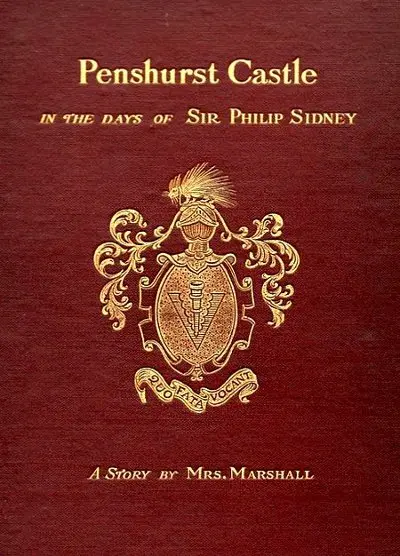
"Penshurst Castle in the Time of Sir Philip Sidney" by Emma Marshall is a historical account written in the late 19th century. This work delves into the life and times of Sir Philip Sidney, a revered poet, scholar, and soldier during the Elizabethan era. The narrative sets the scene at Penshurst Castle, exploring the events surrounding Sidney, while also introducing fictional characters such as Mary Gifford and her younger sister Lucy Forrester, who navigate the complexities of their lives amidst the backdrop of the time. The opening of the narrative presents a glimpse into the domestic life of Mary and Lucy Gifford, contrasting their sheltered existence with the lively events occurring in the world outside, such as the anticipated tournament at Whitehall. As Lucy dreams of attending the tournament and meeting Mr. Sidney, the sisters' relationship and family dynamics are explored, particularly the difficulties presented by their stepmother. The chapter not only foreshadows Lucy's desire for adventure but also hints at deeper tensions and secrets, as Mary reveals her protective instincts over her son Ambrose. The dialogue and interactions paint a vivid picture of the period and establish a foundation of character development that promises to unfold throughout the story.
Introduction adapted from the source catalogue; source summaries may be automatically generated.
Free to read · English · 80,337 words · No account needed
MAKE TIME FOR A GOOD BOOK
On by default. Untick to stop anonymous reading totals. Each page counts after 10 seconds in view. How this works.
Anonymous counting is on unless you have switched it off.
What if it had been possible for her to take refuge with him! What if she had been, as for years everyone believed her to be, a widow! Now disgraced, and with the death of the man, whom he had killed, on his head, and as one of the hunted and persecuted Papists, her husband lived! If only he had died.
The next moment the very thought was dismissed, with a prayer for grace to resist temptation, and pardon even for the thought, and Mary Gifford was her true self again.
With the fading light of the April evening on her face--pale as death, but no longer resentful--her heart no longer filled with passionate anger and shrinking from the husband who had so cruelly deserted her, she stood before him, quiet and self-possessed, awakening in his worldly and deceitful heart admiration, and even awe.
There was silence between them for a short space.
Suddenly, from the open casement above their heads, came the sound of a child's voice--a low murmur at first, then growing louder--as the dream passed into reality.
'Mother, mother! Ambrose wants mother!'
Then, without another word, Mary Gifford bowed her head, and, passing into the kitchen, closed and barred the door; and, hastening to her room, threw herself on her knees by the child's little bed, crying,--
'Ambrose, sweetheart! Mother is here!'
'I'm glad on't,' said the child, in a sleepy, dreamy voice, as he turned towards her, and wound his arms round her neck.
'I'm glad on't! I thought I had lost her.'
The sound of the child's voice smote on the ears of the unhappy father, and sent a sharp thrill of pain through his heart.
Perhaps there never was a moment in his life when he felt so utterly
ashamed and miserable.
He felt the great gulf which lay between him and the pure woman whom he had so cruelly deserted--a gulf, too, separating him from the child in his innocent childhood--the possession of whom he so greatly coveted. For a moment or two softer feelings got the mastery, and Ambrose Gifford stood there, under the starlit sky, almost resolved to relinquish his purpose, and leave the boy to his mother. But that better feeling soon passed, and the specious reasoning, that he was doing the best for the child to have him brought up a good Catholic, and educated as his mother could never educate him, and that the end justified the means, and that he was bound to carry out his purpose, made him say to himself, as he turned away,--
Your reading position is saved on this browser. Take it to another device with a library code. Reading pages adapt to text, rather than matching a printed edition.
Emma Marshall
Emma Marshall
Emma Marshall
Emma Marshall
BEHIND THE BOOK
This eBook is for the use of anyone anywhere in the United States and most other parts of the world at no cost and with almost no restrictions whatsoever. You may copy it, give it away or re-use it under the terms of the Project Gutenberg License included with this eBook or online at www.gutenberg.org. If you are not located in the United States, you will have to check the laws of the country where you are located before using this eBook. Read the source licence.
The original source file, including credits and licence, is retained by this library. Request an original-format copy at no charge. Please include the book title and Project Gutenberg identifier #28616.
KEEP YOUR CURIOSITY GOING
Cécile Tormay

Moritz Busch
Coulson Kernahan
John L. Ransom

Maurice Baring
Frances Wright