No. XIII; or, The Story of the Lost Vestal
Emma Marshall
THE CLASSIC COLLECTION · 1894
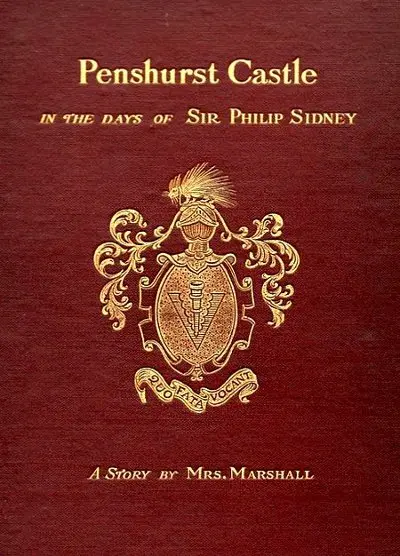
"Penshurst Castle in the Time of Sir Philip Sidney" by Emma Marshall is a historical account written in the late 19th century. This work delves into the life and times of Sir Philip Sidney, a revered poet, scholar, and soldier during the Elizabethan era. The narrative sets the scene at Penshurst Castle, exploring the events surrounding Sidney, while also introducing fictional characters such as Mary Gifford and her younger sister Lucy Forrester, who navigate the complexities of their lives amidst the backdrop of the time. The opening of the narrative presents a glimpse into the domestic life of Mary and Lucy Gifford, contrasting their sheltered existence with the lively events occurring in the world outside, such as the anticipated tournament at Whitehall. As Lucy dreams of attending the tournament and meeting Mr. Sidney, the sisters' relationship and family dynamics are explored, particularly the difficulties presented by their stepmother. The chapter not only foreshadows Lucy's desire for adventure but also hints at deeper tensions and secrets, as Mary reveals her protective instincts over her son Ambrose. The dialogue and interactions paint a vivid picture of the period and establish a foundation of character development that promises to unfold throughout the story.
Introduction adapted from the source catalogue; source summaries may be automatically generated.
Free to read · English · 80,337 words · No account needed
MAKE TIME FOR A GOOD BOOK
On by default. Untick to stop anonymous reading totals. Each page counts after 10 seconds in view. How this works.
Anonymous counting is on unless you have switched it off.
Mistress Crawley finished by emptying the silver cup full of cordial herself, and, pressing her hand to her heart, said,--'She felt like to swoon at first, but it would do no good to sit moping, and Lucy had best bestir herself, and, for her part, she did not know why she should sit there as if she were moon-struck.'
The days were long over since Mistress Crawley had ordered Lucy, in the same commanding tones with which she often struck terror into the hearts of the other maidens, threatening them with dismissal and report of their ill-conduct to Lady Pembroke.
Lucy had won the place she held by her gentleness and submission, and, let it be said, by her quickness and readiness to perform the duties required of her.
So Mistress Crawley, finding her adjurations unheeded, bustled off to see that the maidens were not gossiping in the ante-chamber, but had returned to their work.
Lucy was thus left alone with her thoughts, and, in silence and solitude, she faced the full weight of this sorrow which had fallen on the house of Sidney, yes, and on her also.
'What right had she to sit and mourn? What part was hers in this great trouble?' Mistress Crawley's words were repeated again and again in a low whisper, as if communing with her own heart.
'What right have I? No right if right goes by possession. What right? Nay,
none.'
Then, with a sudden awaking from the trance of sorrow, Lucy rose, the light came back to her eyes, the colour to her cheeks.
'Right? What right? Yes, the right that is mine, that for long, long years he has been as the sun in my sky. I have gloried in all his great gifts, I have said a thousand times that there were none like him, none. I have seen him as he is, and his goodness and truth have inspirited me in my weakness and ignorance to reach after what is pure and noble. Yes, I have a right, and oh! if, indeed, I never see him again, to my latest day I shall thank God I have known him, Philip, Sir Philip Sidney, true and noble knight.'
There was now a sound of more arrivals in the hall, and Lucy was leaving the room, fearing, hoping, that there might be yet further tidings, when the Earl of Pembroke came hastily along the corridor.
'How fares it with my lady, Mistress Forrester? I have come to give her what poor comfort lies in my power.'
The Earl's face betrayed deep emotion and anxiety.
Your reading position is saved on this browser. Take it to another device with a library code. Reading pages adapt to text, rather than matching a printed edition.
Emma Marshall
Emma Marshall
Emma Marshall
Emma Marshall
BEHIND THE BOOK
This eBook is for the use of anyone anywhere in the United States and most other parts of the world at no cost and with almost no restrictions whatsoever. You may copy it, give it away or re-use it under the terms of the Project Gutenberg License included with this eBook or online at www.gutenberg.org. If you are not located in the United States, you will have to check the laws of the country where you are located before using this eBook. Read the source licence.
The original source file, including credits and licence, is retained by this library. Request an original-format copy at no charge. Please include the book title and Project Gutenberg identifier #28616.
KEEP YOUR CURIOSITY GOING
Cécile Tormay

Moritz Busch
Coulson Kernahan
John L. Ransom

Maurice Baring
Frances Wright