THE CLASSIC COLLECTION✦Heu-Heu, or The monsterCLASSIC FREE BOOKS
Heu-Heu, or The monster
H. Rider (Henry Rider) Haggard
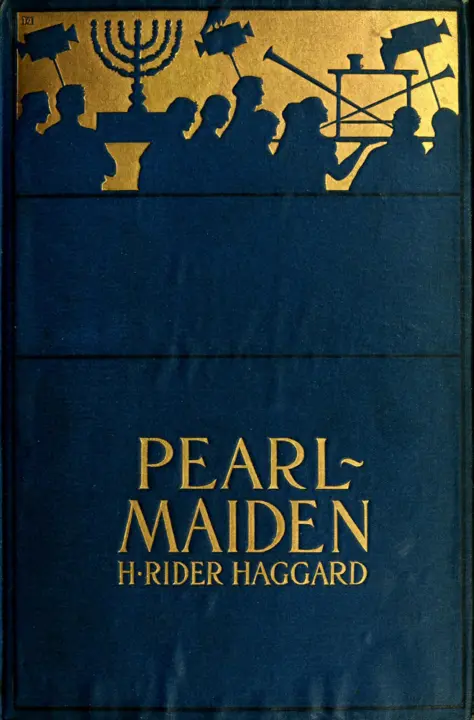
THE CLASSIC COLLECTION · 1901
"Pearl-Maiden: A Tale of the Fall of Jerusalem" by H. Rider Haggard is a historical novel written in the early 20th century. The story unfolds against the backdrop of Jerusalem's tumultuous period under Roman rule, focusing on the harrowing experiences of its inhabitants as they grapple with oppression and the impending fall of their city. Central to the narrative are the characters Rachel, a noble Jewish woman, and Nehushta, her devoted slave and protector, as they face the brutal realities of persecution for their Christian faith. At the start of the novel, we are introduced to Cæsarea, where King Agrippa celebrates a festival while dark fates loom for captured Christians in the nearby prison. The ominous atmosphere sets the stage for a day filled with grisly spectacles involving gladiatorial combats and cruel entertainments, culminating in plans to sacrifice innocent Christians to wild beasts. Rachel and Nehushta are among those condemned, navigating fear and determination as they share poignant conversations about faith, family, and the child Rachel bears. While darkness hovers, their strength and bond echo against the backdrop of despair, indicating both personal and spiritual resilience amidst catastrophic events.
Introduction adapted from the source catalogue; source summaries may be automatically generated.
Free to read · English · 134,394 words · No account needed
MAKE TIME FOR A GOOD BOOK
On by default. Untick to stop anonymous reading totals. Each page counts after 10 seconds in view. How this works.
Anonymous counting is on unless you have switched it off.
“So I see,” answered Marcus; “and to be frank, lady, I do not like Caleb. He has an eye like a knife-point.”
“Come, Nehushta,” said Miriam, “this is our road, and there runs that of the captain and his company. Sir, farewell, and thank you for your escort.”
“Lady, for this while farewell, and thank you for your guidance.”
Thus for that day they parted.
The dwelling which many years before had been built by the Essenes for the use of their ward and her nurse, stood next to the large guest-house. Indeed, it occupied a portion of the ground which originally belonged to it, although now the plot was divided into two gardens by an irrigation ditch and a live pomegranate fence, covered at this season of the year with its golden globes of fruit. That evening, as Miriam and Nehushta walked in the garden, they heard the familiar voice of Ithiel calling to them from the other side of this fence, and presently above it saw his kindly face and venerable white head.
“What is it, my uncle?” asked Miriam running to him.
“Only this, child; the noble Roman captain, Marcus, is to stay in the guest-house during his visit to us, so do not be frightened if you hear or see men moving about in this garden—If, indeed, Romans care to walk in gardens. I am to bide here also, to play host to him and see that he lacks nothing. Also I do not think that he will give you any trouble, since, for a Roman, he seems both courteous and kindly.”
“I am not afraid, my uncle,” said Miriam; “indeed,” she added, blushing a little in spite of herself, “Nehushta and I have already become acquainted with this captain”; and she told him of their meeting beyond the village.
“Nehushta, Nehushta,” said Ithiel reprovingly, “have I not said to you that you should not walk so far afield without some of the brethren as an escort? You might, perchance, have met thieves, or drunken men.”
“My lady wished to gather some flowers she sought,” answered Nehushta, “as she has done without harm for many a year; and being armed, I did not fear thieves, if such men are to be found where all are poor.”
“Well, well, as it chances, no harm has happened; but do not go out unattended again, lest the soldiers should not be so courteous as their captain. They will not trouble you by the way, since, with the exception of a single guard, they camp yonder by the streamlet. Farewell for this night, my child; we will meet to-morrow.”
Your reading position is saved on this browser. Take it to another device with a library code. Reading pages adapt to text, rather than matching a printed edition.
H. Rider (Henry Rider) Haggard
H. Rider (Henry Rider) Haggard
H. Rider (Henry Rider) Haggard
H. Rider (Henry Rider) Haggard
BEHIND THE BOOK
This eBook is for the use of anyone anywhere in the United States and most other parts of the world at no cost and with almost no restrictions whatsoever. You may copy it, give it away or re-use it under the terms of the Project Gutenberg License included with this eBook or online at www.gutenberg.org. If you are not located in the United States, you will have to check the laws of the country where you are located before using this eBook. Read the source licence.
The original source file, including credits and licence, is retained by this library. Request an original-format copy at no charge. Please include the book title and Project Gutenberg identifier #5175.
KEEP YOUR CURIOSITY GOING
Cécile Tormay

Moritz Busch
Coulson Kernahan
John L. Ransom

Maurice Baring
Frances Wright