THE CLASSIC COLLECTION✦Heu-Heu, or The monsterCLASSIC FREE BOOKS
Heu-Heu, or The monster
H. Rider (Henry Rider) Haggard
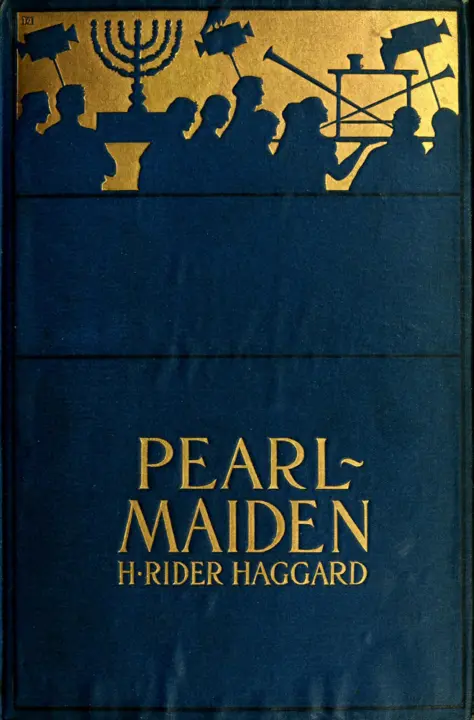
THE CLASSIC COLLECTION · 1901
"Pearl-Maiden: A Tale of the Fall of Jerusalem" by H. Rider Haggard is a historical novel written in the early 20th century. The story unfolds against the backdrop of Jerusalem's tumultuous period under Roman rule, focusing on the harrowing experiences of its inhabitants as they grapple with oppression and the impending fall of their city. Central to the narrative are the characters Rachel, a noble Jewish woman, and Nehushta, her devoted slave and protector, as they face the brutal realities of persecution for their Christian faith. At the start of the novel, we are introduced to Cæsarea, where King Agrippa celebrates a festival while dark fates loom for captured Christians in the nearby prison. The ominous atmosphere sets the stage for a day filled with grisly spectacles involving gladiatorial combats and cruel entertainments, culminating in plans to sacrifice innocent Christians to wild beasts. Rachel and Nehushta are among those condemned, navigating fear and determination as they share poignant conversations about faith, family, and the child Rachel bears. While darkness hovers, their strength and bond echo against the backdrop of despair, indicating both personal and spiritual resilience amidst catastrophic events.
Introduction adapted from the source catalogue; source summaries may be automatically generated.
Free to read · English · 134,394 words · No account needed
MAKE TIME FOR A GOOD BOOK
On by default. Untick to stop anonymous reading totals. Each page counts after 10 seconds in view. How this works.
Anonymous counting is on unless you have switched it off.
“Yes, yes,” answered the chamberlain, “still I had rather stand. I met with an accident last night, a most unpleasant accident,” and he coughed as though to cover up some word that leapt to his lips. “You also, worthy Demetrius—that is your name, is it not?” he added, eyeing him keenly—“look as though you had not slept well.”
“No,” answered Caleb, “I also met with an accident—oh! nothing that you can see—a slight internal injury which is, I fear, likely to prove troublesome. Well, noble Saturius, how can I—serve you? Anything in the way of Eastern shawls, for instance?”
“I thank you, friend, no. I come to speak of shoulders, not shawls,” and he twitched his own—“women’s shoulders, I mean. A remarkably fine pair for their size had that Jewish captive, by the way, in whom you seemed to take an interest last night—to the considerable extent indeed of fourteen hundred sestertia.”
“Yes,” said Caleb, “they were well shaped.”
Then followed a pause.
“Perhaps as I am a busy man,” suggested Caleb presently, “you would not mind coming to the point.”
“Certainly, I was but waiting for your leave. As you may have heard, I represent a very noble person——”
“Who, I think, took an interest in the captive to the extent of fifteen hundred sestertia,” suggested Caleb.
“Quite so—and whose interest unfortunately remains unabated, or rather, I should say, that it is transferred.”
“To the gentleman whose deep feeling induced him to provide five hundred more?” queried Caleb.
“Precisely. What intuition you have! It is a gift with which the East
endows her sons.”
“Suppose you put the matter plainly, worthy Saturius.”
“I will, excellent Demetrius. The great person to whom I have alluded was so moved when he heard of his loss that he actually burst into tears, and even reproached me, whom he loves more dearly than his brother——”
“He might easily do that, if all reports are true,” said Caleb, drily, adding, “Was it then that you met with your accident?”
“It was. Overcome at the sight of my royal master’s grief, I fell
down.”
“Into a well, I suppose, since you managed to injure your eye, your back, and your leg all at once. There—I understand—these things will happen—in the households of the Great where the floors are so slippery that the most wary feet may slide. But that does not console the sufferer whose hurt remains, does it?”
Your reading position is saved on this browser. Take it to another device with a library code. Reading pages adapt to text, rather than matching a printed edition.
H. Rider (Henry Rider) Haggard
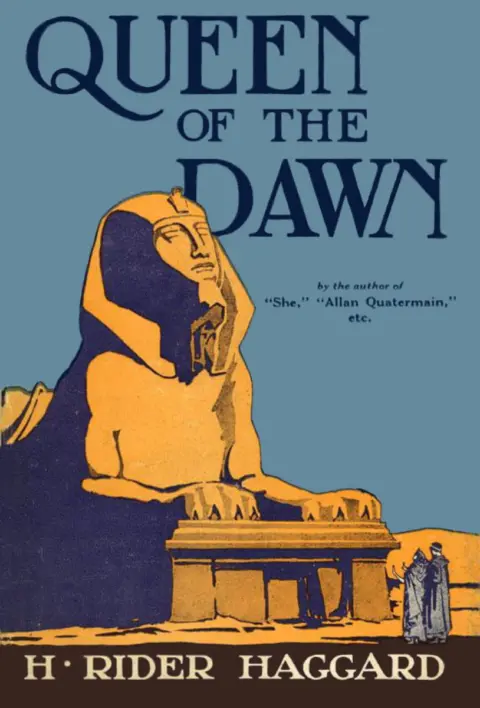
H. Rider (Henry Rider) Haggard
H. Rider (Henry Rider) Haggard
H. Rider (Henry Rider) Haggard
BEHIND THE BOOK
This eBook is for the use of anyone anywhere in the United States and most other parts of the world at no cost and with almost no restrictions whatsoever. You may copy it, give it away or re-use it under the terms of the Project Gutenberg License included with this eBook or online at www.gutenberg.org. If you are not located in the United States, you will have to check the laws of the country where you are located before using this eBook. Read the source licence.
The original source file, including credits and licence, is retained by this library. Request an original-format copy at no charge. Please include the book title and Project Gutenberg identifier #5175.
KEEP YOUR CURIOSITY GOING
Cécile Tormay

Moritz Busch
Coulson Kernahan
John L. Ransom

Maurice Baring
Frances Wright