THE CLASSIC COLLECTION✦Heu-Heu, or The monsterCLASSIC FREE BOOKS
Heu-Heu, or The monster
H. Rider (Henry Rider) Haggard
THE CLASSIC COLLECTION · 1901
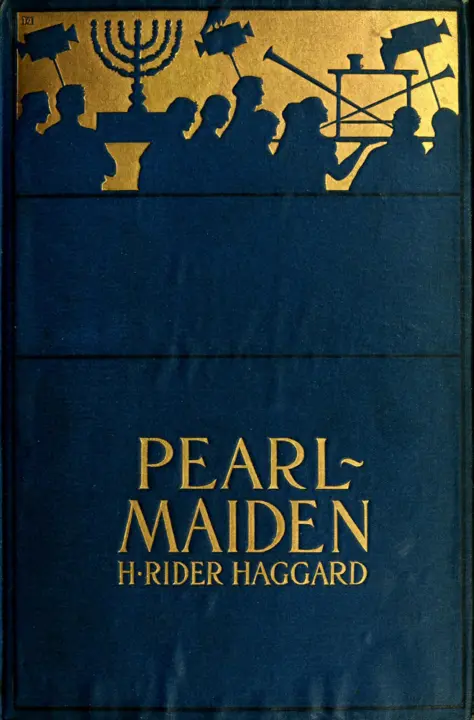
"Pearl-Maiden: A Tale of the Fall of Jerusalem" by H. Rider Haggard is a historical novel written in the early 20th century. The story unfolds against the backdrop of Jerusalem's tumultuous period under Roman rule, focusing on the harrowing experiences of its inhabitants as they grapple with oppression and the impending fall of their city. Central to the narrative are the characters Rachel, a noble Jewish woman, and Nehushta, her devoted slave and protector, as they face the brutal realities of persecution for their Christian faith. At the start of the novel, we are introduced to Cæsarea, where King Agrippa celebrates a festival while dark fates loom for captured Christians in the nearby prison. The ominous atmosphere sets the stage for a day filled with grisly spectacles involving gladiatorial combats and cruel entertainments, culminating in plans to sacrifice innocent Christians to wild beasts. Rachel and Nehushta are among those condemned, navigating fear and determination as they share poignant conversations about faith, family, and the child Rachel bears. While darkness hovers, their strength and bond echo against the backdrop of despair, indicating both personal and spiritual resilience amidst catastrophic events.
Introduction adapted from the source catalogue; source summaries may be automatically generated.
Free to read · English · 134,394 words · No account needed
MAKE TIME FOR A GOOD BOOK
On by default. Untick to stop anonymous reading totals. Each page counts after 10 seconds in view. How this works.
Anonymous counting is on unless you have switched it off.
Here his spirits revived somewhat, since he knew that before long his chamberlain, Saturius, would appear with the lovely Jewish maiden upon whom he had set his fancy. This at least was certain, for he had arranged that the auction should be held that evening and instructed him to buy her at all costs, even for a thousand sestertia. Indeed, who would dare to bid for a slave that the Prince Domitian desired?
Learning that Saturius had not yet arrived, he went to his private chambers, and to pass away the time commanded his most beautiful slaves to dance before him, where he inflamed himself by drinking more wine of a vintage that he loved. As the fumes of the strong liquor mounted to his brain the pains in his head ceased, at any rate for a while. Very soon he became half-drunk, and as was his nature when in drink, savage. One of the dancing slaves stumbled and growing nervous stepped out of time, whereon he ordered the poor half-naked girl to be scourged before him by the hands of her own companions. Happily for her, however, before the punishment began a slave arrived with the intelligence that Saturius waited without.
“What, alone?” said the prince, springing to his feet.
“Nay, lord,” said the slave, “there is a woman with him.”
At this news instantly his ill-temper was forgotten.
“Let that girl go,” he said, “and bid her be more careful another time. Away, all the lot of you, I wish to be private. Now, slave, bid the worthy Saturius enter with his charge.”
Presently the curtains were drawn apart and through them came Saturius rubbing his hands and smiling somewhat nervously, followed by a woman wrapped in a long cloak and veiled. He began to offer the customary salutations, but Domitian cut him short.
“Rise, man,” he said. “That sort of thing is very well in public, but I don’t want it here. So you have got her,” he added, eyeing the draped form in the background.
“Yes,” replied Saturius doubtfully.
“Good, your services shall be remembered. You were ever a discreet and faithful agent. Did the bidding run high?”
“Oh! my lord, enormous, ee—normous. I never heard such bidding,” and he stretched out his hands.
“Impertinence! Who dared to compete with me?” remarked Domitian. “Well, what did you have to give?”
“Fifty sestertia, my lord.”
“Fifty sestertia?” answered Domitian with an air of relief. “Well, of course it is enough, but I have known beautiful maidens fetch more. By the way, dear one,” he went on, addressing the veiled woman, “you must, I fear, be tired after all that weary, foolish show.”
Your reading position is saved on this browser. Take it to another device with a library code. Reading pages adapt to text, rather than matching a printed edition.
H. Rider (Henry Rider) Haggard
H. Rider (Henry Rider) Haggard
H. Rider (Henry Rider) Haggard
H. Rider (Henry Rider) Haggard
BEHIND THE BOOK
This eBook is for the use of anyone anywhere in the United States and most other parts of the world at no cost and with almost no restrictions whatsoever. You may copy it, give it away or re-use it under the terms of the Project Gutenberg License included with this eBook or online at www.gutenberg.org. If you are not located in the United States, you will have to check the laws of the country where you are located before using this eBook. Read the source licence.
The original source file, including credits and licence, is retained by this library. Request an original-format copy at no charge. Please include the book title and Project Gutenberg identifier #5175.
KEEP YOUR CURIOSITY GOING
Cécile Tormay

Moritz Busch
Coulson Kernahan
John L. Ransom

Maurice Baring
Frances Wright