THE CLASSIC COLLECTION✦Heu-Heu, or The monsterCLASSIC FREE BOOKS
Heu-Heu, or The monster
H. Rider (Henry Rider) Haggard
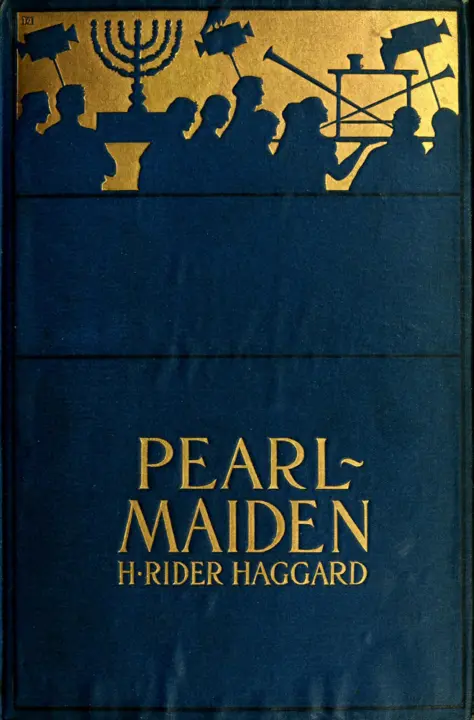
THE CLASSIC COLLECTION · 1901
"Pearl-Maiden: A Tale of the Fall of Jerusalem" by H. Rider Haggard is a historical novel written in the early 20th century. The story unfolds against the backdrop of Jerusalem's tumultuous period under Roman rule, focusing on the harrowing experiences of its inhabitants as they grapple with oppression and the impending fall of their city. Central to the narrative are the characters Rachel, a noble Jewish woman, and Nehushta, her devoted slave and protector, as they face the brutal realities of persecution for their Christian faith. At the start of the novel, we are introduced to Cæsarea, where King Agrippa celebrates a festival while dark fates loom for captured Christians in the nearby prison. The ominous atmosphere sets the stage for a day filled with grisly spectacles involving gladiatorial combats and cruel entertainments, culminating in plans to sacrifice innocent Christians to wild beasts. Rachel and Nehushta are among those condemned, navigating fear and determination as they share poignant conversations about faith, family, and the child Rachel bears. While darkness hovers, their strength and bond echo against the backdrop of despair, indicating both personal and spiritual resilience amidst catastrophic events.
Introduction adapted from the source catalogue; source summaries may be automatically generated.
Free to read · English · 134,394 words · No account needed
MAKE TIME FOR A GOOD BOOK
On by default. Untick to stop anonymous reading totals. Each page counts after 10 seconds in view. How this works.
Anonymous counting is on unless you have switched it off.
She shook her head. “No, but the dead forbid it, and rather will I join them than break their command.”
Again Marcus thought and spoke.
“Well, then, since I must, I will become a Christian.”
She looked at him sadly and answered:
“It is not enough. Do you remember what I told you far away in the village of the Essenes, that this is no matter of casting incense on an altar, but rather one of a changed spirit. When you can say those words from your heart as well as with your lips, then, Marcus, I will listen to you, but unless God calls you this you can never do.”
“What then do you propose?” he asked.
“I? I have not had time to think. To go away, I suppose.”
“To Domitian?” he queried. “Nay, forgive me, but a sore heart makes
bitter lips.”
“I am glad you asked forgiveness for those words, Marcus,” she said quivering. “What need is there to insult a slave?”
The word seemed to suggest a new train of thought to Marcus.
“Yes,” he said, “a slave—my slave whom I have bought at a great price. Well, why should I let you go? I am minded to keep you.”
“Marcus, you can keep me if you will, but then your sin against your own honour will be greater even than your sin against me.”
“Sin!” he said, passionately. “What sin? You say you cannot marry me, not because you do not wish it, if I understand you right, but for other reasons which have weight, at any rate with you. But the dead give no command as to whom you should love.”
“No, my love is my own, but if it is not lawful it can be denied.”
“Why should it be denied?” he asked softly and coming towards her. “Is there not much between you and me? Did not you, brave and blessed woman that you are, risk your life for my sake in the Old Tower at Jerusalem? Did you not for my sake stand there upon the gate Nicanor to perish miserably? And I, though it be little, have I not done something for you? Have I not so soon as your message reached me, journeyed here to Rome, at the cost, perhaps, of what I value more than life—my honour?”
“Your honour?” she asked. “Why your honour?”
“Because those who have been taken prisoner by the enemy and escaped are held to be cowards among the Romans,” he answered bitterly, “and it may be that such a lot awaits me.”
“Coward! You a coward, Marcus?”
Your reading position is saved on this browser. Take it to another device with a library code. Reading pages adapt to text, rather than matching a printed edition.
H. Rider (Henry Rider) Haggard
H. Rider (Henry Rider) Haggard
H. Rider (Henry Rider) Haggard
H. Rider (Henry Rider) Haggard
BEHIND THE BOOK
This eBook is for the use of anyone anywhere in the United States and most other parts of the world at no cost and with almost no restrictions whatsoever. You may copy it, give it away or re-use it under the terms of the Project Gutenberg License included with this eBook or online at www.gutenberg.org. If you are not located in the United States, you will have to check the laws of the country where you are located before using this eBook. Read the source licence.
The original source file, including credits and licence, is retained by this library. Request an original-format copy at no charge. Please include the book title and Project Gutenberg identifier #5175.
KEEP YOUR CURIOSITY GOING
Cécile Tormay

Moritz Busch
Coulson Kernahan
John L. Ransom

Maurice Baring
Frances Wright