THE CLASSIC COLLECTION✦Heu-Heu, or The monsterCLASSIC FREE BOOKS
Heu-Heu, or The monster
H. Rider (Henry Rider) Haggard
THE CLASSIC COLLECTION · 1901
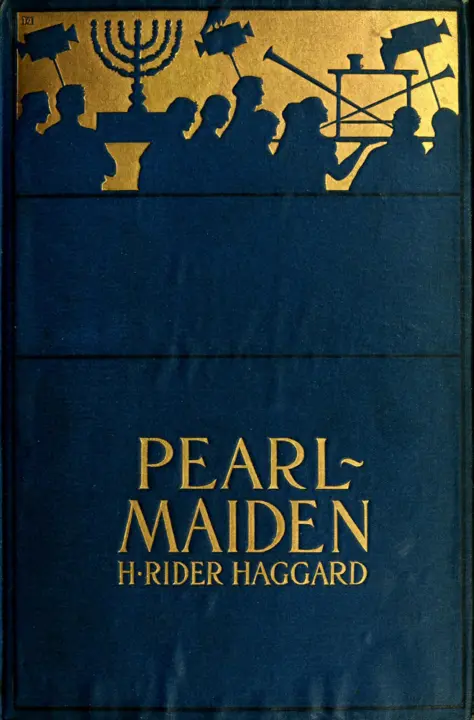
"Pearl-Maiden: A Tale of the Fall of Jerusalem" by H. Rider Haggard is a historical novel written in the early 20th century. The story unfolds against the backdrop of Jerusalem's tumultuous period under Roman rule, focusing on the harrowing experiences of its inhabitants as they grapple with oppression and the impending fall of their city. Central to the narrative are the characters Rachel, a noble Jewish woman, and Nehushta, her devoted slave and protector, as they face the brutal realities of persecution for their Christian faith. At the start of the novel, we are introduced to Cæsarea, where King Agrippa celebrates a festival while dark fates loom for captured Christians in the nearby prison. The ominous atmosphere sets the stage for a day filled with grisly spectacles involving gladiatorial combats and cruel entertainments, culminating in plans to sacrifice innocent Christians to wild beasts. Rachel and Nehushta are among those condemned, navigating fear and determination as they share poignant conversations about faith, family, and the child Rachel bears. While darkness hovers, their strength and bond echo against the backdrop of despair, indicating both personal and spiritual resilience amidst catastrophic events.
Introduction adapted from the source catalogue; source summaries may be automatically generated.
Free to read · English · 134,394 words · No account needed
MAKE TIME FOR A GOOD BOOK
On by default. Untick to stop anonymous reading totals. Each page counts after 10 seconds in view. How this works.
Anonymous counting is on unless you have switched it off.
“Fourteen hundred. I have fourteen hundred. Against you, worthy Saturius. Come, come, I must knock the lot down, which perhaps would not please some whom I could mention. Don’t be stingy, friend, you have a large purse to draw on, and it is called the Roman Empire. Now. Thank you, I have fifteen hundred. Well, my friend yonder. What! Have you had enough?” and he pointed to the Alexandrian merchant, who, with a groan, had turned aside and hidden his face in his hands.
“Knocked out, knocked out, it seems,” said the auctioneer, “and though it is little enough under all the circumstances for this lot, who is as lovely as she is historical, I suppose that I can scarcely expect——” and he looked around despondently.
Suddenly the old woman with the basket glanced up and, speaking in a quiet matter-of-fact voice but with a foreign accent, said:
“Two thousand.”
A titter of laughter went around the room.
“My dear madam?” queried the auctioneer, looking at her dubiously, “might I ask if you mean sestertii or sestertia?[*] Your pardon, but it has occurred to me that you might be confounding the two sums.”
[*] A sestertius was worth less than 2d., a sestertium was a sum of money of the value of about £8.
“Two thousand sestertia,” repeated the matter-of-fact voice with the
foreign accent.
“Well, well,” said the auctioneer, “I suppose that I must accept the bid. Friend Saturius, I have two thousand sestertia, and it is against you.”
“Against me it must remain, then,” replied the little man in a fury. “Do all the kings in the world want this girl? Already I have exceeded my limit by five hundred sestertia. I dare do no more. Let her go.”
“Don’t vex yourself, Saturius,” said the auctioneer, “bidding is one thing, paying another. At present I have a bona-fide bid of fifteen hundred from you. Unless this liberal but unknown lady is prepared with the cash I shall close on that. Do you understand, madam?”
“Perfectly,” answered the veiled old woman. “Being a stranger to Rome I thought it well to bring the gold with me, since strangers cannot expect credit.”
“To bring the gold with you!” gasped the auctioneer. “To bring two thousand sestertia with you! Where is it then?”
“Where? Oh! in my servant’s and my own baskets, and something more as well. Come, good sir, I have made my bid. Does the worthy gentleman advance?”
“No,” shouted Saturius. “You are being fooled, she has not got the
money.”
Your reading position is saved on this browser. Take it to another device with a library code. Reading pages adapt to text, rather than matching a printed edition.
H. Rider (Henry Rider) Haggard
H. Rider (Henry Rider) Haggard
H. Rider (Henry Rider) Haggard
H. Rider (Henry Rider) Haggard
BEHIND THE BOOK
This eBook is for the use of anyone anywhere in the United States and most other parts of the world at no cost and with almost no restrictions whatsoever. You may copy it, give it away or re-use it under the terms of the Project Gutenberg License included with this eBook or online at www.gutenberg.org. If you are not located in the United States, you will have to check the laws of the country where you are located before using this eBook. Read the source licence.
The original source file, including credits and licence, is retained by this library. Request an original-format copy at no charge. Please include the book title and Project Gutenberg identifier #5175.
KEEP YOUR CURIOSITY GOING
Cécile Tormay

Moritz Busch
Coulson Kernahan
John L. Ransom

Maurice Baring
Frances Wright