THE CLASSIC COLLECTION✦Heu-Heu, or The monsterCLASSIC FREE BOOKS
Heu-Heu, or The monster
H. Rider (Henry Rider) Haggard
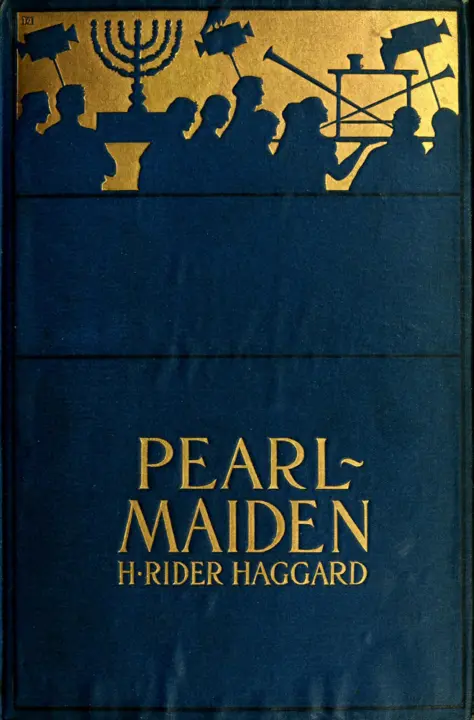
THE CLASSIC COLLECTION · 1901
"Pearl-Maiden: A Tale of the Fall of Jerusalem" by H. Rider Haggard is a historical novel written in the early 20th century. The story unfolds against the backdrop of Jerusalem's tumultuous period under Roman rule, focusing on the harrowing experiences of its inhabitants as they grapple with oppression and the impending fall of their city. Central to the narrative are the characters Rachel, a noble Jewish woman, and Nehushta, her devoted slave and protector, as they face the brutal realities of persecution for their Christian faith. At the start of the novel, we are introduced to Cæsarea, where King Agrippa celebrates a festival while dark fates loom for captured Christians in the nearby prison. The ominous atmosphere sets the stage for a day filled with grisly spectacles involving gladiatorial combats and cruel entertainments, culminating in plans to sacrifice innocent Christians to wild beasts. Rachel and Nehushta are among those condemned, navigating fear and determination as they share poignant conversations about faith, family, and the child Rachel bears. While darkness hovers, their strength and bond echo against the backdrop of despair, indicating both personal and spiritual resilience amidst catastrophic events.
Introduction adapted from the source catalogue; source summaries may be automatically generated.
Free to read · English · 134,394 words · No account needed
MAKE TIME FOR A GOOD BOOK
On by default. Untick to stop anonymous reading totals. Each page counts after 10 seconds in view. How this works.
Anonymous counting is on unless you have switched it off.
“In truth, no, father. When last I saw her she was a sooty, withered little thing whom Gallus yonder carried in his great arms, as a child might carry a large doll that he had rescued from the fire. Yes, I agree that she is beautiful and worthy of a very good place in the procession. Also she should fetch a large price afterwards, for that necklace of pearls goes with her—make a note of this, Scribe—and the reversion to considerable property in Tyre and elsewhere. This, by special favour, she will be allowed to inherit from her grandfather, the old rabbi, Benoni, one of the Sanhedrim, who perished in the burning of the Temple.”
“How can a slave inherit property, son?” asked Vespasian, raising his
eyebrows.
“I don’t know,” answered Titus with a laugh. “Perhaps Domitian can tell you. He says that he has studied law. But so I have decreed.”
“A slave,” interrupted Domitian wisely, “has no rights and can hold no property, but the Cæsar of the East”—here he sneered—“can declare that certain lands and goods will pass to the highest bidder with the person of the slave, and this, Vespasian Cæsar, my father, is what I understand Titus Cæsar, my brother, has thought it good to do in the present instance.”
“Yes,” said Titus in a quiet voice, though his face flushed, “that, Domitian, is what I have thought it good to do. In such a matter is not my will enough?”
“Conqueror of the East,” replied Domitian, “Thrower-down of the mountain stronghold called Jerusalem, to which the topless towers of Ilium were as nothing, and Exterminator of a large number of misguided fanatics, in what matter is not your will enough? Yet a boon, O Cæsar. As you are great, be generous,” and with a mocking gesture he bowed the knee to Titus.
“What boon do you seek of me, brother, who know that all I have is, or,” he added slowly, “will be—yours?”
“One that is already granted by your precious words, Titus. Of all you have, which is much, I seek only this Pearl-Maiden, who has taken my fancy. The girl only, not her property in Tyre, wherever that may be, which you can keep for yourself.”
Vespasian looked up, but before he could speak, Titus answered quickly:
“I said, Domitian, ‘all I have.’ This maid I have not, therefore the words do not apply. I have decreed that the proceeds of the sale of these captives is to be divided equally between the wounded soldiers and the poor of Rome. Therefore she is their property, not mine. I will not rob them.”
Your reading position is saved on this browser. Take it to another device with a library code. Reading pages adapt to text, rather than matching a printed edition.
H. Rider (Henry Rider) Haggard
H. Rider (Henry Rider) Haggard
H. Rider (Henry Rider) Haggard
H. Rider (Henry Rider) Haggard
BEHIND THE BOOK
This eBook is for the use of anyone anywhere in the United States and most other parts of the world at no cost and with almost no restrictions whatsoever. You may copy it, give it away or re-use it under the terms of the Project Gutenberg License included with this eBook or online at www.gutenberg.org. If you are not located in the United States, you will have to check the laws of the country where you are located before using this eBook. Read the source licence.
The original source file, including credits and licence, is retained by this library. Request an original-format copy at no charge. Please include the book title and Project Gutenberg identifier #5175.
KEEP YOUR CURIOSITY GOING
Cécile Tormay

Moritz Busch
Coulson Kernahan
John L. Ransom

Maurice Baring
Frances Wright