THE CLASSIC COLLECTION✦Heu-Heu, or The monsterCLASSIC FREE BOOKS
Heu-Heu, or The monster
H. Rider (Henry Rider) Haggard
THE CLASSIC COLLECTION · 1901
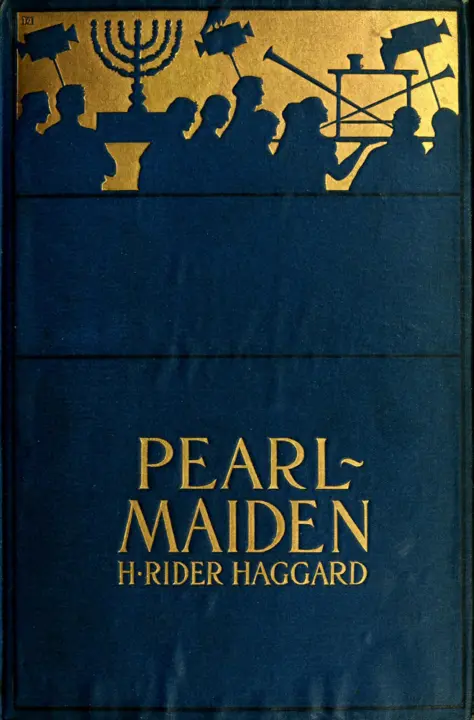
"Pearl-Maiden: A Tale of the Fall of Jerusalem" by H. Rider Haggard is a historical novel written in the early 20th century. The story unfolds against the backdrop of Jerusalem's tumultuous period under Roman rule, focusing on the harrowing experiences of its inhabitants as they grapple with oppression and the impending fall of their city. Central to the narrative are the characters Rachel, a noble Jewish woman, and Nehushta, her devoted slave and protector, as they face the brutal realities of persecution for their Christian faith. At the start of the novel, we are introduced to Cæsarea, where King Agrippa celebrates a festival while dark fates loom for captured Christians in the nearby prison. The ominous atmosphere sets the stage for a day filled with grisly spectacles involving gladiatorial combats and cruel entertainments, culminating in plans to sacrifice innocent Christians to wild beasts. Rachel and Nehushta are among those condemned, navigating fear and determination as they share poignant conversations about faith, family, and the child Rachel bears. While darkness hovers, their strength and bond echo against the backdrop of despair, indicating both personal and spiritual resilience amidst catastrophic events.
Introduction adapted from the source catalogue; source summaries may be automatically generated.
Free to read · English · 134,394 words · No account needed
MAKE TIME FOR A GOOD BOOK
On by default. Untick to stop anonymous reading totals. Each page counts after 10 seconds in view. How this works.
Anonymous counting is on unless you have switched it off.
“This renegade is insolent, like all her accursed sect,” said the judge, spitting on the ground. “Captain, tell your story, and be brief.”
He obeyed. After him that soldier was examined from whose hand Miriam had struck the lantern. Then Caleb was called and asked what he knew of the matter.
“Nothing,” he answered, “except that I took the Roman and saw him laid in the tower, for he was senseless. When I returned the Roman had gone, and this lady Miriam was there, who said that he had escaped by the doorway. I did not see them together, and know no more.”
“That is a lie,” said one of the judges roughly. “You told the captain that Marcus had been her lover. Why did you say this?”
“Because years ago by Jordan she, who is a sculptor, graved a likeness of him in stone,” answered Caleb.
“Are artists always the lovers of those whom they picture, Caleb?” asked Benoni, speaking for the first time.
Caleb made no answer, but one of the Sanhedrim, a sharp-faced man, named Simeon, the friend of Simon, the son of Gioras, the Zealot, who sat next to him, cried, “Cease this foolishness; the daughter of Satan is beautiful; doubtless Caleb desires her for himself; but what has that to do with us?” though he added vindictively, “it should be remembered against him that he is striving to hide the truth.”
“There is no evidence against this woman, let her be set free,”
exclaimed Benoni.
“So we might expect her grandfather to think,” said Simeon, with sarcasm. “Little wonder that we are smitten with the Sword of God when Rabbis shelter Christians because they chance to be of their house, and when warriors bear false witness concerning them because they chance to be fair. For my part I say that she is guilty, and has hidden the man away in some secret place. Otherwise why did she dash the light from the soldier’s hand?”
“Mayhap to hide herself lest she should be attacked,” answered another, “though how she came in the tower, I cannot guess.”
“I lived there,” said Miriam. “It was bricked up until yesterday and
safe from robbers.”
“So!” commented that judge, “you lived alone in a deserted tower like a bat or an owl, and without food or water. Then these must have been brought to you from without the walls, perhaps by some secret passage that was known to none, down which you loosed the Prefect, but had no time to follow him. Woman, you are a Roman spy, as a Christian well might be. I say that she is worthy of death.”
Then Benoni rose and rent his robes.
Your reading position is saved on this browser. Take it to another device with a library code. Reading pages adapt to text, rather than matching a printed edition.
H. Rider (Henry Rider) Haggard
H. Rider (Henry Rider) Haggard
H. Rider (Henry Rider) Haggard
H. Rider (Henry Rider) Haggard
BEHIND THE BOOK
This eBook is for the use of anyone anywhere in the United States and most other parts of the world at no cost and with almost no restrictions whatsoever. You may copy it, give it away or re-use it under the terms of the Project Gutenberg License included with this eBook or online at www.gutenberg.org. If you are not located in the United States, you will have to check the laws of the country where you are located before using this eBook. Read the source licence.
The original source file, including credits and licence, is retained by this library. Request an original-format copy at no charge. Please include the book title and Project Gutenberg identifier #5175.
KEEP YOUR CURIOSITY GOING
Cécile Tormay

Moritz Busch
Coulson Kernahan
John L. Ransom

Maurice Baring
Frances Wright