THE CLASSIC COLLECTION✦Heu-Heu, or The monsterCLASSIC FREE BOOKS
Heu-Heu, or The monster
H. Rider (Henry Rider) Haggard
THE CLASSIC COLLECTION · 1901
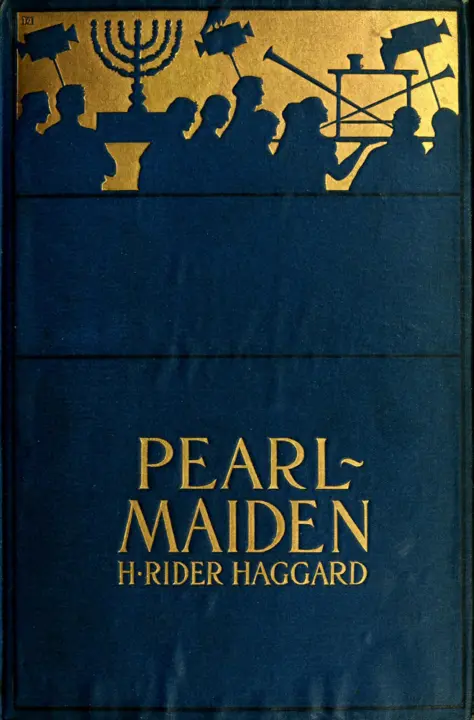
"Pearl-Maiden: A Tale of the Fall of Jerusalem" by H. Rider Haggard is a historical novel written in the early 20th century. The story unfolds against the backdrop of Jerusalem's tumultuous period under Roman rule, focusing on the harrowing experiences of its inhabitants as they grapple with oppression and the impending fall of their city. Central to the narrative are the characters Rachel, a noble Jewish woman, and Nehushta, her devoted slave and protector, as they face the brutal realities of persecution for their Christian faith. At the start of the novel, we are introduced to Cæsarea, where King Agrippa celebrates a festival while dark fates loom for captured Christians in the nearby prison. The ominous atmosphere sets the stage for a day filled with grisly spectacles involving gladiatorial combats and cruel entertainments, culminating in plans to sacrifice innocent Christians to wild beasts. Rachel and Nehushta are among those condemned, navigating fear and determination as they share poignant conversations about faith, family, and the child Rachel bears. While darkness hovers, their strength and bond echo against the backdrop of despair, indicating both personal and spiritual resilience amidst catastrophic events.
Introduction adapted from the source catalogue; source summaries may be automatically generated.
Free to read · English · 134,394 words · No account needed
MAKE TIME FOR A GOOD BOOK
On by default. Untick to stop anonymous reading totals. Each page counts after 10 seconds in view. How this works.
Anonymous counting is on unless you have switched it off.
At length tidings did come—the best of tidings. One day, wearying of the house, with the permission of her grandfather, and escorted by servants, Miriam had gone to walk in the gardens that he owned to the north of that part of the city on the mainland, which was called Palætyrus. They were lovely gardens, well watered and running down to the sea-edge, and in them grew beautiful palms and other trees, with fruitful shrubs and flowers. Here, when they had roamed a while, Miriam and Nehushta sat down upon the fallen column of some old temple and rested. Suddenly they heard a footstep, and Miriam looked up to see before her a Roman officer, clad in a cloak that showed signs of sea-travel, and, guiding him, one of Benoni’s servants.
The officer, a rough but kindly looking man of middle age, bowed to her, asking in Greek if he spoke to the lady Miriam, the granddaughter of Benoni the Jew, she who had been brought up among the Essenes.
“Sir, I am she,” answered Miriam.
“Then, lady, I, who am named Gallus, have an errand to perform”; and drawing from his robe a letter tied with silk and sealed, and with the letter a package, he handed them to her.
“Who sends these?” she asked, hope shining in her eyes, “and whence
come they?”
“From Rome, lady, as fast as sails could waft them and me. And the sender is the noble Marcus, called the Fortunate.”
“Oh!” said Miriam, blushing to her eyes, “tell me, sir, is he well?”
“Not so well but that such a look as that, lady, would better him, or any other man, could he be here to see it,” answered the Roman, gazing at her with admiration.
“Did you then leave him ill? I do not understand.”
“Nay, his health seemed sound, and his uncle Caius being dead his wealth can scarce be counted, or so they say, since the old man made him his heir. Perhaps that is why the divine Nero has taken such a fancy to him that he can scarce leave the palace. Therefore I cannot say that Marcus is well to-day, since sometimes Nero’s friends are short-lived. Nay, be not frightened, I did but jest; your Marcus is safe enough. Read the letter, lady, and waste no time. As for me, my mission is fulfilled. Thank me not; it is reward enough to have seen that sweet face of yours. Fortunate indeed is the star of Marcus, and, though I am jealous of the man, for your sake I pray that it may lead him back to you. Lady, farewell.”
Your reading position is saved on this browser. Take it to another device with a library code. Reading pages adapt to text, rather than matching a printed edition.
H. Rider (Henry Rider) Haggard
H. Rider (Henry Rider) Haggard
H. Rider (Henry Rider) Haggard
H. Rider (Henry Rider) Haggard
BEHIND THE BOOK
This eBook is for the use of anyone anywhere in the United States and most other parts of the world at no cost and with almost no restrictions whatsoever. You may copy it, give it away or re-use it under the terms of the Project Gutenberg License included with this eBook or online at www.gutenberg.org. If you are not located in the United States, you will have to check the laws of the country where you are located before using this eBook. Read the source licence.
The original source file, including credits and licence, is retained by this library. Request an original-format copy at no charge. Please include the book title and Project Gutenberg identifier #5175.
KEEP YOUR CURIOSITY GOING
Cécile Tormay

Moritz Busch
Coulson Kernahan
John L. Ransom

Maurice Baring
Frances Wright