THE CLASSIC COLLECTION✦Heu-Heu, or The monsterCLASSIC FREE BOOKS
Heu-Heu, or The monster
H. Rider (Henry Rider) Haggard
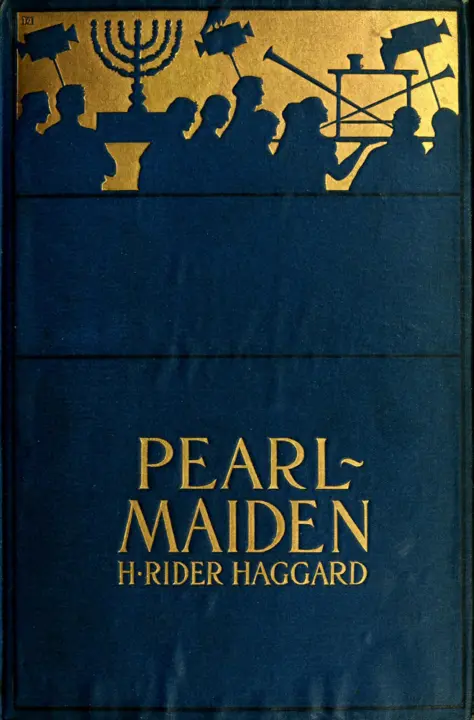
THE CLASSIC COLLECTION · 1901
"Pearl-Maiden: A Tale of the Fall of Jerusalem" by H. Rider Haggard is a historical novel written in the early 20th century. The story unfolds against the backdrop of Jerusalem's tumultuous period under Roman rule, focusing on the harrowing experiences of its inhabitants as they grapple with oppression and the impending fall of their city. Central to the narrative are the characters Rachel, a noble Jewish woman, and Nehushta, her devoted slave and protector, as they face the brutal realities of persecution for their Christian faith. At the start of the novel, we are introduced to Cæsarea, where King Agrippa celebrates a festival while dark fates loom for captured Christians in the nearby prison. The ominous atmosphere sets the stage for a day filled with grisly spectacles involving gladiatorial combats and cruel entertainments, culminating in plans to sacrifice innocent Christians to wild beasts. Rachel and Nehushta are among those condemned, navigating fear and determination as they share poignant conversations about faith, family, and the child Rachel bears. While darkness hovers, their strength and bond echo against the backdrop of despair, indicating both personal and spiritual resilience amidst catastrophic events.
Introduction adapted from the source catalogue; source summaries may be automatically generated.
Free to read · English · 134,394 words · No account needed
MAKE TIME FOR A GOOD BOOK
On by default. Untick to stop anonymous reading totals. Each page counts after 10 seconds in view. How this works.
Anonymous counting is on unless you have switched it off.
“Here may be an answer to the riddle,” said the President. “We know of this Benoni, also that he purposed to demand his granddaughter of us, though until he did so it was not for us to speak.” Then he put it to the Court that Benoni should be admitted.
To this they agreed, and presently the Jew came, splendidly attired, his long white beard flowing down a robe that glittered with embroideries of gold and silver. Entering the dim, cool hall, he stared in amazement at the long half-circles of venerable, white-robed men who were gathered there. Next his quick eyes fell upon the lovely maiden who, attended by the dark-visaged Nehushta, sat before them on a seat of honour; and looking, he guessed that she must be Miriam.
“Little wonder,” reflected Benoni to himself, “that all men seem to love this girl, since at the first sight of her my own heart softens.”
Then he bowed to the President of the Court and the President bowed back in answer. But not one of the rest so much as moved his head, since already every man of them hated this stranger who was about to carry away her whom they called their Queen.
“Sirs,” said Benoni breaking the silence, “I come here upon a strange errand—namely, to ask of you a maid whom I believe to be my granddaughter, of whose existence I learned not long ago, and whom, as it seems, you have sheltered from her birth. Is she among you here?” and he looked at Miriam.
“The lady Miriam sits yonder,” said the President. “You are right in naming her your granddaughter, as we have known her to be from the beginning.”
“Then why,” said Benoni, “did I not know it also?”
“Because,” answered the President quietly, “we did not think it fitting to deliver a child that was committed to our charge, to the care of one who had brought her father, and tried to bring her mother, his own seed, to the most horrible of deaths.”
As he spoke he fixed his eyes indignantly upon Benoni; as did every man of all that great company, till even the bold-faced Jew dropped his head abashed.
“I am not here,” he said, recovering himself, “to make defence of what I have done, or have not done in the past. I am here to demand that my grandchild, now as I perceive a woman grown, may be handed over to me, her natural guardian.”
“Before this can be considered,” answered the President, “we who have been her guardians for so many years, should require guarantees and sureties.”
“What guarantees, and what sureties?” asked Benoni.
Your reading position is saved on this browser. Take it to another device with a library code. Reading pages adapt to text, rather than matching a printed edition.
H. Rider (Henry Rider) Haggard
H. Rider (Henry Rider) Haggard
H. Rider (Henry Rider) Haggard
H. Rider (Henry Rider) Haggard
BEHIND THE BOOK
This eBook is for the use of anyone anywhere in the United States and most other parts of the world at no cost and with almost no restrictions whatsoever. You may copy it, give it away or re-use it under the terms of the Project Gutenberg License included with this eBook or online at www.gutenberg.org. If you are not located in the United States, you will have to check the laws of the country where you are located before using this eBook. Read the source licence.
The original source file, including credits and licence, is retained by this library. Request an original-format copy at no charge. Please include the book title and Project Gutenberg identifier #5175.
KEEP YOUR CURIOSITY GOING
Cécile Tormay

Moritz Busch
Coulson Kernahan
John L. Ransom

Maurice Baring
Frances Wright