THE CLASSIC COLLECTION✦The sprightly romance of MarsacCLASSIC FREE BOOKS
The sprightly romance of Marsac
Molly Elliot Seawell
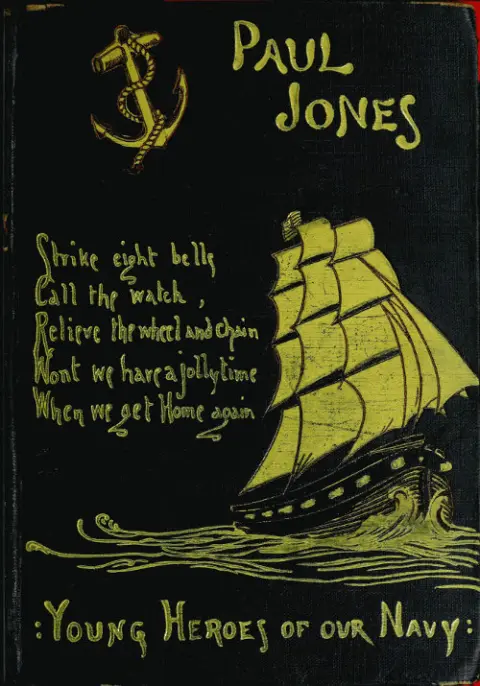
THE CLASSIC COLLECTION · 1893
"Paul Jones" by Molly Elliot Seawell is a historical novel written in the late 19th century. This work captures the life and adventures of the famed naval officer John Paul Jones, whose contributions were pivotal in establishing the U.S. Navy. The narrative introduces Paul Jones as a determined and courageous young lieutenant in the Continental Navy, delving into his naval battles against the British and his deep sense of patriotism. The opening of the novel presents a vivid scene in January 1776, focusing on Paul Jones at the Philadelphia docks as he anticipates his upcoming command of a naval ship. Through his reflections, the reader gains insight into his modest beginnings as the son of a Scottish gardener and his fierce commitment to the American cause. As he sets out to enlist the help of a young boy named Danny Dixon, who wishes to fight alongside him, the foundation of companionship begins to form. Jones's interactions highlight his leadership qualities and the early challenges that await him in his quest for glory at sea, setting the tone for the unfolding excitement and adventure in the narrative.
Introduction adapted from the source catalogue; source summaries may be automatically generated.
Free to read · English · 48,963 words · No account needed
MAKE TIME FOR A GOOD BOOK
On by default. Untick to stop anonymous reading totals. Each page counts after 10 seconds in view. How this works.
Anonymous counting is on unless you have switched it off.
In the bustle and excitement of the change Paul Jones had quite forgotten Danny Dixon. While making his final preparations in his cabin to change his quarters to the Providence, Danny appeared at the door with his best clothes on and a bundle in his hand.
“What is it, Danny?” asked Paul Jones kindly.
“Nothin’, sir,” answered Danny, “’cep’ I’m ready to go, sir, whenever
you are.”
“What do you mean?” said Paul Jones, looking closely at the boy.
“Why, sir, ain’t I a-goin’ with you on the Providence?” replied Danny, in a surprised voice. “When I heard you had done got your orders, I went and made up my kit. Mr. Green, the quartermaster, come along, sir, and he says you axed for him to go with you, and that you had said you was goin’ to make me a boatswain’s mate, and for me to git my kit. I wanted to go with you anyhow, sir, though I didn’t expect to be nothin’ but a ship’s boy; but when you axed for me—”
The boy’s simplicity was so genuine that Paul Jones could not laugh at him. He only said, smiling a little:
“Very well. Green is to be my quartermaster, and I’ll see the captain, and perhaps he may let me have you.”
“Thankee, sir,” replied Danny gratefully, and sitting down outside the cabin door he kept his earnest eyes fixed on Paul Jones, like a dog on his master. Presently Paul Jones came out, and after a few words with the captain, Danny was told that he might go along with the new commander of the Providence. Paul Jones was touched by the boy’s devotion, and took him for the captain’s cabin boy.
Paul Jones had good reason to be satisfied with all the people he had brought from the Alfred. Bill Green, besides being a first-class quartermaster, was such a pleasant, cheery, waggish fellow that he kept everything forward in a good humor. Moreover, he had a very valuable talent—he could sing beautifully, and had a store of sea songs, some of which he had picked up in the British navy, where he had served some time, and others were patriotic songs which were often composed and much sung in those days. But Bill had a weakness—he always professed to have composed all his songs himself, and to have written them out, when it was a well-known fact that he could not write a word. He had signed the ship’s books with a cross instead of his name, which he explained by saying: “The officer, he was in a hurry, and it was gittin’ on toward my watch, and I didn’t have no half hour to spend writin’ ‘Bill Green,’ so I jest made a cross mark, not thinkin’ as how nobody would suspicion I couldn’t write; and then, it takes so much o’ my time to write my songs, I ain’t got none for to write my name.” All this was received with many sly winks by the men, but they were willing to humor the handsome quartermaster in anything, he was such a favorite with them. Bill, also, like other artists, liked to be urged. This, too, was fully understood, and he always yielded to pressure.
Your reading position is saved on this browser. Take it to another device with a library code. Reading pages adapt to text, rather than matching a printed edition.
Molly Elliot Seawell
Molly Elliot Seawell
Molly Elliot Seawell
Molly Elliot Seawell
BEHIND THE BOOK
This eBook is for the use of anyone anywhere in the United States and most other parts of the world at no cost and with almost no restrictions whatsoever. You may copy it, give it away or re-use it under the terms of the Project Gutenberg License included with this eBook or online at www.gutenberg.org. If you are not located in the United States, you will have to check the laws of the country where you are located before using this eBook. Read the source licence.
The original source file, including credits and licence, is retained by this library. Request an original-format copy at no charge. Please include the book title and Project Gutenberg identifier #61784.
KEEP YOUR CURIOSITY GOING
Wilfrid Scawen Blunt
Wilfrid Scawen Blunt

E. W. (Edgar Watson) Howe
Cécile Tormay

Moritz Busch
Coulson Kernahan