
The story of Betty
Carolyn Wells
THE CLASSIC COLLECTION · 1909
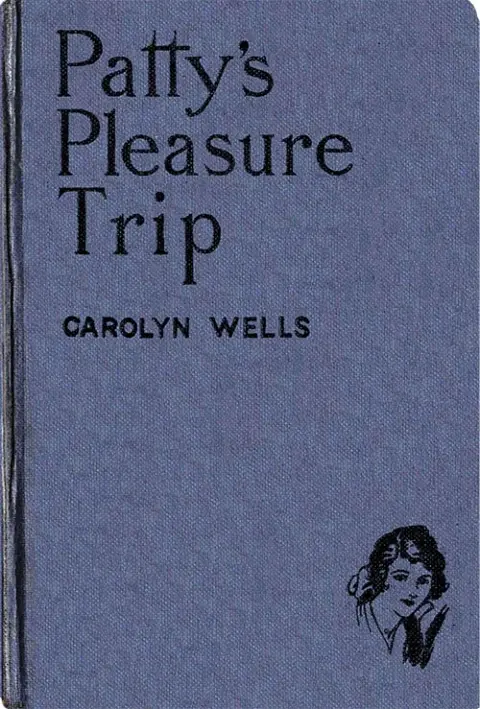
"Patty's Pleasure Trip" by Carolyn Wells is a novel written in the early 20th century. The story follows the adventures of Patty Fairfield, a spirited young American girl, as she navigates her summer in England with friends and prepares for an exciting journey to Italy. The novel captures the themes of friendship, youthful exuberance, and the anticipation of travel. At the start of the book, Patty is enjoying a carefree summer at Markleham Grange, the home of her friend Lady Kitty. As she spends her days reading and teasing Kitty about hat designs, the narrative introduces a mix of colorful characters, including the humorous Floyd Austin and the scholarly Peter Homer. The pace picks up when Patty receives a telegram from her father signaling a sudden change in plans, leading to an unexpected trip to Rome instead of returning home. This sets the stage for an adventure filled with exploration, vibrant dialogues, and the charms of European travel, promising a delightful ride through Patty's evolving experiences and relationships.
Introduction adapted from the source catalogue; source summaries may be automatically generated.
Free to read · English · 55,821 words · No account needed
MAKE TIME FOR A GOOD BOOK
On by default. Untick to stop anonymous reading totals. Each page counts after 10 seconds in view. How this works.
Anonymous counting is on unless you have switched it off.
“A whole lot better! I’ll try hard to win that.”
“But I don’t understand the contest part,” said Patty; “what do we do?”
“Why, Caddy has written four lines of a Limerick,” explained Peter. “I’ll read those,--you may jot them down if you like. Then, each tries to write a fifth line, and whichever is judged the best gets the prize.”
“Who’s the judge?”
“Well, I’ll appoint Mrs. Fairfield and Mrs. Snippy to judge the efforts. Now, listen; here are the first four lines:
“‘There was a young tourist from home,
Who Baedekered all over Rome.
Said a lady, “My dear,
Do you like the things here?”’
Now, you see you must each make a fifth line.”
“Oh, that’s easy,” said Milly, who was a born rhymer.
They all sat silently for a few moments, scribbling, or nibbling, at
their pencils.
“It’s harder than I thought,” confessed Patty. “I can’t think of a thing that rhymes and makes sense both.”
At last the lines were done, and given over to the judges.
“We’ve decided,” said Nan, soon after. “But we’ll read first the ones that did not win the prize. They’re all awfully good, I think. Here’s Patty’s first; shall I read the four lines?”
“No, we all know those; just read the fifth.”
“Very well, this is it. ‘She said, not when they say “write a pome!”’”
“That’s capital. Are the others better?”
“Some are,” said Nan, going on. “Here’s Floyd Austin’s; ‘She said, “Well,--I have bought a pearl comb.”’”
“Oh, I think that’s good,” cried Patty, “I’d give that the prize. Go on, Nan, this is fun.”
“This is Flo’s. ‘“Well,”’ she said, ‘“it surpasses Cape Nome.”’”
“That’s all right! Next!”
“Here’s Lancaster’s: ‘She said, “All except St. Peter’s Dome!”’”
“Whew! I suppose she tried to climb it,” said Caddy. “I did once!”
“This is a good one,” said Nan; “it’s Violet’s; it almost took the prize: ‘She said, “No, I like our Hippodrome!”’”
“Oh, that’s fine!” cried Patty, clapping her hands. “Why didn’t I think of that? It was so hard to find a rhyme.”
“But here’s the prize one. It’s Milly’s. I think you’ll have to yield her the palm for composition. I’ll read the whole this time.
“‘There was a young tourist from home,
Who Baedekered all over Rome.
Said a lady, “My dear,
Do you like the things here?”
She looked up and answered, “Why, no’m.”’
Your reading position is saved on this browser. Take it to another device with a library code. Reading pages adapt to text, rather than matching a printed edition.
Carolyn Wells

Carolyn Wells & Harry Persons Taber

Carolyn Wells

Carolyn Wells
BEHIND THE BOOK
This eBook is for the use of anyone anywhere in the United States and most other parts of the world at no cost and with almost no restrictions whatsoever. You may copy it, give it away or re-use it under the terms of the Project Gutenberg License included with this eBook or online at www.gutenberg.org. If you are not located in the United States, you will have to check the laws of the country where you are located before using this eBook. Read the source licence.
The original source file, including credits and licence, is retained by this library. Request an original-format copy at no charge. Please include the book title and Project Gutenberg identifier #56552.
KEEP YOUR CURIOSITY GOING
Wilfrid Scawen Blunt
Wilfrid Scawen Blunt

E. W. (Edgar Watson) Howe
Coulson Kernahan

Maurice Baring
Frances Wright