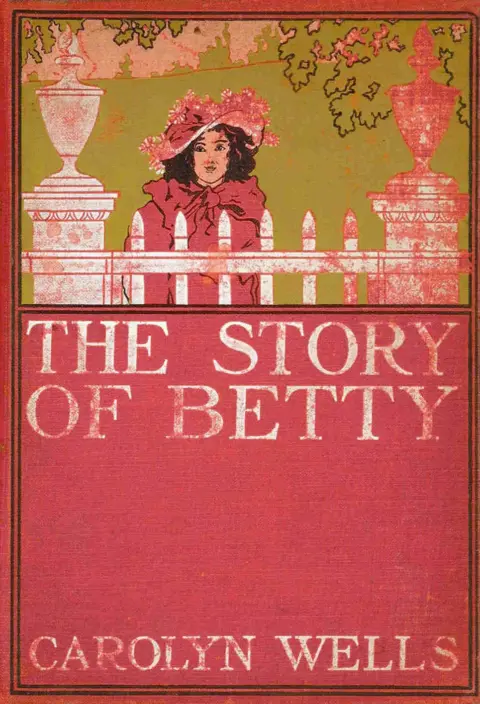
The story of Betty
Carolyn Wells
THE CLASSIC COLLECTION · 1918
"Patty—Bride" by Carolyn Wells is a novel written in the early 20th century. The story focuses on the life of Patricia "Patty" Fairfield and her romantic entanglements, primarily involving her engagement to Bill Farnsworth and the persistent affections of Philip Van Reypen. As Patty navigates her relationships against the backdrop of societal expectations and personal desires, her character's journey unfolds with a blend of humor and drama. The opening of the novel introduces Patty and Philip in a tense conversation, where Philip expresses his unwillingness to give up on his feelings for Patty, despite her engagement to another man, Bill. As they argue over Patrick's commitment and Philip's hope to win her affection, the reader gets a glimpse into Patty's character—strong-willed yet compassionate, struggling with the dynamics of loyalty and love. The dialogue sets the tone for the ensuing narrative, suggesting the complexities of relationships during a time when traditional roles and duties were merging into more modern interpretations. This chapter establishes the conflict and character dynamics that will likely drive the story forward.
Introduction adapted from the source catalogue; source summaries may be automatically generated.
Free to read · English · 53,388 words · No account needed
MAKE TIME FOR A GOOD BOOK
On by default. Untick to stop anonymous reading totals. Each page counts after 10 seconds in view. How this works.
Anonymous counting is on unless you have switched it off.
Faster fell the snow, and slower went the horse. He stumbled frequently, and almost fell several times.
At last he did fall, and Helen was pitched forward against the glass.
Luckily, it did not break, and as she crouched in a heap, the driver
reassured her from above.
"Sit tight, Miss! We'll get him up. Don't open the doors!"
Helen was thoroughly scared now, but her good sense told her that to obey the driver's advice was the best thing she could do.
And sure enough, after a time, with the help of policemen and others, the horse was somehow again on his feet and apparently uninjured.
"Now we're off," the cheery driver called down. "It's a terrible storm, but I can get you there, if we go slowly."
"Go slowly, then," Helen answered, greatly reassured by his honest, kindly accents, "but do get there!"
So they went on, now merely crawling, as the poor horse cautiously
picked his steps, and now stopping altogether, as the traffic forced
them to.
Helen's watch had stopped, because she had forgotten to wind it. They passed few pedestal clocks, and those she could not see for the whirling flakes. She wanted to ask the driver how late it was getting, but couldn't make him hear.
So they kept on, and at last the cab drew up to a curb and the driver
got down.
"Well, Miss," he said, "you was lucky to have me,--you sure was! For, I see you was young and didn't know New York at all hardly. And I'm mighty glad to get you here without any broken bones,--I am that!"
Helen appreciated his solicitude for her welfare, and though she well knew it was, in part, a hint for a goodly fee above his regular fare, she felt that he deserved it.
She paid him generously, and bade him good night with courteous thanks.
"You all right, now?" he asked, as he looked at the brightly-lighted entrance of the apartment house.
"Oh, yes," said Helen, glancing at the number to be sure it was 783. "This is Ninety-fifth Street, isn't it?"
"Yes, Ma'am,--good night."
"Good night and thank you."
The hansom drove away through the storm and as Helen approached the house, the door was swung open by a liveried doorman.
She went in, smiling with gladness to be once more indoors amid light and warm surroundings, and going at once to the elevator, she said, "Third floor, please."
To the maid who answered her ring at the door of the apartment, she nodded pleasantly, and said: "I'm Miss Barlow."
Then she looked around for her friend, Millicent Wheeler.
Your reading position is saved on this browser. Take it to another device with a library code. Reading pages adapt to text, rather than matching a printed edition.
Carolyn Wells
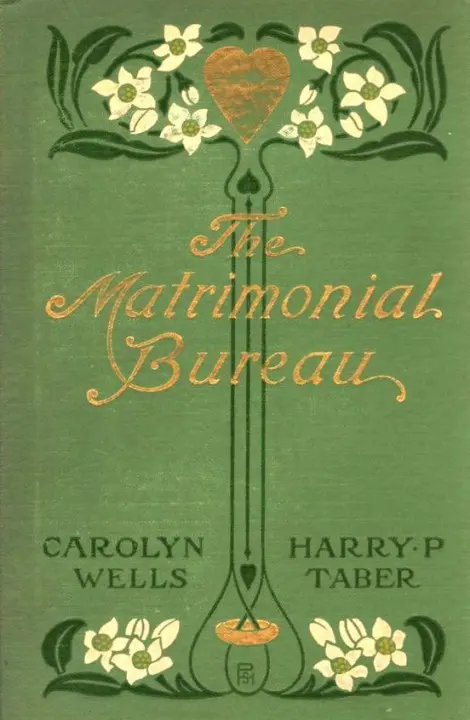
Carolyn Wells & Harry Persons Taber

Carolyn Wells
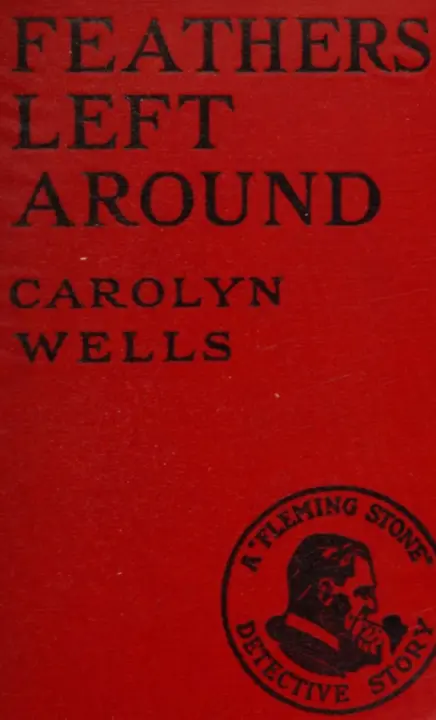
Carolyn Wells
BEHIND THE BOOK
This eBook is for the use of anyone anywhere in the United States and most other parts of the world at no cost and with almost no restrictions whatsoever. You may copy it, give it away or re-use it under the terms of the Project Gutenberg License included with this eBook or online at www.gutenberg.org. If you are not located in the United States, you will have to check the laws of the country where you are located before using this eBook. Read the source licence.
The original source file, including credits and licence, is retained by this library. Request an original-format copy at no charge. Please include the book title and Project Gutenberg identifier #49173.
KEEP YOUR CURIOSITY GOING
Coulson Kernahan

Maurice Baring
Frances Wright
Cécile Tormay

Frederic Jesup Stimson

W. H. P. (William Henry Pope) Jarvis