
Dark Hester
Anne Douglas Sedgwick
THE CLASSIC COLLECTION · 1904
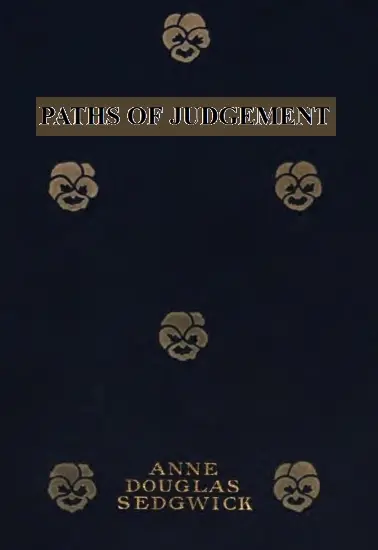
"Paths of Judgement" by Anne Douglas Sedgwick is a novel written in the early 20th century. The story centers on the Merrick family, especially the dynamics between Mrs. Cuthbert Merrick and her niece Felicia, as they navigate their relationships with various guests in their country home, particularly Maurice Wynne, a charming if poor young man. The novel explores themes of societal expectations, intellectual pursuits, and deeply human emotions set against the backdrop of a changing world. At the start of the narrative, we are introduced to Mrs. Merrick, who observes her surroundings with a critical eye, reflecting her character's materialistic and status-conscious nature. Felicia, her niece, presents a contrasting perspective—she finds joy in nature and desires authenticity in her life. Tension arises in their relationship as Mrs. Merrick emphasizes social standing, while Felicia grapples with jealousy towards Lady Angela, a beautiful, idealistic friend of the family who is also interested in Maurice. The opening chapters paint a rich tableau of character interactions, setting the stage for underlying conflicts concerning love, ambition, and the pursuit of meaning in social relationships.
Introduction adapted from the source catalogue; source summaries may be automatically generated.
Free to read · English · 79,985 words · No account needed
MAKE TIME FOR A GOOD BOOK
On by default. Untick to stop anonymous reading totals. Each page counts after 10 seconds in view. How this works.
Anonymous counting is on unless you have switched it off.
"Scoff is perhaps too strong a word. You allowed her to see to the full your dislike, your scorn, and then repulsed her sympathy. That is what Maurice gave me to understand, and that, I don't fancy you can deny, is the truth."
Felicia, looking now about her vaguely, sank again in her chair. Her silence, her dazed helplessness, tinged Mr. Merrick's displeasure with a slight compunction.
"There, child," he said, rising as he spoke, "don't feel like that about it. Any injury that I may have received is fully forgiven. The only real harm is your irrational hatred,--don't stare like that, Felicia--your irrational hatred, as I say, and the influence that I protest against and must always protest against."
Still she was silent, though her gaze had dropped from him. Her silence, her look of disproportionate dismay, perturbed and rather embarrassed him. He yielded to the magnanimity of a pat on the head as he passed her on his way out of the room, saying, "Think it all over; think better of it all." Pausing at the door, he added, "She bears no grudge, not the faintest; understands you better than you do yourself, my poor child." She still sat, lying back in her chair, her eyes cast down, her hands intertwisted in her lap. It was uncomfortable to leave her so, but after all, the punishment was deserved, her very silence proved as much; and he had done his duty.
Felicia was hardly conscious of his presence, his voice or his going; the words went over her head like the silly cries of a flight of cranes; when the door was closed it was as if the cranes had passed. She was alone on a great empty moor, it seemed, an empty, lowering sky above her.
This, then, was the truth. Her husband was a false, a craven man. Fiercely, yet with a languid fierceness, as of slow flames, feeling an immense fatigue, as though she had been beaten with scourges, her thoughts stripped him of all her sweet seeings of him. Shallow, impressionable, weak, his love for her the only steady thing in him; his loyalty to her as unsteady as a flame in the wind; his love, perhaps, steady only because she was strong. She could feel no pity; rather she felt that she spurned him from her. In her weariness it seemed to her that for a long time she had been trying to love him, and that now the effort was snapped. And her scorn of him passed into self-scorn. Fatal weakness and blindness not to have seen him truly from the first, not to have felt that her craving for love, her love for his love, had been more than any love for him. In her deep repulsion from him and all he signified, his individuality and its fears, its sadness, its devotion, were unreal to her, blotted out in scorn--scorn, the distorter of all truth--as unreal as her love for it had been. And with her recognized weakness and despair came, with the memory of that trembling nearness, the thought of Geoffrey, and her heart suddenly cried out for him, for his strength, his unwavering truth. She closed her eyes, holding the thought close.
Your reading position is saved on this browser. Take it to another device with a library code. Reading pages adapt to text, rather than matching a printed edition.
Anne Douglas Sedgwick
Anne Douglas Sedgwick

Anne Douglas Sedgwick

Anne Douglas Sedgwick
BEHIND THE BOOK
This eBook is for the use of anyone anywhere in the United States and most other parts of the world at no cost and with almost no restrictions whatsoever. You may copy it, give it away or re-use it under the terms of the Project Gutenberg License included with this eBook or online at www.gutenberg.org. If you are not located in the United States, you will have to check the laws of the country where you are located before using this eBook. Read the source licence.
The original source file, including credits and licence, is retained by this library. Request an original-format copy at no charge. Please include the book title and Project Gutenberg identifier #42012.
KEEP YOUR CURIOSITY GOING
Coulson Kernahan

Maurice Baring
Frances Wright
Cécile Tormay

Frederic Jesup Stimson

W. H. P. (William Henry Pope) Jarvis