
The type-writer girl
Grant Allen

THE CLASSIC COLLECTION · 1897
"Paris" by Grant Allen is a historical guidebook written in the late 19th century. This work is part of Grant Allen's series on historical towns and aims to provide tourists, especially those with a deep desire for cultural enrichment, with historical and antiquarian insights rather than practical travel information. The book is focused on the city's rich architectural heritage and the significance of its monuments. The opening portion of "Paris" lays out the author’s intentions for the guide, explaining that it differs from traditional tourist guides by emphasizing the historical context and cultural significance of the city's landmarks. Allen aims to explore why Paris developed in its particular location and how its history shaped its artistic achievements, such as its churches and palaces. At the start, he reflects on the origins of Paris and introduces the Île de la Cité, the heart of historical Paris, detailing its transformation from a small Roman settlement into a significant medieval city. He discusses important figures like St. Denis and Ste. Geneviève, whose legacies are intertwined with the city's identity and religious architecture.
Introduction adapted from the source catalogue; source summaries may be automatically generated.
Free to read · English · 91,272 words · No account needed
MAKE TIME FOR A GOOD BOOK
On by default. Untick to stop anonymous reading totals. Each page counts after 10 seconds in view. How this works.
Anonymous counting is on unless you have switched it off.
3. Her Education, presided over by Minerva, with the aid of Mercury (to indicate her rapidity in learning), and Apollo, as teacher of the arts. Close by are the Graces, admirable nude figures. Among the accessories, bust of Socrates, painting materials, etc.
4. The Genius of France in attendance upon Henri IV, while Love shows him Marie’s portrait. The attitude of the king expresses delight and astonishment. In the clouds, Jupiter and Juno smile compliance. Below, little Loves steal the king’s shield and helmet.
5. Marriage of Marie by proxy. The Grand Duke Ferdinand represents the king. Hymen holds the torch.
6. Marie lands at Marseilles, and is received by France, while Tritons and Nereids give easy passage to her vessel. Above, her Fame. On the vessel, the balls or palli of the Medici family.
7. Consummation of the Marriage at Lyons. The town itself is seen in the background. In the foreground, the (personified) city, crowned with a mural coronet, and designated by her lions. Above, the King, as Jupiter, with his eagle, and the Queen, as Juno, with her peacocks.
8. Birth of her son, afterwards Louis XIII, at Fontainebleau. Health receives the infant. Fortune attends the Queen.
9. The King, setting out to his war against Germany, makes Marie Regent—allegorically represented by passing her the ball of empire—and confides to her their son.
Larger pictures: No. 10, the Coronation of the Queen, and No. 11, the Apotheosis of Henri, the painful scene of his death being avoided. He is represented as raised to the sky by Jupiter on one side, and Death with his sickle on the other. Beneath, the assassin, as a serpent, wounded with an arrow. Victory and Bellona mourning. Beyond, the allegorical figure of France presenting the regency to Marie, with the acclamation of the nobility and people.
12. The Queen’s government approved of by Jupiter, Juno, and the heavenly powers. In the foreground Apollo, Mars, and Minerva (the first copied from the antique statue known as the Belvedere), representing courage, art, and literature, dispel calumny and the powers of darkness.
Continue on the =opposite side=, crossing over =directly=.
13. Civil discord arises. Marie starts for Anjou, attended by Victory. Military preparations in the background.
14. The exchange of Princesses between allegorical figures of France and Austria—each intended to marry the heir of the other empire.
15. The Happiness of the Regency. The Queen bears the scales of justice. Plenty prevails. Literature, science, art, and beauty predominate over evil, slander, and baseness.
16. Louis XIII attains his Majority (at 14) and mans the ship of State in person, still attended by the counsels of his mother. The Virtues row it.
Your reading position is saved on this browser. Take it to another device with a library code. Reading pages adapt to text, rather than matching a printed edition.
Grant Allen
Grant Allen

Grant Allen
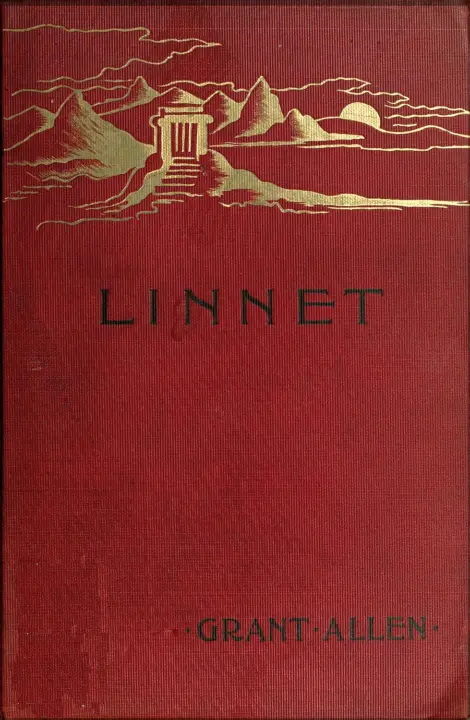
Grant Allen
BEHIND THE BOOK
This eBook is for the use of anyone anywhere in the United States and most other parts of the world at no cost and with almost no restrictions whatsoever. You may copy it, give it away or re-use it under the terms of the Project Gutenberg License included with this eBook or online at www.gutenberg.org. If you are not located in the United States, you will have to check the laws of the country where you are located before using this eBook. Read the source licence.
The original source file, including credits and licence, is retained by this library. Request an original-format copy at no charge. Please include the book title and Project Gutenberg identifier #49907.
KEEP YOUR CURIOSITY GOING
Wilfrid Scawen Blunt
Wilfrid Scawen Blunt

E. W. (Edgar Watson) Howe
Cécile Tormay

Moritz Busch
John L. Ransom