
The type-writer girl
Grant Allen
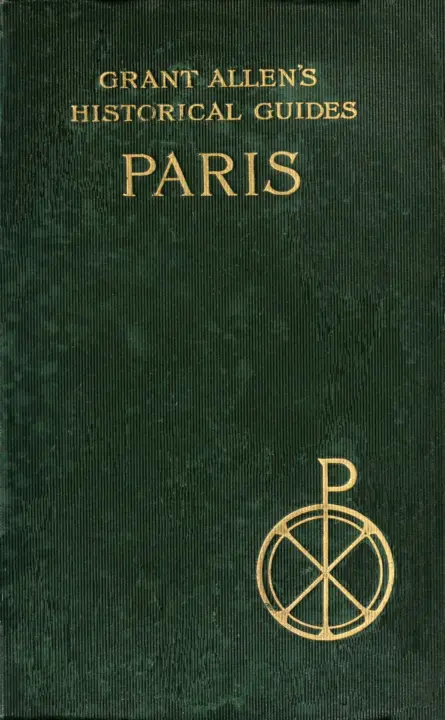
THE CLASSIC COLLECTION · 1897
"Paris" by Grant Allen is a historical guidebook written in the late 19th century. This work is part of Grant Allen's series on historical towns and aims to provide tourists, especially those with a deep desire for cultural enrichment, with historical and antiquarian insights rather than practical travel information. The book is focused on the city's rich architectural heritage and the significance of its monuments. The opening portion of "Paris" lays out the author’s intentions for the guide, explaining that it differs from traditional tourist guides by emphasizing the historical context and cultural significance of the city's landmarks. Allen aims to explore why Paris developed in its particular location and how its history shaped its artistic achievements, such as its churches and palaces. At the start, he reflects on the origins of Paris and introduces the Île de la Cité, the heart of historical Paris, detailing its transformation from a small Roman settlement into a significant medieval city. He discusses important figures like St. Denis and Ste. Geneviève, whose legacies are intertwined with the city's identity and religious architecture.
Introduction adapted from the source catalogue; source summaries may be automatically generated.
Free to read · English · 91,272 words · No account needed
MAKE TIME FOR A GOOD BOOK
On by default. Untick to stop anonymous reading totals. Each page counts after 10 seconds in view. How this works.
Anonymous counting is on unless you have switched it off.
ROOM I.—Gallery, looking down on the courtyard of Room VI, below. =Wall D=, by which you enter; tiles, French Renaissance. =Wall C=: first case, blue Flemish stoneware. Fine wrought-iron gates, gilt. In front of them, female Satyr, French, 18th century, very characteristic of the national taste; opposite it, male Satyr, the same. Second case: Palissy ware, French 16th and 17th centuries. This fine ware is full of Renaissance feeling. Notice particularly (3140), a Sacrifice of Abraham; (3145) the Baptism in Jordan, conventional treatment; (3139) Judith and Holofernes, with several other scriptural scenes in the older spirit; intermingled with these are classical and mythological scenes, displaying the growing love for the nude; observe particularly (3119), a Venus with Cupids; and another dish below it, unnumbered, same subject; also, a Creation of Eve; (3131) Susanna and the Elders, and other scenes of similar character. Observe that while the early work is purely scriptural or sacred, the Renaissance introduces classical subjects. Note too the frequent scenes of the Baptism in the same connection. Centre (3102), beautiful vase with lid, of the period of Henri II. Study all the Palissy ware. =Wall B=, French pottery of the 18th century, exhibiting the rapid decline in taste under Louis XIV and XV, especially as regards colour. The most satisfactory pieces are the blue and white dishes with royal monograms, arms, etc. Second case: Rouen ware of the 18th century, far superior in style and tone to the preceding. Good nude figure of Venus. =Wall A=, Nevers pottery, delicate blue and white; (3338) figure of a page, to support a lamp. Last case: Dutch pottery, Delft, 18th century, exhibiting the strong domestic Dutch tendency.
ROOM II.—Also galleries, surrounding a courtyard. Exquisite Italian Renaissance pottery. =Wall B=, R of entrance, beautiful Italian specimens of Faenza ware, 15th and 16th centuries (whence the word faïence); these should be closely studied in detail. (2811) Quaint dish with Diana as archer; beside it, portraits. (2824 and 2825) Decorative plaques with heads of women. (3949) St. George and the Dragon in green pottery. Behind it, plate with admirable portrait. In the same case, Judith receiving the head of Holofernes; (3024) Hercules playing the lyre to entice Auge. =Wall C=, first case, Deruta and Chaffagiolo ware of the 16th century. Exquisite decorative dishes and plaques; (2814) Actæon changed to a stag by Diana. (2849) Susanna and the Elders. (2887) St. Jerome in the desert, with his lion. (2895) The doubting Thomas. (2823) Another Actæon. Observe frequent repetition of certain scenes. Fine plates with arms of Medici Popes, etc. Second case: Deruta ware, still more splendid specimens, many of them with remarkable lustre. (2894) Madonna and Child, with infant St. John of Florence. Other plates with Mercury, a sphinx, a lion, the huntress Diana, a Moor’s head, portraits and decorative designs. Examine in detail. =Wall D=, first case, Casteldurante and Gubbio ware, 16th century (3007) Manius Curtius leaping into the Forum. (3015) Crucifixion, with the sun and the moon darkened. (3004) Dædalus and the Minotaur. (3008) Fine conventional design. Other plates have heads of St. Paul and mythological persons. (2802) a quaint Temptation of St. Antony. (2818) Leda and the Swan, etc. Second case: Urbino ware, 17th century. Head of Raphael, and delicate Raphaelesque scenes, instinct with the later Renaissance feeling. (2961) Perseus and Andromeda. (3064) Expulsion from Paradise; on either side, Temptation, and Adam eating the fruit. (2872) a Baptism in Jordan. Notice again the mixture of religious and mythological scenes, with a preference for those where the nude is permissible—Judith and Holofernes, Orpheus, etc. =Wall A=, fine Florentine terra-cotta bust of the young St. John, patron saint of the city. More Urbino ware, to be carefully examined. The greater part of this wall, however, is occupied by =**Della Robbia= ware, glazed Florentine majolica of the 15th and 16th centuries. (2794) Fine figure of St. Michael. (2799) Martyrdom of St. Catherine, the wheels of her torture broken by angels. Above it, Madonna adoring the Child; observe in this and many other cases the beautiful setting of fruit and flowers, characteristic of the Delia Robbias. Beneath, no number, the Beheading of St. Catherine; in the background, angels conveying her soul to Heaven. (2795) The Infant St. John, patron Saint of Florence. (2793) Temperance, with flagon and patera. Then, more Urbino ware, very fine examples of the end of the 16th century; above them, touching Madonna and Child, Della Robbia. =Wall B=, again, Castello ware, and Venetian pottery, 15th, 16th and 17th centuries. Apothecary’s jars, plaques, etc., extremely beautiful.
Your reading position is saved on this browser. Take it to another device with a library code. Reading pages adapt to text, rather than matching a printed edition.
Grant Allen
Grant Allen
Grant Allen

Grant Allen
BEHIND THE BOOK
This eBook is for the use of anyone anywhere in the United States and most other parts of the world at no cost and with almost no restrictions whatsoever. You may copy it, give it away or re-use it under the terms of the Project Gutenberg License included with this eBook or online at www.gutenberg.org. If you are not located in the United States, you will have to check the laws of the country where you are located before using this eBook. Read the source licence.
The original source file, including credits and licence, is retained by this library. Request an original-format copy at no charge. Please include the book title and Project Gutenberg identifier #49907.
KEEP YOUR CURIOSITY GOING
Wilfrid Scawen Blunt
Wilfrid Scawen Blunt

E. W. (Edgar Watson) Howe
Cécile Tormay

Moritz Busch
John L. Ransom