
The type-writer girl
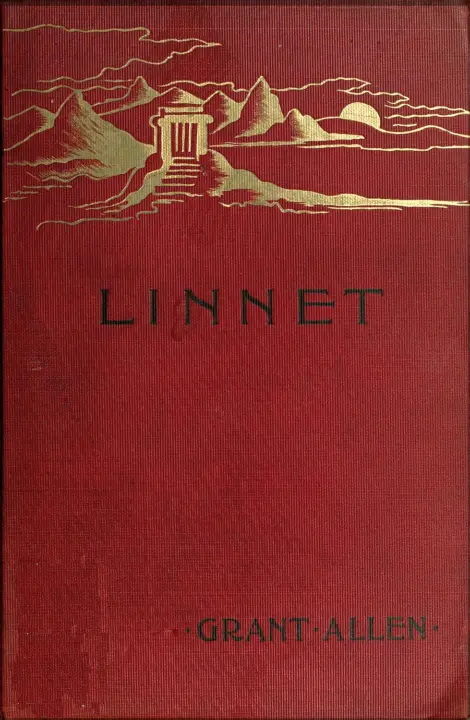
Grant Allen

THE CLASSIC COLLECTION · 1897
"Paris" by Grant Allen is a historical guidebook written in the late 19th century. This work is part of Grant Allen's series on historical towns and aims to provide tourists, especially those with a deep desire for cultural enrichment, with historical and antiquarian insights rather than practical travel information. The book is focused on the city's rich architectural heritage and the significance of its monuments. The opening portion of "Paris" lays out the author’s intentions for the guide, explaining that it differs from traditional tourist guides by emphasizing the historical context and cultural significance of the city's landmarks. Allen aims to explore why Paris developed in its particular location and how its history shaped its artistic achievements, such as its churches and palaces. At the start, he reflects on the origins of Paris and introduces the Île de la Cité, the heart of historical Paris, detailing its transformation from a small Roman settlement into a significant medieval city. He discusses important figures like St. Denis and Ste. Geneviève, whose legacies are intertwined with the city's identity and religious architecture.
Introduction adapted from the source catalogue; source summaries may be automatically generated.
Free to read · English · 91,272 words · No account needed
MAKE TIME FOR A GOOD BOOK
On by default. Untick to stop anonymous reading totals. Each page counts after 10 seconds in view. How this works.
Anonymous counting is on unless you have switched it off.
In conclusion, I would say in all humility, I am only too conscious that I have but scratched in this book the surface of Paris. Adequately to fill in the outline so sketched, for so great and beautiful a city, so rich in historical and artistic interest, would require a big book—and big books are not easy to carry about with one, sight-seeing. Moreover, I reflect by way of comfort, it is not good for us to be told everything; something must be left for the individual intelligence to have the pleasure of discovering. All I have endeavoured to do here is to suggest a method; if I have succeeded in making you take an interest in Mediæval and Renaissance Paris, if I have stimulated in you a desire to learn more about it, I have succeeded in my object. However imperfect this work may be—and nobody can be more conscious of its imperfections than its author—it will be justified if it arouses curiosity and intelligent inspection of works of art or antiquity, in place of mere listless and casual perambulation.
It is common in England to hear superior people sneer at Paris as modern and meretricious. I often wonder whether these people have ever really seen Paris at all—that beautiful, wonderful, deeply interesting Paris, some glimpse of which I have endeavoured to give in this little volume. To such I would say, when you are next at your favourite hotel in the Avenue de l’Opéra, take a few short walks to St. Germain-des-Prés, the Place des Vosges, St. Étienne-du-Mont, St. Eustache, and Cluny, and see whether you will not modify your opinion.
Ancient Sculpture, 154-168.
Antinous, 163.
Archæology, Prehistoric, 251.
Armour, 46.
Assyrian Antiquities, 189.
Boucher, 111.
Boulevards, The, 197, 198, 208, 209.
Burgundian Art, 175, 177.
Canova, 188.
Carnavalet Museum, 247.
Carpaccio, 148, 149.
Carrousel, Place de, 69.
Caryatides, 167.
Cellini, 174.
Childebert, 65, 178, 213.
Christian Sculpture, Early, 193-196.
Cimabue, 74.
Classical Sculpture, 153-168.
Claude of Lorraine, 108, 110.
Cluniac Priory, 211.
Cluny, The Museum, 37-55.
Colombe, Michel, 179, 225.
Copies, Museum of, 225-229.
Correggio, 85.
Dagobert, Tomb of, 237.
David, 112, 114.
Debrosse, Jacques, 215, 224.
Delacroix, 114.
Delaroche, Paul, 109, 114, 229.
Della Robbia, 48, 170, 171.
Diana of Gabii, The, 162.
Dieulafoy Collection of Persian Antiquities, 190, 191.
Donatello, 169, 170.
Drawings, Collection of, 192.
Dutch School of Painting, The, 104, 105, 114.
Ebony carvings, 53.
École des Beaux-Arts, The, 224-229.
Egyptian Antiquities, 189.
Enamels, 49, 50, 244.
English School of Painting, The, 107.
Etruscan Antiquities, 192.
Faubourg St. Germain, The, 35, 213-229.
Flandrin, Frescoes by, 218-220, 248.
Flemish School of Painting, The, 100-106.
Fontainebleau, 250.
Fontaine des Innocents, 203.
Fontaine St. Sulpice, 223.
Fra Angelico, 78, 150.
Fragonard, 111, 113.
François I., Tomb of, 238.
Frédégonde, Tomb of, 238.
French School of Painting, The Early, 99, 100, 108-114.
French School of Painting, The Modern, 107, 114, 115, 223.
French Sculpture, 174-188.
Frescoes, 83, 144, 219.
Your reading position is saved on this browser. Take it to another device with a library code. Reading pages adapt to text, rather than matching a printed edition.
Grant Allen
Grant Allen

Grant Allen
Grant Allen
BEHIND THE BOOK
This eBook is for the use of anyone anywhere in the United States and most other parts of the world at no cost and with almost no restrictions whatsoever. You may copy it, give it away or re-use it under the terms of the Project Gutenberg License included with this eBook or online at www.gutenberg.org. If you are not located in the United States, you will have to check the laws of the country where you are located before using this eBook. Read the source licence.
The original source file, including credits and licence, is retained by this library. Request an original-format copy at no charge. Please include the book title and Project Gutenberg identifier #49907.
KEEP YOUR CURIOSITY GOING
Wilfrid Scawen Blunt
Wilfrid Scawen Blunt

E. W. (Edgar Watson) Howe
Cécile Tormay

Moritz Busch
John L. Ransom