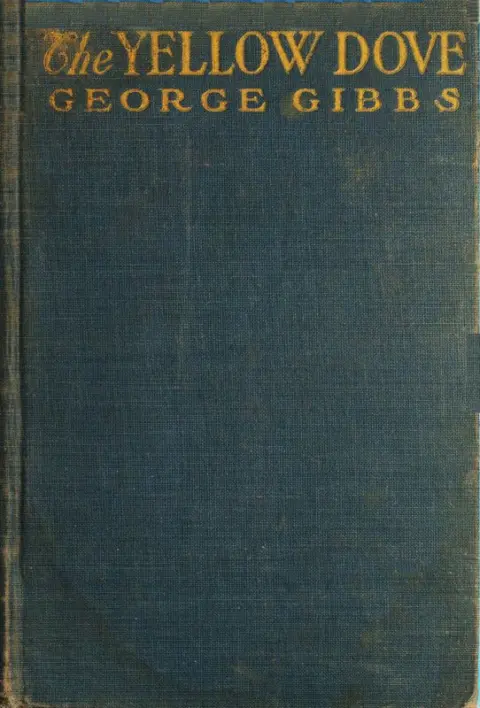
The Yellow Dove
George Gibbs
THE CLASSIC COLLECTION · 1916
"Paradise Garden: The Satirical Narrative of a Great Experiment" by George Gibbs is a satirical novel written in the early 20th century. The story revolves around a unique social experiment conducted by the late millionaire John Benham, who wants to raise his son Jerry in a secluded and controlled environment, sheltered from the influence of women and modern society. The narrative is presented through the perspective of Roger Canby, the intellectual tutor assigned to shape the upbringing of the boy, whose life is dictated by his father's eccentric directives. At the start of the novel, we meet Roger Canby, who is approached by Jack Ballard with a peculiar opportunity to become the tutor for Jerry Benham, the son of a wealthy but cynical father. John Benham has established strict conditions for Jerry's upbringing, which include living in isolation within a vast estate known as Horsham Manor, devoid of female influence until he turns twenty-one. As Roger navigates this unorthodox role, he reflects on his own philosophies and the implications of this grand experiment. The opening chapters introduce the social dynamics and set the stage for the conflicts that will arise as Jerry grows up under Roger's intellectual guidance, eventually leading to a confrontation with the realities of the outside world and the complexities of human relationships.
Introduction adapted from the source catalogue; source summaries may be automatically generated.
Free to read · English · 92,556 words · No account needed
MAKE TIME FOR A GOOD BOOK
On by default. Untick to stop anonymous reading totals. Each page counts after 10 seconds in view. How this works.
Anonymous counting is on unless you have switched it off.
"Yes. You see--" Jerry's pause must have been that of embarrassment. I think he realized that he had been going it rather rapidly. I didn't hear this part of the dialogue until our third conversation. "Well, you see, I'm not supposed to see any--any females until I'm twenty-one. Not that I've ever wanted to, you know, but it seems rather foolish that I can't ask you down, if you'd like to come."
Can you visualize a very modern young woman during this ingenuous revelation? Jerry said that close, cool inspection of her slate-blue eyes (he had, you see, also identified their color) rather disconcerted him.
"I'm sure I should be delighted to come," she said with a gravity which to anyone but Jerry would have made her an object of suspicion.
Jerry shook his head.
"But I--I'm afraid it wouldn't do. I've never given my word, but it's
an understanding--"
"With whom?"
"With Roger. He's my tutor, you know."
"Oh, I see. And Roger objects to--er--females?"
"Oh, yes, and so do I. They're so useless--most of them. You don't
mind my saying so, do you?"
"Oh, not at all," she replied, though I'm sure her lips must have been
twitching.
"Of course, you're different. You're really very like a boy. And I don't doubt you're very capable."
"How--capable?"
"You look as if you could do things--I mean useful things."
At this she sank on a rock and buried her face in her hands, quivering from head to foot. Jerry thought that she was crying.
"What's the--?"
She threw out her arms, leaned back against a tree, her long suppressed merriment bubbling forth unrestrained.
"Oh, you'll be the death of me," she laughed, the tears running down her cheeks. "I can't stand being bottled up another minute. I can't."
Jerry was offended.
"I don't see what there is to laugh at," he said with some dignity.
"You don't--that's just it, you don't, and that's what's so funny."
And she laughed again.
"What's funny?" he asked.
"You--!"
"I'm not half as funny as you are, but I don't laugh at you."
"Y--you w-would if you didn't p-pity me so much," she gasped between
giggles.
"I don't pity you at all. And I think you're extremely foolish to
laugh so much at nothing."
"Even when I'm laughing at y-you?"
She had taken out her handkerchief and now composed herself with difficulty while Jerry's ruffled dignity in silence preened at its feathers. She watched him furtively, I'm sure, between dabs with her handkerchief and at last stopped laughing, got up and offered him her hand.
"I've made you angry," she said. "I'm sorry."
Your reading position is saved on this browser. Take it to another device with a library code. Reading pages adapt to text, rather than matching a printed edition.
George Gibbs
George Gibbs
George Gibbs
George Gibbs
BEHIND THE BOOK
This eBook is for the use of anyone anywhere in the United States and most other parts of the world at no cost and with almost no restrictions whatsoever. You may copy it, give it away or re-use it under the terms of the Project Gutenberg License included with this eBook or online at www.gutenberg.org. If you are not located in the United States, you will have to check the laws of the country where you are located before using this eBook. Read the source licence.
The original source file, including credits and licence, is retained by this library. Request an original-format copy at no charge. Please include the book title and Project Gutenberg identifier #15570.
KEEP YOUR CURIOSITY GOING
Coulson Kernahan

Maurice Baring
Frances Wright
Cécile Tormay

Frederic Jesup Stimson

W. H. P. (William Henry Pope) Jarvis