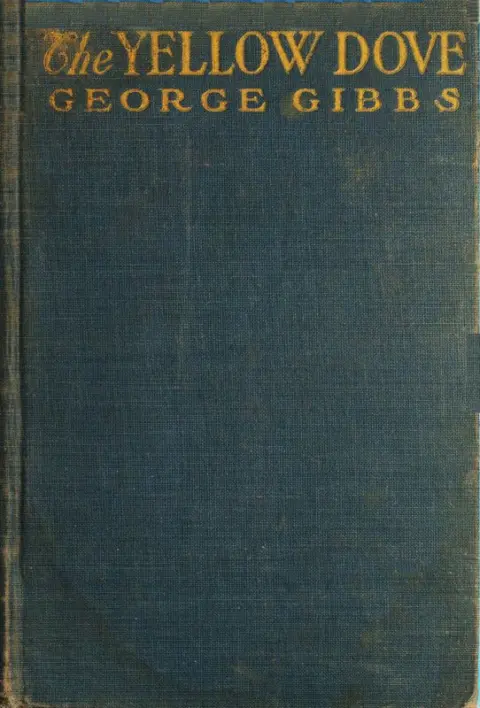
The Yellow Dove
George Gibbs
THE CLASSIC COLLECTION · 1916
"Paradise Garden: The Satirical Narrative of a Great Experiment" by George Gibbs is a satirical novel written in the early 20th century. The story revolves around a unique social experiment conducted by the late millionaire John Benham, who wants to raise his son Jerry in a secluded and controlled environment, sheltered from the influence of women and modern society. The narrative is presented through the perspective of Roger Canby, the intellectual tutor assigned to shape the upbringing of the boy, whose life is dictated by his father's eccentric directives. At the start of the novel, we meet Roger Canby, who is approached by Jack Ballard with a peculiar opportunity to become the tutor for Jerry Benham, the son of a wealthy but cynical father. John Benham has established strict conditions for Jerry's upbringing, which include living in isolation within a vast estate known as Horsham Manor, devoid of female influence until he turns twenty-one. As Roger navigates this unorthodox role, he reflects on his own philosophies and the implications of this grand experiment. The opening chapters introduce the social dynamics and set the stage for the conflicts that will arise as Jerry grows up under Roger's intellectual guidance, eventually leading to a confrontation with the realities of the outside world and the complexities of human relationships.
Introduction adapted from the source catalogue; source summaries may be automatically generated.
Free to read · English · 92,556 words · No account needed
MAKE TIME FOR A GOOD BOOK
On by default. Untick to stop anonymous reading totals. Each page counts after 10 seconds in view. How this works.
Anonymous counting is on unless you have switched it off.
"You missed nothing at the house?"
She waited for his reply.
"I'm not sure who took them--"
"But you did miss--?"
"Yes, spoons, forks and things--" He broke off exasperated. "Oh, Una,
it's cruel of you?"
"No, kind. Sagorski is a smudgy page, Jerry. I happened to have seen it in the records. And there's a woman at the Mission--"
It was Una's turn to pause in sudden solemnity.
"A woman. His wife?" asked Jerry.
"No, just a woman."
"He had treated her badly?"
"Her soul," she replied slowly, "is dead. Her body doesn't matter."
She must have been thankful for the silence that followed? for the look of bewilderment, piteous, I think, it must now have seemed to Una, was in his face again. And before he could question further she had turned the topic.
A little later, I think, personalities began again.
"You're always helping people, Una, always helping," he said slowly.
"Does it make you happy?"
"Yes, if I can help."
"And you want to help me? I wonder if I'm worth it."
"Yes, I wouldn't bother if you weren't."
"And how do you know I'm worth it?"
"It's my business to know," she said.
Jerry sent the car spinning joyously down a fine stretch of straight empty road. And then when he had reduced the car to a slower pace,
"You know, Una," he laughed, "you do take charge of a fellow, don't
you?"
"You need 'mothering'," she smiled.
"Or sistering. I wish I had a sister like you. Fellows ought to have sisters, anyway. People ought to be born in pairs, male and female."
She laughed and then with sudden seriousness:
"But people ought to stand on their feet. All the 'sistering' in the world won't help a lame man to walk."
"I'm not so awfully lame, am I?"
"No. Just limpy. But don't try to run yet, Jerry."
"Oh, I say--"
"Just keep your eyes open. You'll see." And then quietly, "You know
Phil Laidlaw, don't you?"
"Oh, yes, fine chap."
"I think it wouldn't harm you to know Phil better. He isn't brilliant, but he's steady, sure, reliable. And he stands on his feet, Jerry, on both of them."
Jerry's comment to me in telling this part of the conversation was amusing. "Phil Laidlaw is a good fellow and all that," he muttered, "but hang it all, Roger, you can't stomach having another man's virtues thrust down your throat!"
My own comment may be interesting.
"I don't wonder that she cares for him," I said. "A good match, I
should say."
"H--m," replied Jerry. "I can't seem to think of Una married to anybody. She's so much occupied--"
Your reading position is saved on this browser. Take it to another device with a library code. Reading pages adapt to text, rather than matching a printed edition.
George Gibbs
George Gibbs
George Gibbs
George Gibbs
BEHIND THE BOOK
This eBook is for the use of anyone anywhere in the United States and most other parts of the world at no cost and with almost no restrictions whatsoever. You may copy it, give it away or re-use it under the terms of the Project Gutenberg License included with this eBook or online at www.gutenberg.org. If you are not located in the United States, you will have to check the laws of the country where you are located before using this eBook. Read the source licence.
The original source file, including credits and licence, is retained by this library. Request an original-format copy at no charge. Please include the book title and Project Gutenberg identifier #15570.
KEEP YOUR CURIOSITY GOING
Coulson Kernahan

Maurice Baring
Frances Wright
Cécile Tormay

Frederic Jesup Stimson

W. H. P. (William Henry Pope) Jarvis