THE CLASSIC COLLECTION✦My diaries, being a personal narrative of events 1888-1914, Part 2 (1900-1914)CLASSIC FREE BOOKS
My diaries, being a personal narrative of events 1888-1914, Part 2 (1900-1914)
Wilfrid Scawen Blunt
THE CLASSIC COLLECTION · 1906
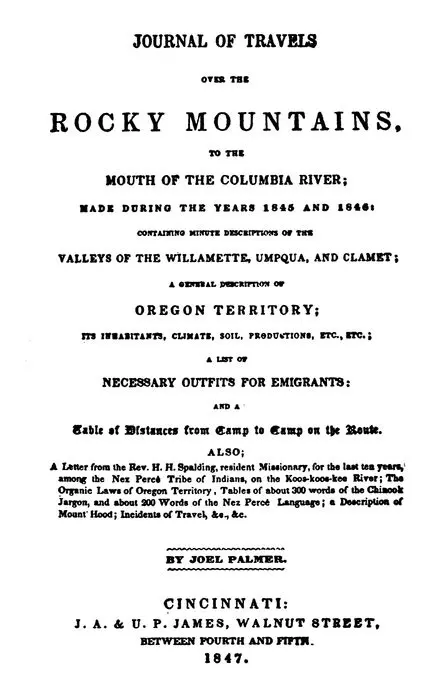
"Palmer's Journal of Travels Over the Rocky Mountains, 1845-1846" by Joel Palmer is a historical account written in the mid-19th century. This work documents the author's personal journey as he traverses the Oregon Trail, providing a meticulous description of the landscapes, indigenous peoples, social conditions, and the challenges faced by emigrants during the westward expansion of America. Palmer, who was a pioneer leader among the emigrants, presents a detailed narrative of his observations, practical recommendations for future travelers, and insights into the lifestyle and environment of the Oregon Territory. The opening of this journal details Palmer's departure from Indiana with the intent of assessing the Oregon Territory for potential settlement. Beginning on April 16, 1845, he recounts various mishaps and encounters along the way, such as his disappointment at not finding companions to join him and the struggles faced, including trading for livestock and dealing with unexpected events like a wild horse. His observations cover the terrain, water sources, and agricultural potential, setting the stage for a journey that explores not only the physical landscape but also the emotional weight of leaving home, signifying an adventure that is as much about personal growth as it is about discovery.
Introduction adapted from the source catalogue; source summaries may be automatically generated.
Free to read · English · 88,645 words · No account needed
MAKE TIME FOR A GOOD BOOK
On by default. Untick to stop anonymous reading totals. Each page counts after 10 seconds in view. How this works.
Anonymous counting is on unless you have switched it off.
August 3. We traveled about fourteen miles, crossing a number of spring branches, coming in from the mountains. These branches abound in trout. The ground, for a strip of about four miles, was covered with black crickets of a large size. I saw some that were about three inches in length, and measuring about three-fourths of an inch in diameter; but the common size were two inches in length and one-half or five-eighths of an inch in diameter; their legs were large in proportion {38} to the size of their bodies. Some were singing on stalks of wild sage; others crawling in every direction. Our teams made great havoc among them; so numerous were they that we crushed them at every step. As soon as one was killed, others of them would alight upon it and devour it. The bottoms are wide, and covered with grass, and the soil looks well. A few patches of snow were seen upon the mountain some ten miles distant. A portion of the mountain is covered with fine timber. The bottoms are rolling.
August 4. We reached the Soda springs, having traveled about eight miles.[58] The first view we had was of two or three white hillocks or mounds, standing up at different points to the right of the road, and near a grove of cedar and pine timber. One of them is about ten rods long at the base, and three or four rods in width; its elevation is probably twenty-five or thirty feet from the plain in which it is situated. The size of these mounds continually increases, as the water oozes out at different points, and produces a crust which becomes quite hard. The rocks, for miles around, are of the soda formation. Upon these mounds the water is warm. In a small bottom, immediately before reaching the first of these mounds, and about two hundred yards above the road, is a hole about eight feet in diameter; in this is a pool of water, strongly impregnated with soda. I had no means of ascertaining the depth, but believe it to be considerable; at one edge of it the water was boiling and sparkling; it would sometimes swell four inches above the surface. This pool, and others contiguous, affords excellent drinking water; it was cool, and, when sweetened, would compare favourably with any soda water. Just below the mound, and near the grove, is a rapid stream of water, coursing over a rocky bottom, formed by soda. At the crossing of this creek, and below the road, is a morass; and immediately on the bank of the rivulet, is a crevice in the rock, from which a small stream of water issues; this was the best to drink of any I found. After crossing the creek, the distance to the springs generally resorted to is about three-fourths of a mile; they boil up in every direction. Several mounds have been formed, of ten feet in height. The water has found some other passage, and left them to moulder away. The centre or middle of these are concave. The surface of the earth here is some twelve or fifteen feet above the level of the river, the bank of which is of rock, of the soda formation. A grove of cedar and pine timber extends from the river back to {39} the mountain, a distance of two and a half or three miles; the space between the road and the river is covered with grass; but between it and the mountain it is barren of vegetation of any kind. The soda has left a sediment, which is now crumbled and loose, with an occasional mound of ten or twelve feet elevation, but no water running. The river here is about one hundred yards in width, and about eighteen inches in depth, running very rapidly. The soda water is bubbling up in every direction, and sometimes rises six inches above the surface of the river. This bubbling extends for near half a mile. A stream comes in from the north at the western edge of the springs, tumbles over the rocks, and finally into the river. Near where one branch of this falls over the rock (it has several passages where the road crosses it) is a circular basin in the rock, being two feet in diameter at the top, but larger below. It was covered with grass; and, in walking along, I barely avoided stepping into it; whilst at its edge the purling or gurgling of the water, as it boils up, apprized me of its vicinity. The surface of the water is about three feet below the top of the rock. The water is cool, much more so than the water of the springs, and is remarkably clear.
Your reading position is saved on this browser. Take it to another device with a library code. Reading pages adapt to text, rather than matching a printed edition.
BEHIND THE BOOK
This eBook is for the use of anyone anywhere in the United States and most other parts of the world at no cost and with almost no restrictions whatsoever. You may copy it, give it away or re-use it under the terms of the Project Gutenberg License included with this eBook or online at www.gutenberg.org. If you are not located in the United States, you will have to check the laws of the country where you are located before using this eBook. Read the source licence.
The original source file, including credits and licence, is retained by this library. Request an original-format copy at no charge. Please include the book title and Project Gutenberg identifier #46906.
KEEP YOUR CURIOSITY GOING
Wilfrid Scawen Blunt
Wilfrid Scawen Blunt

E. W. (Edgar Watson) Howe
Cécile Tormay

Moritz Busch
John L. Ransom