THE CLASSIC COLLECTION✦My diaries, being a personal narrative of events 1888-1914, Part 2 (1900-1914)CLASSIC FREE BOOKS
My diaries, being a personal narrative of events 1888-1914, Part 2 (1900-1914)
Wilfrid Scawen Blunt
THE CLASSIC COLLECTION · 1906
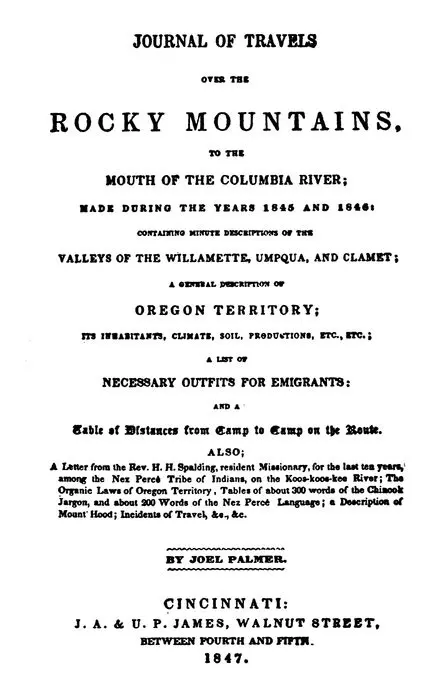
"Palmer's Journal of Travels Over the Rocky Mountains, 1845-1846" by Joel Palmer is a historical account written in the mid-19th century. This work documents the author's personal journey as he traverses the Oregon Trail, providing a meticulous description of the landscapes, indigenous peoples, social conditions, and the challenges faced by emigrants during the westward expansion of America. Palmer, who was a pioneer leader among the emigrants, presents a detailed narrative of his observations, practical recommendations for future travelers, and insights into the lifestyle and environment of the Oregon Territory. The opening of this journal details Palmer's departure from Indiana with the intent of assessing the Oregon Territory for potential settlement. Beginning on April 16, 1845, he recounts various mishaps and encounters along the way, such as his disappointment at not finding companions to join him and the struggles faced, including trading for livestock and dealing with unexpected events like a wild horse. His observations cover the terrain, water sources, and agricultural potential, setting the stage for a journey that explores not only the physical landscape but also the emotional weight of leaving home, signifying an adventure that is as much about personal growth as it is about discovery.
Introduction adapted from the source catalogue; source summaries may be automatically generated.
Free to read · English · 88,645 words · No account needed
MAKE TIME FOR A GOOD BOOK
On by default. Untick to stop anonymous reading totals. Each page counts after 10 seconds in view. How this works.
Anonymous counting is on unless you have switched it off.
[187] For a brief historical sketch of Fort Vancouver see our
volume xxi, p. 297, note 82.--ED.
[188] Colonel John McClure came to Oregon from New Orleans some time before 1842. In 1843 he settled at Astoria, where he had a cabin on the site of the first Astoria mill. He married a native woman, and his portion of the early town was known as McClure's Astoria. He is described as having been an old man in 1845, and he had died before 1867.--ED.
[189] The British ship of war "Modesté," Captain Baillie commanding, first visited Fort Vancouver in July, 1844. Governor McLoughlin was offered no protection at this time; but the situation having grown more intense, the vessel was ordered to the Columbia in October, 1845, and remained to protect British interests until April, 1847. The officers sought to conciliate the American pioneers, but there was on the whole little intercourse between the two nationalities. Theatrical entertainments were planned and given in the winter of 1845-46, and a ball arranged by these officers was the occasion of an expression of a majority sentiment for the American cause. See Oregon Pioneer Association Transactions, 1874, pp. 26, 27.--ED.
[190] For Fraser River and Vancouver Island see Farnham's Travels, our volume xxix, pp. 43, 75, notes 52, 91.--ED.
[191] For Puget's Sound see ibid., p. 90, note 108. The first
road over the Cascades was built in 1853, from Olympia to Walla
Walla.--ED.
[192] For Gray's Harbor see our volume vi, p. 256, note 64; the Chehalis River is described in Farnham's Travels, our volume xxix, p. 81, note 103.--ED.
[193] For the Cowlitz settlement see our volume xxvii, p. 386,
note 203.--ED.
[194] Much has been written on the provisional government of Oregon, which was shadowed forth in the action of 1841, and actually established July 5, 1843. Consult J. Quinn Thornton, "History of the Provisional Government," in Oregon Pioneer Association Transactions, 1874, pp. 43-96; J. Henry Brown, Political History of Oregon (Portland, 1892); James R. Robertson, "Genesis of Political Authority in Oregon," in Oregon Historical Quarterly, i, pp. 1-59; and H. W. Scott, "Formation and Administration of the Provisional Government of Oregon," ibid., ii, pp. 95-118. Palmer's brief synopsis is a summary of the revised organic law, drafted by a committee appointed by the legislature in June, 1845, endorsed by popular vote on July 26, and put in operation August 5 (see appendix to the present volume). This government continued until February 16, 1849, when it was superseded by the territorial government provided by Congress under act approved August 14, 1848. The code of Iowa laws appears to have been adopted because of the existence of a copy of Iowa statutes in the country. See F. I. Herriott, "Transplanting Iowa's Laws to Oregon," in Oregon Historical Quarterly, v, pp. 139-150.--ED.
Your reading position is saved on this browser. Take it to another device with a library code. Reading pages adapt to text, rather than matching a printed edition.
BEHIND THE BOOK
This eBook is for the use of anyone anywhere in the United States and most other parts of the world at no cost and with almost no restrictions whatsoever. You may copy it, give it away or re-use it under the terms of the Project Gutenberg License included with this eBook or online at www.gutenberg.org. If you are not located in the United States, you will have to check the laws of the country where you are located before using this eBook. Read the source licence.
The original source file, including credits and licence, is retained by this library. Request an original-format copy at no charge. Please include the book title and Project Gutenberg identifier #46906.
KEEP YOUR CURIOSITY GOING
Wilfrid Scawen Blunt
Wilfrid Scawen Blunt

E. W. (Edgar Watson) Howe
Cécile Tormay

Moritz Busch
John L. Ransom