THE CLASSIC COLLECTION✦My diaries, being a personal narrative of events 1888-1914, Part 2 (1900-1914)CLASSIC FREE BOOKS
My diaries, being a personal narrative of events 1888-1914, Part 2 (1900-1914)
Wilfrid Scawen Blunt
THE CLASSIC COLLECTION · 1906
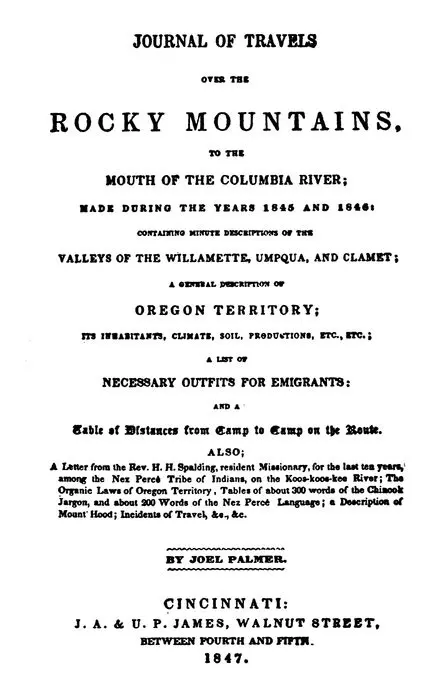
"Palmer's Journal of Travels Over the Rocky Mountains, 1845-1846" by Joel Palmer is a historical account written in the mid-19th century. This work documents the author's personal journey as he traverses the Oregon Trail, providing a meticulous description of the landscapes, indigenous peoples, social conditions, and the challenges faced by emigrants during the westward expansion of America. Palmer, who was a pioneer leader among the emigrants, presents a detailed narrative of his observations, practical recommendations for future travelers, and insights into the lifestyle and environment of the Oregon Territory. The opening of this journal details Palmer's departure from Indiana with the intent of assessing the Oregon Territory for potential settlement. Beginning on April 16, 1845, he recounts various mishaps and encounters along the way, such as his disappointment at not finding companions to join him and the struggles faced, including trading for livestock and dealing with unexpected events like a wild horse. His observations cover the terrain, water sources, and agricultural potential, setting the stage for a journey that explores not only the physical landscape but also the emotional weight of leaving home, signifying an adventure that is as much about personal growth as it is about discovery.
Introduction adapted from the source catalogue; source summaries may be automatically generated.
Free to read · English · 88,645 words · No account needed
MAKE TIME FOR A GOOD BOOK
On by default. Untick to stop anonymous reading totals. Each page counts after 10 seconds in view. How this works.
Anonymous counting is on unless you have switched it off.
[1] Oregon Territory, which under the treaty of 1818 was held in joint occupation by the United States and Great Britain, had been brought into prominence by the presidential campaign of 1844, and the belligerent message of President Polk at his inauguration in March, 1845. Emigration thither for the year 1845 exceeded that of any previous season and consisted of nearly three thousand persons, largely from Missouri and the frontier states of the Old Northwest.--ED.
[2] Blue River, in central Indiana, flowing through Rush and Shelby counties, is part of the White River system.--ED.
[3] For a note on the founding of Indianapolis see our volume
ix, p. 190, note 100.--ED.
[4] Mount Meridian is a small village in Jefferson township,
Putnam County, Indiana. It was laid out in 1833 and at first named
Carthage.--ED.
[5] For St. Charles see our volume v, p. 39, note 9.--ED.
[6] By the term "Lute creek," Palmer intends Loutre River, rising in northeast Callaway County, and flowing south and southwest through Montgomery County into the Missouri, at Loutre Island. See our volume v, p. 47, note 19.--ED.
[7] Williamsburgh, a village in the township of Nine Mile Prairie, Callaway County, was laid out in 1836. For Fulton see our volume xxi, p. 131, note 7.--ED.
[8] Columbia and Rocheport are noted in our volume xxi, p. 133, note 8; Boonville, ibid., p. 89, note 59. Palmer probably crossed the Missouri at Boonville. Townsend went by a similar route from St. Louis to Boonville. See his Narrative in our volume xxi, pp. 125-134.--ED.
[9] Marshall was in 1839 set off as the county seat of Saline, and in 1900 had a population of 5086. It was named in honor of the chief justice of the United States, who died shortly before the incorporation of the town.--ED.
[10] For Independence see our volume xix, p. 189, note 34. Gregg gives a much fuller description of this town as an outfitting place, than does our present author; ibid., pp. 188-192.--ED.
[11] On the bounds of this territory, see our volume xxi, p.
50, note 31.--ED.
[12] Walkarusa Creek rises in several branches in Wabaunsee County, and flows east through Shawnee and Douglas into Kansas River. The crossing of the Oregon Trail was almost directly south of Lawrence. The trail thence followed the divide between the creek and river to about the present site of Topeka. During the Free Soil troubles in Kansas, a bloodless campaign (1855) along this creek toward Lawrence was known as the "Walkarusa War."
Kansas River is noted in our volume xiv, p. 174, note 140.--ED.
[13] For the Kansa Indians see our volume v, p. 67, note 37; also our volume xxviii, p. 140, note 84. Wyeth notes their village in his Oregon, our volume xxi, pp. 48, 49.--ED.
[14] For this stream see De Smet's Letters in our volume
xxvii, p. 197, note 74.--ED.
Your reading position is saved on this browser. Take it to another device with a library code. Reading pages adapt to text, rather than matching a printed edition.
BEHIND THE BOOK
This eBook is for the use of anyone anywhere in the United States and most other parts of the world at no cost and with almost no restrictions whatsoever. You may copy it, give it away or re-use it under the terms of the Project Gutenberg License included with this eBook or online at www.gutenberg.org. If you are not located in the United States, you will have to check the laws of the country where you are located before using this eBook. Read the source licence.
The original source file, including credits and licence, is retained by this library. Request an original-format copy at no charge. Please include the book title and Project Gutenberg identifier #46906.
KEEP YOUR CURIOSITY GOING
Wilfrid Scawen Blunt
Wilfrid Scawen Blunt

E. W. (Edgar Watson) Howe
Cécile Tormay

Moritz Busch
John L. Ransom