THE CLASSIC COLLECTION✦My diaries, being a personal narrative of events 1888-1914, Part 2 (1900-1914)CLASSIC FREE BOOKS
My diaries, being a personal narrative of events 1888-1914, Part 2 (1900-1914)
Wilfrid Scawen Blunt
THE CLASSIC COLLECTION · 1906
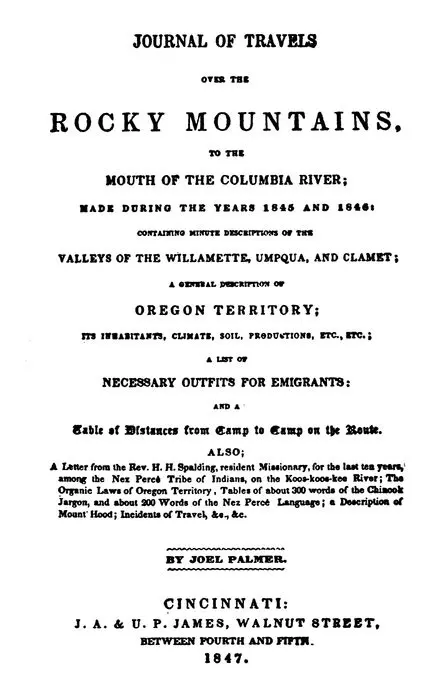
"Palmer's Journal of Travels Over the Rocky Mountains, 1845-1846" by Joel Palmer is a historical account written in the mid-19th century. This work documents the author's personal journey as he traverses the Oregon Trail, providing a meticulous description of the landscapes, indigenous peoples, social conditions, and the challenges faced by emigrants during the westward expansion of America. Palmer, who was a pioneer leader among the emigrants, presents a detailed narrative of his observations, practical recommendations for future travelers, and insights into the lifestyle and environment of the Oregon Territory. The opening of this journal details Palmer's departure from Indiana with the intent of assessing the Oregon Territory for potential settlement. Beginning on April 16, 1845, he recounts various mishaps and encounters along the way, such as his disappointment at not finding companions to join him and the struggles faced, including trading for livestock and dealing with unexpected events like a wild horse. His observations cover the terrain, water sources, and agricultural potential, setting the stage for a journey that explores not only the physical landscape but also the emotional weight of leaving home, signifying an adventure that is as much about personal growth as it is about discovery.
Introduction adapted from the source catalogue; source summaries may be automatically generated.
Free to read · English · 88,645 words · No account needed
MAKE TIME FOR A GOOD BOOK
On by default. Untick to stop anonymous reading totals. Each page counts after 10 seconds in view. How this works.
Anonymous counting is on unless you have switched it off.
§ 5. The boundary lines of all claims shall hereafter conform, as near as may be, to the cardinal points.
§ 6. The officers elected at the general election, held on the first Tuesday in June, 1845, shall be the officers to act under this organic law, and their official acts, so far as they are in accordance with this compact, are hereby declared valid and legal.
§ 7. Amendments to this instrument may be proposed by the House of Representatives, two-thirds of the members concurring therein; which amendments shall be made public in all parts of Oregon, and be read at the polls at the next succeeding general election, and a concurrence of two-thirds of all {187} the members elected at said election, may pass said amendments, and they shall become a part of this compact.
I, John E. Long,[230] secretary of Oregon territory, do hereby certify, that the foregoing is a true and correct copy of the original law, as passed by the representatives of the people of Oregon, on the fifth day of July, A. D. 1845, and submitted to the people on the twenty-sixth day of the same month, and by them adopted and now on file in my office.
J. E. LONG, Secretary.
N. B. At the December Session, 1845, of the House of Representatives, two-thirds of the members concurring therein, the following amendments to the Organic Law were proposed, to wit: Strike out in the 4th section of said law, the words "or more." Also, to amend the land law so as to "permit claimants to hold six hundred acres in the prairie, and forty acres in the timber, though said tracts do not join."
AN ACT to prevent the introduction, sale, and distillation of ardent
spirits in Oregon.
§ 1. Be it enacted by the House of Representatives of Oregon Territory, That if any person shall hereafter import or introduce any ardent spirits into Oregon, with intent to sell, barter, give, or trade the same, and shall offer the same for sale, trade, barter, or gift, he shall be fined the sum of fifty dollars for each and every such offence, which may be recovered by indictment, or by trial before a justice of the peace, without the form of pleading.
§ 2. That if any person shall hereafter sell, barter, give, or trade any ardent spirits of any kind whatever, directly or indirectly, to any person within Oregon, he shall forfeit and pay {188} the sum of twenty dollars for each and every such sale, trade, barter, or gift, to be recovered by indictment in the county court, or before a justice of the peace, without the form of pleading.
Your reading position is saved on this browser. Take it to another device with a library code. Reading pages adapt to text, rather than matching a printed edition.
BEHIND THE BOOK
This eBook is for the use of anyone anywhere in the United States and most other parts of the world at no cost and with almost no restrictions whatsoever. You may copy it, give it away or re-use it under the terms of the Project Gutenberg License included with this eBook or online at www.gutenberg.org. If you are not located in the United States, you will have to check the laws of the country where you are located before using this eBook. Read the source licence.
The original source file, including credits and licence, is retained by this library. Request an original-format copy at no charge. Please include the book title and Project Gutenberg identifier #46906.
KEEP YOUR CURIOSITY GOING
Wilfrid Scawen Blunt
Wilfrid Scawen Blunt

E. W. (Edgar Watson) Howe
Cécile Tormay

Moritz Busch
John L. Ransom