
The Writing of News A Handbook with Chapters on Newspaper Correspondence and Copy Reading
Charles G. (Charles Griffith) Ross
THE CLASSIC COLLECTION · 1882
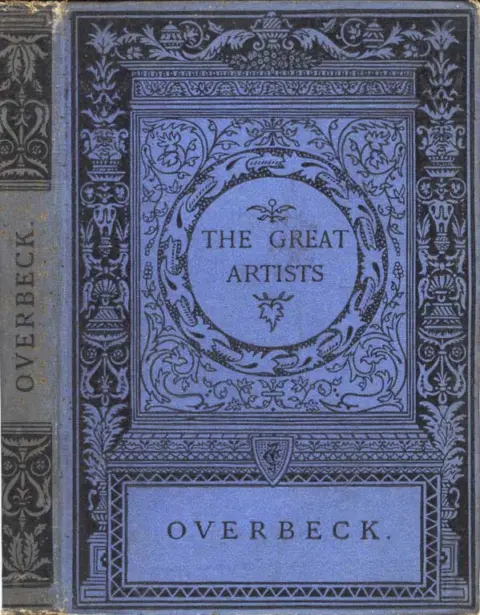
"Overbeck" by J. Beavington Atkinson is a biography written in the late 19th century. This work offers a comprehensive overview of the life of Johann Friedrich Overbeck, a painter who dedicated himself to reviving Christian art in a period characterized by conflicting artistic movements. It explores Overbeck’s artistic journey, his influences, and his quest for spiritual expression through his work. The opening of the biography introduces the reader to Overbeck's early life in Lübeck, detailing his family background and the rich artistic and religious environment that shaped his upbringing. It highlights his transition from Lübeck to Vienna, where he faced disillusionment within the academy's conventional art scene. At this stage, we learn of Overbeck's determination to pursue Christian art, setting the stage for his eventual move to Rome, where he would flourish and connect with fellow artists in the German community. The narrative reflects the complexity of his artistic aspirations interwoven with spiritual quest, establishing a foundation for understanding Overbeck's role in the broader context of 19th-century art.
Introduction adapted from the source catalogue; source summaries may be automatically generated.
Free to read · English · 33,630 words · No account needed
MAKE TIME FOR A GOOD BOOK
On by default. Untick to stop anonymous reading totals. Each page counts after 10 seconds in view. How this works.
Anonymous counting is on unless you have switched it off.
By a curious coincidence, about the time when these conversions to Roman Catholicism were going on in Rome the third jubilee of the Reformation was celebrated at Lübeck. The pietist father of the painter made himself champion of the cause, and delivered a speech at a meeting of the Bible Society, wherein he proclaimed Luther the great witness of truth. "Luther," he declared, "spoke, wrote, thundered, and the power of darkness was overturned; thus conscience became free, doctrines were purified, and the precious Bible, as a heavenly treasure, was given back to the people."[5] It has been assigned as a reason why Overbeck never returned home, that he could not bear to see the city of Lübeck with her old walls thrown down; but a less fanciful cause was that other walls than those of brick and mortar had been set up, dividing kindred and friends.
Let us now turn from polemics to the pleasing descriptions given by Niebuhr and Bunsen of the daily lives of the German Brotherhood. It is not always that archæologists and literary men are the soundest counsellors of artists; they place overmuch stress on the inward conception and motive; they lay down, like Coleridge, the axiom that "a picture is an intermediate something between a thought and a thing," and in exalting the "thought" they subordinate the "thing." This was the last teaching that Overbeck needed. He and his fellows were already only too prone to ignore technique, to neglect colour, chiaroscuro, texture. They deemed it all-sufficient to perfect form as the language of thought; consequently while their works instruct and elevate, they fail to please or to gain wide popularity.
Nevertheless, taken for all in all, Overbeck and Cornelius must be accounted most fortunate in their intellectual companionship. The habit was, when gathered socially together at the Embassy in the Palazzo Caffarelli, to read books, talk of pictures, and to consort together generally for the furtherance of the great art revival in which Niebuhr and Bunsen believed fervently. The attachment became mutual, the intercourse was prized on both sides. Niebuhr writes of Cornelius and his wife: "They are, strictly speaking, intimate family friends;" and again he says: "The society of Cornelius and Overbeck gives an inspiring variety to the day's occupations, and one or other of these intellectual companions seldom fails to join our evening walks." In another letter we read: "Cornelius of Düsseldorf, Platner from Leipzig, Koch from the Tyrol, Overbeck from Lübeck, Mosler from Coblentz, and William Schadow from Berlin, were assembled at Bunsen's in the apartments of the painter Brandis: in different ways and degrees we are attached to them all, and we think them men of talent. Their society is the only pleasure we derive from human beings in Rome." The young artists are found to be wholly without worldly wisdom, a charge to which at least Overbeck might readily plead guilty. Niebuhr further declares: "I confidently believe we are on the eve of a new era of Art in Germany, similar to the sudden bloom of our literature in the eighteenth century." He discerned in the movement an unaccustomed spiritual phenomenon--one of those manifestations of the national mind from time to time found in the history of humanity. He felt once more an outburst of the intellectual life of Germany, a rising again of the force of genius which had impelled Lessing, Kant, and Goethe, which had given birth to profound philosophy and science, and had animated a whole people with patriotism and a spirit of self-sacrifice to do battle amid national songs and hymns, even to the death, in the cause of the King and the Fatherland. Bunsen testifies how Niebuhr showed his affection and care for the Prussian and German disciples of art; he considered it an agreeable part of his duty and vocation to render them assistance, to encourage them in their studies, to give them the time of which he was so sparing to men of mere show and fashion, also to render them pecuniary assistance when necessary. To Niebuhr belongs the honour of having been the first to recognise the new school at the moment when it was "despised, derided, and vituperated." He befriended the men who had to fight their way against shallowness and wickedness, against the low and false taste of connoisseurs and patrons, till the day came when the martyrs of an exalted aspiration gained the attention and admiration of the world.
Your reading position is saved on this browser. Take it to another device with a library code. Reading pages adapt to text, rather than matching a printed edition.
BEHIND THE BOOK
This eBook is for the use of anyone anywhere in the United States and most other parts of the world at no cost and with almost no restrictions whatsoever. You may copy it, give it away or re-use it under the terms of the Project Gutenberg License included with this eBook or online at www.gutenberg.org. If you are not located in the United States, you will have to check the laws of the country where you are located before using this eBook. Read the source licence.
The original source file, including credits and licence, is retained by this library. Request an original-format copy at no charge. Please include the book title and Project Gutenberg identifier #25073.
KEEP YOUR CURIOSITY GOING
Charles G. (Charles Griffith) Ross
Hannah Webster Foster

Emily Lawless
Edwin Hamlin Carr

Charles De Lano Hine
Andrew Ure