
The Writing of News A Handbook with Chapters on Newspaper Correspondence and Copy Reading
Charles G. (Charles Griffith) Ross
THE CLASSIC COLLECTION · 1882
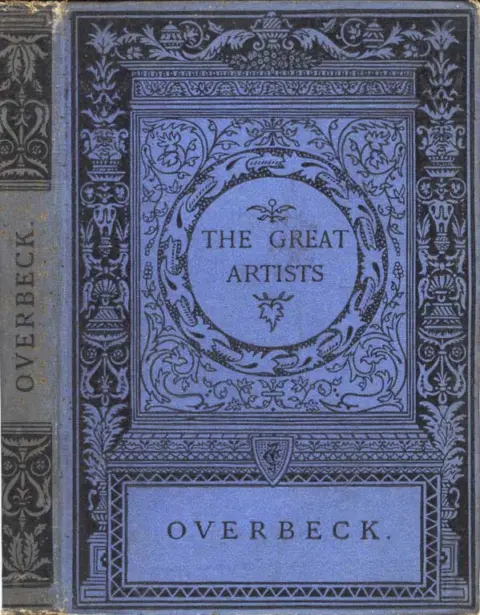
"Overbeck" by J. Beavington Atkinson is a biography written in the late 19th century. This work offers a comprehensive overview of the life of Johann Friedrich Overbeck, a painter who dedicated himself to reviving Christian art in a period characterized by conflicting artistic movements. It explores Overbeck’s artistic journey, his influences, and his quest for spiritual expression through his work. The opening of the biography introduces the reader to Overbeck's early life in Lübeck, detailing his family background and the rich artistic and religious environment that shaped his upbringing. It highlights his transition from Lübeck to Vienna, where he faced disillusionment within the academy's conventional art scene. At this stage, we learn of Overbeck's determination to pursue Christian art, setting the stage for his eventual move to Rome, where he would flourish and connect with fellow artists in the German community. The narrative reflects the complexity of his artistic aspirations interwoven with spiritual quest, establishing a foundation for understanding Overbeck's role in the broader context of 19th-century art.
Introduction adapted from the source catalogue; source summaries may be automatically generated.
Free to read · English · 33,630 words · No account needed
MAKE TIME FOR A GOOD BOOK
On by default. Untick to stop anonymous reading totals. Each page counts after 10 seconds in view. How this works.
Anonymous counting is on unless you have switched it off.
The early pictures and drawings executed in Rome carry out the painter's resolve. To this first period belong: The Adoration of the Kings (1811), Jesus in the House of Martha and Mary (1812), The Preaching of St. John, The Raising of Lazarus, The Entombment, Christ Blessing Little Children, The Holy Family, Ave Maria, Blessed art thou among Women, also a portrait of Vittoria Caldoni.[2] The first commission received by the struggling painter came from Queen Caroline of Bavaria for The Adoration of the Kings, in oils. The Queen had written to Rome saying that she wished for a picture by the young artist; that as to the price, a hard bargain need not be driven, for when one gains a beautiful work, the cost cannot be regretted. Overbeck, on receiving the good news, writes, December 16, 1811, "I was so overpowered with joy that I could not bring out a syllable. The affair moves me all the more because I had not dreamt of it. What can be the cause of my good fortune? Happy day! I shall think of it as long as I live: to the Lord be the praise." Four days later he writes to Lübeck:--"What joy! I can now relieve my parents from further burden. This is the moment so long wished for. Henceforth and for ever I am a man and an independent artist in the workshop, free as a king over the boundless domain of fantasy to create a beautiful world."
The maxim that correct drawing lies at the foundation of all true art was maintained by the Brotherhood through both precept and example. Overbeck first mastered form, he trained his hand to outline; next he learnt the principles of composition, that is the power of combining separate parts into a connected whole; lastly, he added colour, but rather as an accessory than an essential. Hence his water-colours and even his oil-pictures are often little more than tinted drawings. In the first Roman period, that is up to about the year 1820, when the age of thirty had been reached, we find the artist in full possession of the faculty of expressing his ideas at the point of his pencil. Of this happy facility many examples have come before me: one especially, at Stift Neuburg, The Raising of Jairus's Daughter (1814); another, almost a replica of the last, delicately washed with colour, in the private collection of Herr Malss, of the Städel Institute, Frankfort. I note with admiration the precision and subtlety of the form, especially in the hands and feet. The work, though small in scale (1 ft. 3 in. by 1 ft.), is large in manner, the treatment being that of the Great Masters as distinguished from the Small Masters. Overbeck, who was on intimate terms with the family of Director Malss, said that he wished they should have a work as perfect as he could make it: verily he realised his endeavour. Belonging to the same period, I find in another private collection in Frankfort a portrait in delicate pencilling of a young girl of about eighteen; the hair is in close curls all round the head, the necklace is marked with utmost detail. Perhaps I have not laid sufficient stress on the truth and rectitude of Overbeck's work, as seen, for instance, in the Head of an Old Monk among the drawings of the National Gallery, Berlin. This is so close to nature that a deformity in one ear has been conscientiously registered. The handling here is masterly, the touch firm and strong; the play of lines in the hatchings proves a free hand and a facile turn of the wrist. Also may be mentioned, for incidents taken from the life, a remarkable composition at Stift Neuburg, The Feeding of the Hungry. Close to nature are these transcripts of the poor, the needy, and aged, one advancing on crutches to receive bounty; and over all presides the spirit of beauty and charity. Also in the same collection is a triptych, wherein angels and cherubs appear: this is among the earliest examples of the intervention of the supernatural. Overbeck was not the man to rush in where angels fear to tread. Likewise among Biblical subjects, I find in the National Gallery, Berlin, The Creation of Adam and Eve, and The Expulsion from Paradise. Here the delineation of the undraped figure proves absolute knowledge, and shows, as before said, that the usual course of drawing from the nude had been gone through. The point indeed need not be discussed further, as Schadow expressly states that Overbeck's drawings from the nude as well as from the draped figure were, for subtlety and truth to nature, the admiration of every one. The Creation and Expulsion are of exceptional value, because the artist for once borrows from Michelangelo: also it will be seen that Overbeck gave himself from the outset to the illustration of the Biblical narrative, and thus fondly trod in the footsteps of Giotto and Fra Angelico.
Your reading position is saved on this browser. Take it to another device with a library code. Reading pages adapt to text, rather than matching a printed edition.
BEHIND THE BOOK
This eBook is for the use of anyone anywhere in the United States and most other parts of the world at no cost and with almost no restrictions whatsoever. You may copy it, give it away or re-use it under the terms of the Project Gutenberg License included with this eBook or online at www.gutenberg.org. If you are not located in the United States, you will have to check the laws of the country where you are located before using this eBook. Read the source licence.
The original source file, including credits and licence, is retained by this library. Request an original-format copy at no charge. Please include the book title and Project Gutenberg identifier #25073.
KEEP YOUR CURIOSITY GOING
Charles G. (Charles Griffith) Ross
Hannah Webster Foster

Emily Lawless
Edwin Hamlin Carr

Charles De Lano Hine
Andrew Ure