THE CLASSIC COLLECTION✦A Woman of GeniusCLASSIC FREE BOOKS
A Woman of Genius
Mary Austin
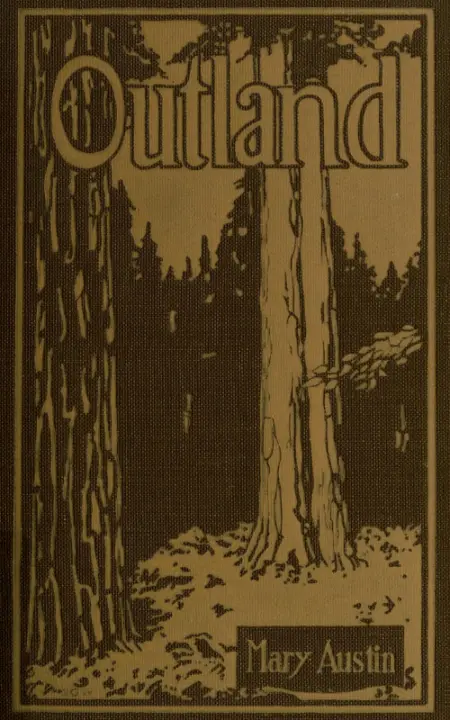
THE CLASSIC COLLECTION · 1919
"Outland" by Mary Austin is a novel written in the early 20th century. The story revolves around a young woman named Mona who finds herself navigating the complexities of relationships and societal expectations, particularly in the context of her interactions with Herman, a professor, and the enigmatic Outliers, a group of woodland dwellers. As she grapples with her own desires and the allure of a life that is more connected to nature, the narrative explores themes of freedom, love, and the artistry of life. The opening of the novel sets a tranquil yet introspective tone as Mona reflects on a visit to the woods with Herman, where their differing views on passion and marriage come to a head. As they journey through the forest, they stumble upon a trail that symbolizes deeper connections—both to the land and to the possibility of encountering the Outliers. Mona’s yearning for creative fulfillment and understanding contrasts sharply with Herman's pragmatic perspective. This tension foreshadows the adventures and discoveries that await her, including a fateful encounter with a mysterious man from the Outliers, which will alter her perception of herself and her relationship with Herman.
Introduction adapted from the source catalogue; source summaries may be automatically generated.
Free to read · English · 59,654 words · No account needed
MAKE TIME FOR A GOOD BOOK
On by default. Untick to stop anonymous reading totals. Each page counts after 10 seconds in view. How this works.
Anonymous counting is on unless you have switched it off.
I turned, and I saw Prassade stooping to disengage his knees from his wife’s clinging, and holding her from him by the shoulders, begin to speak.
“I also....”
“Outliers,” he said, and by the hollowness of his voice and the sinking of his cheek under the red beard they saw what havoc grief and disgrace had made in him, “Outliers, it is through my blood dishonor came, and one of my blood must cure it. There is none but me.”
There was a general outcry of dismayed protest and assurance.
“Not you, Prassade, not you....”
“No fault of yours....”
“She has paid....”
“She was but a child, she has paid in full....”
And then from the woman at his feet:
“Think of me, Prassade.”
“Think of what I think on day and night,” cried Prassade, “and let me
go.”
“Prassade,” said the young chief, greatly troubled, “in that which we propose to do, when this business is settled, I shall have great need, as in the past I have had great benefit, from your interest and advice....”
“No, no!...” The man’s voice was a desperate gasp merely. “Never shall I give counsel who could not advise my own child against dishonor”—holding his wife from him still, though the poor creature worked toward him on her knees. “Never shall I beget children again who have been betrayed by my own child.... Ah ... let me go ... let me go ... and by service ... by forgetting....” There was something almost of madness in his wounded desperation. I suppose his wife must have seen that. She left off entreaty and took his hand, fondling it quietly, turning as she was, upon her knees, toward Persilope and the elders, quite broken and submissive.
“It is best you let him go,” she said, “he will be happier so.”
Prassade caught at this, his lip was wet with eagerness.
“Ay, ay, how can I know happiness again? She knows I cannot.”
“Are you sure,” said Persilope to the wife, “that you are prepared for ... that you understand?”
“I understand,” she answered back, neither of them looking at the man in question. “If it means peace for him, I am....” She threw out her hands to show how obedient she was to destiny.
“Am I accepted, chief; am I accepted?” The man trembled with the hope of
deliverance.
“You are accepted,” the chief admitted, seeing there was no one disposed to deny him. There was a space of stillness in the bright palpitating noon before Persilope, measuring the heap of gold and jeweled vessels with his eye, had turned back and said: “It wants yet another.”
Your reading position is saved on this browser. Take it to another device with a library code. Reading pages adapt to text, rather than matching a printed edition.
Mary Austin
Mary Austin
Mary Austin
Mary Austin
BEHIND THE BOOK
This eBook is for the use of anyone anywhere in the United States and most other parts of the world at no cost and with almost no restrictions whatsoever. You may copy it, give it away or re-use it under the terms of the Project Gutenberg License included with this eBook or online at www.gutenberg.org. If you are not located in the United States, you will have to check the laws of the country where you are located before using this eBook. Read the source licence.
The original source file, including credits and licence, is retained by this library. Request an original-format copy at no charge. Please include the book title and Project Gutenberg identifier #61530.
KEEP YOUR CURIOSITY GOING
Coulson Kernahan

Maurice Baring
Frances Wright
Cécile Tormay
Francis Greenleaf Allinson & Anne C. E. (Anne Crosby Emery) Allinson

Frederic Jesup Stimson