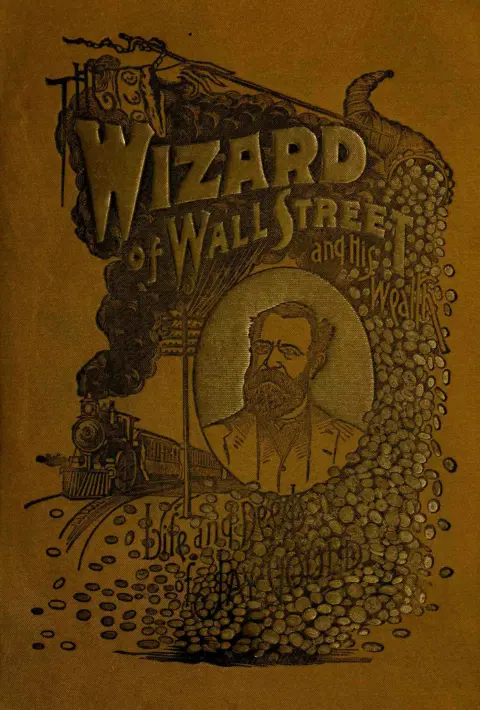
The Wizard of Wall Street and His Wealth; or, The Life and Deeds of Jay Gould
Trumbull White
THE CLASSIC COLLECTION · 1898
"Our War with Spain for Cuba's Freedom" by Trumbull White is a historical account written during the late 19th century. The book explores the complex relationships and events surrounding the American intervention in the Spanish-Cuban conflict, focusing on themes of liberty and oppression. It highlights not only the military operations against Spain but also delves into Cuban history, culture, and the suffering experienced under Spanish rule, ultimately framing the conflict as a righteous struggle for freedom. The opening of the book sets the stage by detailing the dire situation in Cuba prior to American involvement. It introduces the reader to the circumstances that led to the outbreak of hostilities, touching on the oppressive Spanish governance and the burgeoning desire for independence among the Cuban people. White provides a vivid description of American sentiments regarding the war and the aftermath of the tragic explosion of the USS Maine, which galvanized public opinion. The text also discusses the political maneuvers and military preparations as the U.S. government responded to the pressing need to support Cuban patriots in their fight against Spanish tyranny.
Introduction adapted from the source catalogue; source summaries may be automatically generated.
Free to read · English · 186,646 words · No account needed
MAKE TIME FOR A GOOD BOOK
On by default. Untick to stop anonymous reading totals. Each page counts after 10 seconds in view. How this works.
Anonymous counting is on unless you have switched it off.
We know from the reports of competent officers and from personal observation that the army is unable to move into the interior and that there are no facilities for such a move if attempted, and that it could not be attempted until too late. Moreover, the best medical authorities of the island say that with our present equipment we could not live in the interior during the rainy season without losses from malarial fever, which is almost as deadly as yellow fever.
This army must be moved at once or perish. As the army can be safely moved now the persons responsible for preventing such a move will be responsible for the unnecessary loss of many thousands of lives.
Our opinions are the result of careful personal observation, and they are also based on the unanimous opinion of our medical officers with the army, who understand the situation absolutely.
J. FORD KENT, Major-General Volunteers, Commanding First Division
Fifth Corps.
J. C. BATES, Major-General Volunteers, Commanding Provisional
Division.
ADNA R. CHAFFEE, Major-General Commanding Third Brigade, Second
Division.
SAMUEL S. SUMNER, Brigadier-General Volunteers, Commanding First
Brigade Cavalry.
WILL LUDLOW, Brigadier-General Volunteers, Commanding First
Brigade, Second Division.
ADELBERT AMES, Brigadier-General Volunteers, Commanding Third
Brigade, First Division.
LEONARD WOOD, Brigadier-General Volunteers, Commanding the City of
Santiago.
THEODORE ROOSEVELT, Colonel, Commanding Second Cavalry Brigade.
As a result arrangements were completed as quickly as possible for the transportation of the troops to the United States, and immunes were sent to Santiago for garrison duty in their places.
On the morning of July 18 the vessels on blockade duty in the vicinity of Manzanillo approached the harbor of that city from the westward. The Wilmington and Helena entered the northern channel towards the town, the Scorpion and Osceola the mid-channel, and the Hist, Hornet and Wampatuck the south channel, the movement of the vessels being so timed as to bring them within effective range of the shipping at about the same moment. An attack was made on the Spanish vessels in the harbor, and after a deliberate fire lasting about two and a half hours, three transports, El Gloria, Jose Garcia and La Purrissima Concepcion, were burned and destroyed.
The Pontoon, which was the harbor guard and storeship for ammunition, was burned and blown up. Three gunboats were destroyed, one other was driven ashore and sunk, and another was entirely disabled. No casualties occurred on board any of the American vessels. The Spanish loss was over 100 in killed and wounded, and the Delgado, Guantanamo, Ostralia, Continola and Guardian, gunboats of the Spanish navy, were sent to join Cervera's fleet.
Your reading position is saved on this browser. Take it to another device with a library code. Reading pages adapt to text, rather than matching a printed edition.
Trumbull White
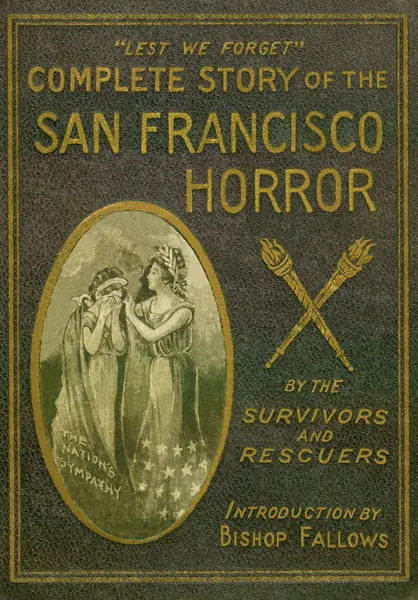
Richard Linthicum & Samuel Fallows & Trumbull White
BEHIND THE BOOK
This eBook is for the use of anyone anywhere in the United States and most other parts of the world at no cost and with almost no restrictions whatsoever. You may copy it, give it away or re-use it under the terms of the Project Gutenberg License included with this eBook or online at www.gutenberg.org. If you are not located in the United States, you will have to check the laws of the country where you are located before using this eBook. Read the source licence.
The original source file, including credits and licence, is retained by this library. Request an original-format copy at no charge. Please include the book title and Project Gutenberg identifier #4210.
KEEP YOUR CURIOSITY GOING
Cécile Tormay

Moritz Busch
John L. Ransom
Frances Wright
Cécile Tormay

Mabel Potter Daggett