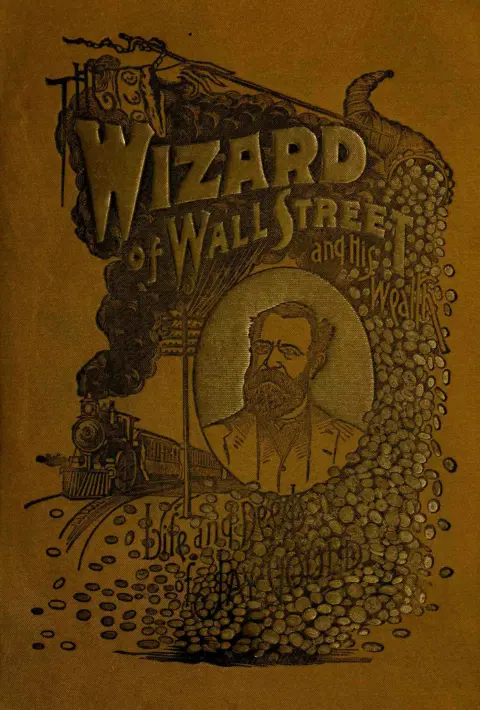
The Wizard of Wall Street and His Wealth; or, The Life and Deeds of Jay Gould
Trumbull White
THE CLASSIC COLLECTION · 1898
"Our War with Spain for Cuba's Freedom" by Trumbull White is a historical account written during the late 19th century. The book explores the complex relationships and events surrounding the American intervention in the Spanish-Cuban conflict, focusing on themes of liberty and oppression. It highlights not only the military operations against Spain but also delves into Cuban history, culture, and the suffering experienced under Spanish rule, ultimately framing the conflict as a righteous struggle for freedom. The opening of the book sets the stage by detailing the dire situation in Cuba prior to American involvement. It introduces the reader to the circumstances that led to the outbreak of hostilities, touching on the oppressive Spanish governance and the burgeoning desire for independence among the Cuban people. White provides a vivid description of American sentiments regarding the war and the aftermath of the tragic explosion of the USS Maine, which galvanized public opinion. The text also discusses the political maneuvers and military preparations as the U.S. government responded to the pressing need to support Cuban patriots in their fight against Spanish tyranny.
Introduction adapted from the source catalogue; source summaries may be automatically generated.
Free to read · English · 186,646 words · No account needed
MAKE TIME FOR A GOOD BOOK
On by default. Untick to stop anonymous reading totals. Each page counts after 10 seconds in view. How this works.
Anonymous counting is on unless you have switched it off.
The city of Ponce is the largest, with a population of about 38,000 and an export trade of vast extent. It is the chief sugar-shipping point, though it has no good harbor, and lies nearly three miles from the sea. It is a rather fine city, with a pretty plaza and a grand cathedral, and its houses, like those of San Juan, are all built of stone.
Other harbors are: On the east coast, Fajardo and Humacao; on the north, besides San Juan, Arrecibo; on the west, Aguadilla and Mayaguez, at the former of which Columbus watered his caravels in 1493, and where the original spring still gushes forth.
Going with Puerto Rico are two small islands called Culebra and Vieque, mainly inhabited by fishermen, but with fine forests of dye and cabinet woods to be exploited. The commerce of the island is mainly with the United States. We gained $1,000,000 a year in exports to this island for the last ten years, and nearly $3,000,000 in imports. With a staple government and under wise control, Puerto Rico will more nearly attain to its full productiveness. The annual sugar yield is estimated at near 70,000 tons; that of coffee, 17,000 tons; bananas, nearly 200,000,000; cocoanuts, 3,000,000, and tobacco, 7,000,000 pounds. Gold was originally abundant here, and copper, iron and lead have been found. With enterprise and protection to life and property they will be profitably exploited.
The loss of Cuba and Puerto Rico did not leave Spain without colonial possessions, as the subjoined table will show:
Area--English
Possessions in Asia square miles. Population.
Philippine Islands 114,326 7,000,000 Sulu Islands 950 73,000 Caroline Islands and Palaos 560 36,000 Marianne Islands 420 10,172 ------- --------- Total Asiatic possessions 116,256 7,121,172
Possessions in Africa
Rio de Oro and Adrar 243,000 100,000 Ifni 27 6,000 Fernando Po, Annabon, Corsico, Elobey, San Juan 850 30,000 ------- ------- Total African possessions 243,877 136,000
The Sulu archipelago lies southwest of the Island of Mindanao, and directly south of Manila and the Mindora sea. The chief island gives its name to the group, which extends to the three-mile limit of Borneo. The area of the whole is estimated at 950 square miles; the population at 75,000 Melanesians.
The Caroline and Marianne, or Ladrone Islands, are more numerous, but scarcely as important or as populous as the Sulu group. They belong to what is sometimes known as Micronesia, from the extreme diminutiveness of the land masses. The two groups are east and northeast of the Philippines, and in easy sailing reach from Manila. From east to west they are spread over 30-odd degrees of longitude, and from north to south over 20 degrees of latitude.
Your reading position is saved on this browser. Take it to another device with a library code. Reading pages adapt to text, rather than matching a printed edition.
Trumbull White
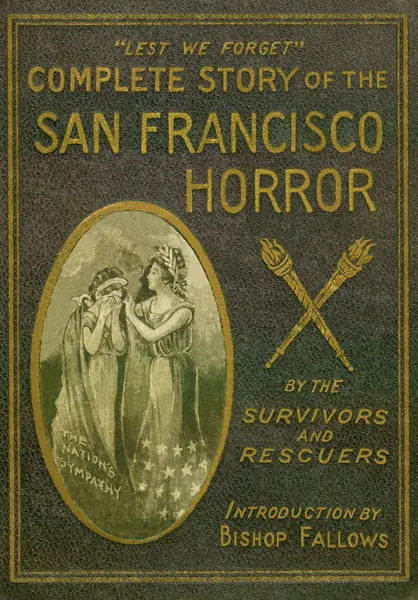
Richard Linthicum & Samuel Fallows & Trumbull White
BEHIND THE BOOK
This eBook is for the use of anyone anywhere in the United States and most other parts of the world at no cost and with almost no restrictions whatsoever. You may copy it, give it away or re-use it under the terms of the Project Gutenberg License included with this eBook or online at www.gutenberg.org. If you are not located in the United States, you will have to check the laws of the country where you are located before using this eBook. Read the source licence.
The original source file, including credits and licence, is retained by this library. Request an original-format copy at no charge. Please include the book title and Project Gutenberg identifier #4210.
KEEP YOUR CURIOSITY GOING
Cécile Tormay

Moritz Busch
John L. Ransom
Frances Wright
Cécile Tormay

Mabel Potter Daggett