THE CLASSIC COLLECTION✦Love Letters of Nathaniel Hawthorne, Volume 2 (of 2)CLASSIC FREE BOOKS
Love Letters of Nathaniel Hawthorne, Volume 2 (of 2)
Nathaniel Hawthorne
THE CLASSIC COLLECTION · 1863
"Our Old Home, Vol. 2" by Nathaniel Hawthorne is a travelogue written in the late 19th century. This reflective work encapsulates the author’s observations and experiences while exploring England, particularly focusing on historical sites, landscapes, and cultural insights during his visits to locales like Blenheim and the homes of famous figures such as Robert Burns. The narrative emphasizes not just the sights, but also the emotional and psychological impressions left on Hawthorne as he contemplates the deeper meanings behind these places. The opening of the volume sets the tone for a leisurely exploration through the countryside, as Hawthorne, accompanied by his party, sets out on an excursion to Blenheim, the residence of the Duke of Marlborough. They navigate through quaint villages, noting the architecture and pastoral beauty, before arriving at the sprawling estate, steeped in history. Hawthorne describes the lush landscapes and significant landmarks they encounter, such as Rosamond’s Well and the Triumphal Pillar, while also reflecting on the gifts of nature and man that adorn Blenheim Park. Interlaced with observations on the Duke's legacy, his musings reveal a contemplative traveler grappling with the weight of history, fame, and the passage of time—elements that resonate throughout the entire volume.
Introduction adapted from the source catalogue; source summaries may be automatically generated.
Free to read · English · 65,686 words · No account needed
MAKE TIME FOR A GOOD BOOK
On by default. Untick to stop anonymous reading totals. Each page counts after 10 seconds in view. How this works.
Anonymous counting is on unless you have switched it off.
In these streets the belted and blue-coated policeman appears seldom in comparison with the frequency of his occurrence in more reputable thoroughfares. I used to think that the inhabitants would have ample time to murder one another, or any stranger, like myself, who might violate the filthy sanctities of the place, before the law could bring up its lumbering assistance. Nevertheless, there is a supervision; nor does the watchfulness of authority permit the populace to be tempted to any outbreak. Once, in a time of dearth, I noticed a ballad-singer going through the street hoarsely chanting some discordant strain in a provincial dialect, of which I could only make out that it addressed the sensibilities of the auditors on the score of starvation; but by his side stalked the policeman, offering no interference, but watchful to hear what this rough minstrel said or sang, and silence him, if his effusion threatened to prove too soul-stirring. In my judgment, however, there is little or no danger of that kind: they starve patiently, sicken patiently, die patiently, not through resignation, but a diseased flaccidity of hope. If ever they should do mischief to those above them, it will probably be by the communication of some destructive pestilence; for, so the medical men affirm, they suffer all the ordinary diseases with a degree of virulence elsewhere unknown, and keep among themselves traditionary plagues that have long ceased to afflict more fortunate societies. Charity herself gathers her robe about her to avoid their contact. It would be a dire revenge, indeed, if they were to prove their claims to be reckoned of one blood and nature with the noblest and wealthiest, by compelling them to inhale death through the diffusion of their own poverty-poisoned atmosphere.
A true Englishman is a kind man at heart, but has an unconquerable dislike to poverty and beggary. Beggars have heretofore been so strange to an American that he is apt to become their prey, being recognized through his national peculiarities, and beset by them in the streets. The English smile at him, and say that there are ample public arrangements for every pauper's possible need, that street charity promotes idleness and vice, and that yonder personification of misery on the pavement will lay up a good day's profit, besides supping more luxuriously than the dupe who gives him a shilling. By and by the stranger adopts their theory and begins to practice upon it, much to his own temporary freedom from annoyance, but not entirely without moral detriment or sometimes a too late contrition. Years afterwards, it may be, his memory is still haunted by some vindictive wretch whose cheeks were pale and hunger-pinched, whose rags fluttered in the east-wind, whose right arm was paralyzed and his left leg shriveled into a mere nerveless stick, but whom he passed by remorselessly because an Englishman chose to say that the fellow's misery looked too perfect, was too artistically got up, to be genuine. Even allowing this to be true (as, a hundred chances to one, it was), it would still have been a clear case of economy to buy him off with a little loose silver, so that his lamentable figure should not limp at the heels of your conscience all over the world.[14] To own the truth, I provided myself with several such imaginary persecutors in England, and recruited their number with at least one sickly-looking wretch whose acquaintance I first made at Assisi, in Italy, and, taking a dislike to something sinister in his aspect, permitted him to beg early and late, and all day long, without getting a single baiocco. At my latest glimpse of him, the villain avenged himself, not by a volley of horrible curses as any other Italian beggar would, but by taking an expression so grief-stricken, want-wrung, hopeless, and withal resigned, that I could paint his lifelike portrait at this moment. Were I to go over the same ground again, I would listen to no man's theories, but buy the little luxury of beneficence at a cheap rate, instead of doing myself a moral mischief by exuding a stony incrustation over whatever natural sensibility I might possess.
Your reading position is saved on this browser. Take it to another device with a library code. Reading pages adapt to text, rather than matching a printed edition.
Nathaniel Hawthorne
Nathaniel Hawthorne
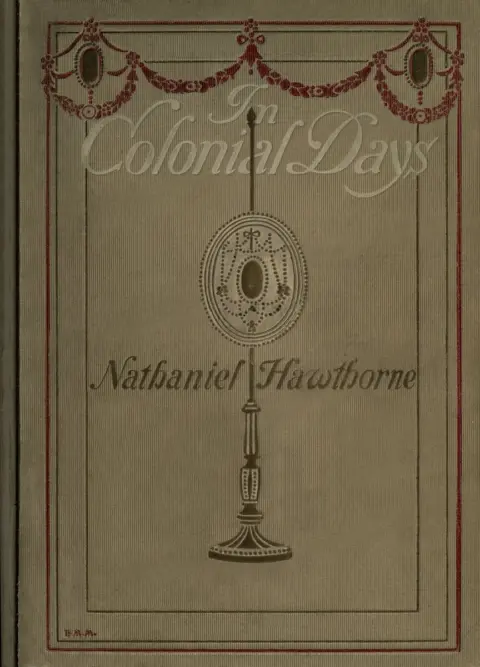
Nathaniel Hawthorne

Rebecca Harding Davis & Thomas De Quincey & Charles Dickens & Nathaniel Hawthorne & Edward Bulwer Lytton, Baron Lytton & Edgar Allan Poe & Harriet Elizabeth Prescott Spofford
BEHIND THE BOOK
This eBook is for the use of anyone anywhere in the United States and most other parts of the world at no cost and with almost no restrictions whatsoever. You may copy it, give it away or re-use it under the terms of the Project Gutenberg License included with this eBook or online at www.gutenberg.org. If you are not located in the United States, you will have to check the laws of the country where you are located before using this eBook. Read the source licence.
The original source file, including credits and licence, is retained by this library. Request an original-format copy at no charge. Please include the book title and Project Gutenberg identifier #37625.
KEEP YOUR CURIOSITY GOING
Wilfrid Scawen Blunt
Wilfrid Scawen Blunt

E. W. (Edgar Watson) Howe
Cécile Tormay

Moritz Busch
John L. Ransom