THE CLASSIC COLLECTION✦Love Letters of Nathaniel Hawthorne, Volume 2 (of 2)CLASSIC FREE BOOKS
Love Letters of Nathaniel Hawthorne, Volume 2 (of 2)
Nathaniel Hawthorne
THE CLASSIC COLLECTION · 1863
"Our Old Home, Vol. 2" by Nathaniel Hawthorne is a travelogue written in the late 19th century. This reflective work encapsulates the author’s observations and experiences while exploring England, particularly focusing on historical sites, landscapes, and cultural insights during his visits to locales like Blenheim and the homes of famous figures such as Robert Burns. The narrative emphasizes not just the sights, but also the emotional and psychological impressions left on Hawthorne as he contemplates the deeper meanings behind these places. The opening of the volume sets the tone for a leisurely exploration through the countryside, as Hawthorne, accompanied by his party, sets out on an excursion to Blenheim, the residence of the Duke of Marlborough. They navigate through quaint villages, noting the architecture and pastoral beauty, before arriving at the sprawling estate, steeped in history. Hawthorne describes the lush landscapes and significant landmarks they encounter, such as Rosamond’s Well and the Triumphal Pillar, while also reflecting on the gifts of nature and man that adorn Blenheim Park. Interlaced with observations on the Duke's legacy, his musings reveal a contemplative traveler grappling with the weight of history, fame, and the passage of time—elements that resonate throughout the entire volume.
Introduction adapted from the source catalogue; source summaries may be automatically generated.
Free to read · English · 65,686 words · No account needed
MAKE TIME FOR A GOOD BOOK
On by default. Untick to stop anonymous reading totals. Each page counts after 10 seconds in view. How this works.
Anonymous counting is on unless you have switched it off.
Gin-shops, or what the English call spirit-vaults, are numerous in the vicinity of these poor streets, and are set off with the magnificence of gilded door-posts, tarnished by contact with the unclean customers who haunt there. Ragged children come thither with old shaving-mugs, or broken-nosed teapots, or any such make-shift receptacle, to get a little poison or madness for their parents, who deserve no better requital at their hands for having engendered them. Inconceivably sluttish women enter at noonday and stand at the counter among boon-companions of both sexes, stirring up misery and jollity in a bumper together, and quaffing off the mixture with a relish. As for the men, they lounge there continually, drinking till they are drunken,--drinking as long as they have a halfpenny left,--and then, as it seemed to me, waiting for a sixpenny miracle to be wrought in their pockets so as to enable them to be drunken again. Most of these establishments have a significant advertisement of "Beds," doubtless for the accommodation of their customers in the interval between one intoxication and the next. I never could find it in my heart, however, utterly to condemn these sad revelers, and should certainly wait till I had some better consolation to offer before depriving them of their dram of gin, though death itself were in the glass; for methought their poor souls needed such fiery stimulant to lift them a little way out of the smothering squalor of both their outward and interior life, giving them glimpses and suggestions, even if bewildering ones, of a spiritual existence that limited their present misery. The temperance-reformers unquestionably derive their commission from the Divine Beneficence, but have never been taken fully into its counsels. All may not be lost, though those good men fail.
Pawnbrokers' establishments--distinguished by the mystic symbol of the three golden balls,--were conveniently accessible; though what personal property these wretched people could possess, capable of being estimated in silver or copper, so as to afford a basis for a loan, was a problem that still perplexes me. Old clothesmen, likewise, dwelt hard by, and hung out ancient garments to dangle in the wind. There were butchers' shops, too, of a class adapted to the neighborhood, presenting no such generously fattened carcasses as Englishmen love to gaze at in the market, no stupendous halves of mighty beeves, no dead hogs, or muttons ornamented with carved bas-reliefs of fat on their ribs and shoulders, in a peculiarly British style of art,--not these, but bits and gobbets of lean meat, selvages snipt off from steaks, tough and stringy morsels, bare bones smitten away from joints by the cleaver; tripe, liver, bullocks' feet, or whatever else was cheapest and divisible into the smallest lots. I am afraid that even such delicacies came to many of their tables hardly oftener than Christmas. In the windows of other little shops you saw half a dozen wizened herrings; some eggs in a basket, looking so dingily antique that your imagination smelt them; fly-speckled biscuits, segments of a hungry cheese, pipes and papers of tobacco. Now and then a sturdy milk-woman passed by with a wooden yoke over her shoulders, supporting a pail on either side, filled with a whitish fluid, the composition of which was water and chalk and the milk of a sickly cow, who gave the best she had, poor thing! but could scarcely make it rich or wholesome, spending her life in some close city-nook and pasturing on strange food. I have seen, once or twice, a donkey coming into one of these streets with panniers full of vegetables, and departing with a return cargo of what looked like rubbish and street-sweepings. No other commerce seemed to exist, except, possibly, a girl might offer you a pair of stockings or a worked collar, or a man whisper something mysterious about wonderfully cheap cigars. And yet I remember seeing female hucksters in those regions, with their wares on the edge of the sidewalk and their own seats right in the carriage-way, pretending to sell half-decayed oranges and apples, toffy, Ormskirk cakes, combs, and cheap jewelry, the coarsest kind of crockery, and little plates of oysters,--knitting patiently all day long, and removing their undiminished stock in trade at nightfall. All indispensable importations from other quarters of the town were on a remarkably diminutive scale: for example, the wealthier inhabitants purchased their coal by the wheelbarrow-load, and the poorer ones by the peck-measure. It was a curious and melancholy spectacle, when an overladen coal-cart happened to pass through the street and drop a handful or two of its burden in the mud, to see half a dozen women and children scrambling for the treasure-trove, like a flock of hens and chickens gobbling up some spilt corn. In this connection I may as well mention a commodity of boiled snails (for such they appeared to me, though probably a marine production) which used to be peddled from door to door, piping hot, as an article of cheap nutriment.
Your reading position is saved on this browser. Take it to another device with a library code. Reading pages adapt to text, rather than matching a printed edition.
Nathaniel Hawthorne
Nathaniel Hawthorne
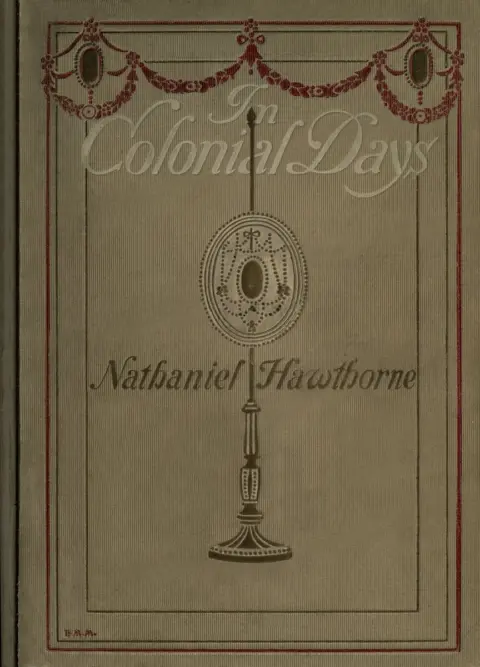
Nathaniel Hawthorne

Rebecca Harding Davis & Thomas De Quincey & Charles Dickens & Nathaniel Hawthorne & Edward Bulwer Lytton, Baron Lytton & Edgar Allan Poe & Harriet Elizabeth Prescott Spofford
BEHIND THE BOOK
This eBook is for the use of anyone anywhere in the United States and most other parts of the world at no cost and with almost no restrictions whatsoever. You may copy it, give it away or re-use it under the terms of the Project Gutenberg License included with this eBook or online at www.gutenberg.org. If you are not located in the United States, you will have to check the laws of the country where you are located before using this eBook. Read the source licence.
The original source file, including credits and licence, is retained by this library. Request an original-format copy at no charge. Please include the book title and Project Gutenberg identifier #37625.
KEEP YOUR CURIOSITY GOING
Wilfrid Scawen Blunt
Wilfrid Scawen Blunt

E. W. (Edgar Watson) Howe
Cécile Tormay

Moritz Busch
John L. Ransom