THE CLASSIC COLLECTION✦Love Letters of Nathaniel Hawthorne, Volume 2 (of 2)CLASSIC FREE BOOKS
Love Letters of Nathaniel Hawthorne, Volume 2 (of 2)
Nathaniel Hawthorne
THE CLASSIC COLLECTION · 1863
"Our Old Home, Vol. 2" by Nathaniel Hawthorne is a travelogue written in the late 19th century. This reflective work encapsulates the author’s observations and experiences while exploring England, particularly focusing on historical sites, landscapes, and cultural insights during his visits to locales like Blenheim and the homes of famous figures such as Robert Burns. The narrative emphasizes not just the sights, but also the emotional and psychological impressions left on Hawthorne as he contemplates the deeper meanings behind these places. The opening of the volume sets the tone for a leisurely exploration through the countryside, as Hawthorne, accompanied by his party, sets out on an excursion to Blenheim, the residence of the Duke of Marlborough. They navigate through quaint villages, noting the architecture and pastoral beauty, before arriving at the sprawling estate, steeped in history. Hawthorne describes the lush landscapes and significant landmarks they encounter, such as Rosamond’s Well and the Triumphal Pillar, while also reflecting on the gifts of nature and man that adorn Blenheim Park. Interlaced with observations on the Duke's legacy, his musings reveal a contemplative traveler grappling with the weight of history, fame, and the passage of time—elements that resonate throughout the entire volume.
Introduction adapted from the source catalogue; source summaries may be automatically generated.
Free to read · English · 65,686 words · No account needed
MAKE TIME FOR A GOOD BOOK
On by default. Untick to stop anonymous reading totals. Each page counts after 10 seconds in view. How this works.
Anonymous counting is on unless you have switched it off.
When the services were over, many of the audience seemed inclined to linger in the nave or wander away among the mysterious aisles; for there is nothing in this world so fascinating as a Gothic minster, which always invites you deeper and deeper into its heart both by vast revelations and shadowy concealments. Through the open-work screen that divides the nave from the chancel and choir, we could discern the gleam of a marvelous window, but were debarred from entrance into that more sacred precinct of the Abbey by the vergers. These vigilant officials (doing their duty all the more strenuously because no fees could be exacted from Sunday visitors) flourished their staves, and drove us towards the grand entrance like a flock of sheep. Lingering through one of the aisles, I happened to look down, and found my foot upon a stone inscribed with this familiar exclamation, "O rare Ben Jonson!" and remembered the story of stout old Ben's burial in that spot, standing upright,--not, I presume, on account of any unseemly reluctance on his part to lie down in the dust, like other men, but because standing-room was all that could reasonably be demanded for a poet among the slumberous notabilities of his age. It made me weary to think of it!--such a prodigious length of time to keep one's feet!--apart from the honor of the thing, it would certainly have been better for Ben to stretch himself at ease in some country churchyard. To this day, however, I fancy that there is a contemptuous alloy mixed up with the admiration which the higher classes of English society profess for their literary men.
Another day--in truth, many other days--I sought out Poets' Corner, and found a sign-board and pointed finger directing the visitor to it, on the corner house of a little lane leading towards the rear of the Abbey. The entrance is at the southeastern end of the south transept, and it is used, on ordinary occasions, as the only free mode of access to the building. It is no spacious arch, but a small, lowly door, passing through which, and pushing aside an inner screen that partly keeps out an exceedingly chill wind, you find yourself in a dim nook of the Abbey, with the busts of poets gazing at you from the otherwise bare stone-work of the walls. Great poets, too; for Ben Jonson is right behind the door, and Spenser's tablet is next, and Butler's on the same side of the transept, and Milton's (whose bust you know at once by its resemblance to one of his portraits, though older, more wrinkled, and sadder than that) is close by, and a profile-medallion of Gray beneath it. A window high aloft sheds down a dusky daylight on these and many other sculptured marbles, now as yellow as old parchment, that cover the three walls of the nook up to an elevation of about twenty feet above the pavement. It seemed to me that I had always been familiar with the spot. Enjoying a humble intimacy--and how much of my life had else been a dreary solitude!--with many of its inhabitants, I could not feel myself a stranger there. It was delightful to be among them. There was a genial awe, mingled with a sense of kind and friendly presences about me; and I was glad, moreover, at finding so many of them there together, in fit companionship, mutually recognized and duly honored, all reconciled now, whatever distant generations, whatever personal hostility or other miserable impediment, had divided them far asunder while they lived. I have never felt a similar interest in any other tombstones, nor have I ever been deeply moved by the imaginary presence of other famous dead people. A poet's ghost is the only one that survives for his fellow-mortals, after his bones are in the dust,--and he not ghostly, but cherishing many hearts with his own warmth in the chillest atmosphere of life. What other fame is worth aspiring for? Or, let me speak it more boldly, what other long-enduring fame can exist? We neither remember nor care anything for the past, except as the poet has made it intelligibly noble and sublime to our comprehension. The shades of the mighty have no substance; they flit ineffectually about the darkened stage where they performed their momentary parts, save when the poet has thrown his own creative soul into them, and imparted a more vivid life than ever they were able to manifest to mankind while they dwelt in the body. And therefore--though he cunningly disguises himself in their armor, their robes of state, or kingly purple--it is not the statesman, the warrior, or the monarch that survives, but the despised poet, whom they may have fed with their crumbs, and to whom they owe all that they now are or have,--a name![12]
Your reading position is saved on this browser. Take it to another device with a library code. Reading pages adapt to text, rather than matching a printed edition.
Nathaniel Hawthorne
Nathaniel Hawthorne
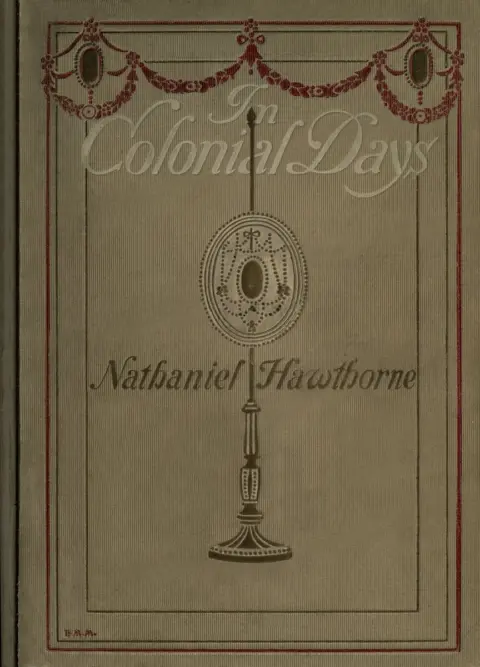
Nathaniel Hawthorne

Rebecca Harding Davis & Thomas De Quincey & Charles Dickens & Nathaniel Hawthorne & Edward Bulwer Lytton, Baron Lytton & Edgar Allan Poe & Harriet Elizabeth Prescott Spofford
BEHIND THE BOOK
This eBook is for the use of anyone anywhere in the United States and most other parts of the world at no cost and with almost no restrictions whatsoever. You may copy it, give it away or re-use it under the terms of the Project Gutenberg License included with this eBook or online at www.gutenberg.org. If you are not located in the United States, you will have to check the laws of the country where you are located before using this eBook. Read the source licence.
The original source file, including credits and licence, is retained by this library. Request an original-format copy at no charge. Please include the book title and Project Gutenberg identifier #37625.
KEEP YOUR CURIOSITY GOING
Wilfrid Scawen Blunt
Wilfrid Scawen Blunt

E. W. (Edgar Watson) Howe
Cécile Tormay

Moritz Busch
John L. Ransom