THE CLASSIC COLLECTION✦Love Letters of Nathaniel Hawthorne, Volume 2 (of 2)CLASSIC FREE BOOKS
Love Letters of Nathaniel Hawthorne, Volume 2 (of 2)
Nathaniel Hawthorne
THE CLASSIC COLLECTION · 1863
"Our Old Home, Vol. 2" by Nathaniel Hawthorne is a travelogue written in the late 19th century. This reflective work encapsulates the author’s observations and experiences while exploring England, particularly focusing on historical sites, landscapes, and cultural insights during his visits to locales like Blenheim and the homes of famous figures such as Robert Burns. The narrative emphasizes not just the sights, but also the emotional and psychological impressions left on Hawthorne as he contemplates the deeper meanings behind these places. The opening of the volume sets the tone for a leisurely exploration through the countryside, as Hawthorne, accompanied by his party, sets out on an excursion to Blenheim, the residence of the Duke of Marlborough. They navigate through quaint villages, noting the architecture and pastoral beauty, before arriving at the sprawling estate, steeped in history. Hawthorne describes the lush landscapes and significant landmarks they encounter, such as Rosamond’s Well and the Triumphal Pillar, while also reflecting on the gifts of nature and man that adorn Blenheim Park. Interlaced with observations on the Duke's legacy, his musings reveal a contemplative traveler grappling with the weight of history, fame, and the passage of time—elements that resonate throughout the entire volume.
Introduction adapted from the source catalogue; source summaries may be automatically generated.
Free to read · English · 65,686 words · No account needed
MAKE TIME FOR A GOOD BOOK
On by default. Untick to stop anonymous reading totals. Each page counts after 10 seconds in view. How this works.
Anonymous counting is on unless you have switched it off.
I gave the pensioner (but I am afraid there may have been a little affectation in it) a magnificent guerdon of all the silver I had in my pocket, to requite him for having unintentionally stirred up my patriotic susceptibilities. He was a meek-looking, kindly old man, with a humble freedom and affability of manner that made it pleasant to converse with him. Old soldiers, I know not why, seem to be more accostable than old sailors. One is apt to hear a growl beneath the smoothest courtesy of the latter. The mild veteran, with his peaceful voice, and gentle reverend aspect, told me that he had fought at a cannon all through the Battle of Waterloo, and escaped unhurt; he had now been in the hospital four or five years, and was married, but necessarily underwent a separation from his wife, who lived outside of the gates. To my inquiry whether his fellow-pensioners were comfortable and happy, he answered, with great alacrity, "Oh yes, sir!" qualifying his evidence, after a moment's consideration, by saying in an undertone, "There are some people, your Honor knows, who could not be comfortable anywhere." I did know it, and fear that the system of Chelsea Hospital allows too little of that wholesome care and regulation of their own occupations and interests which might assuage the sting of life to those naturally uncomfortable individuals by giving them something external to think about. But my old friend here was happy in the hospital, and by this time, very likely, is happy in heaven, in spite of the bloodshed that he may have caused by touching off a cannon at Waterloo.
Crossing Battersea Bridge, in the neighborhood of Chelsea, I remember seeing a distant gleam of the Crystal Palace, glimmering afar in the afternoon sunshine like an imaginary structure,--an air-castle by chance descended upon earth, and resting there one instant before it vanished, as we sometimes see a soap-bubble touch unharmed on the carpet,--a thing of only momentary visibility and no substance, destined to be overburdened and crushed down by the first cloud-shadow that might fall upon that spot. Even as I looked, it disappeared.[11] Shall I attempt a picture of this exhalation of modern ingenuity, or what else shall I try to paint? Everything in London and its vicinity has been depicted innumerable times, but never once translated into intelligible images; it is an "old, old story," never yet told, nor to be told. While writing these reminiscences, I am continually impressed with the futility of the effort to give any creative truth to my sketch, so that it might produce such pictures in the reader's mind as would cause the original scenes to appear familiar when afterwards beheld. Nor have other writers often been more successful in representing definite objects prophetically to my own mind. In truth, I believe that the chief delight and advantage of this kind of literature is not for any real information that it supplies to untraveled people, but for reviving the recollections and reawakening the emotions of persons already acquainted with the scenes described. Thus I found an exquisite pleasure, the other day, in reading Mr. Tuckerman's "Month in England,"--a fine example of the way in which a refined and cultivated American looks at the Old Country, the things that he naturally seeks there, and the modes of feeling and reflection which they excite. Correct outlines avail little or nothing, though truth of coloring may be somewhat more efficacious. Impressions, however, states of mind produced by interesting and remarkable objects, these, if truthfully and vividly recorded, may work a genuine effect, and, though but the result of what we see, go further towards representing the actual scene than any direct effort to paint it. Give the emotions that cluster about it, and, without being able to analyze the spell by which it is summoned up, you get something like a simulachre of the object in the midst of them. From some of the above reflections I draw the comfortable inference, that, the longer and better known a thing may be, so much the more eligible is it as the subject of a descriptive sketch.
Your reading position is saved on this browser. Take it to another device with a library code. Reading pages adapt to text, rather than matching a printed edition.
Nathaniel Hawthorne
Nathaniel Hawthorne
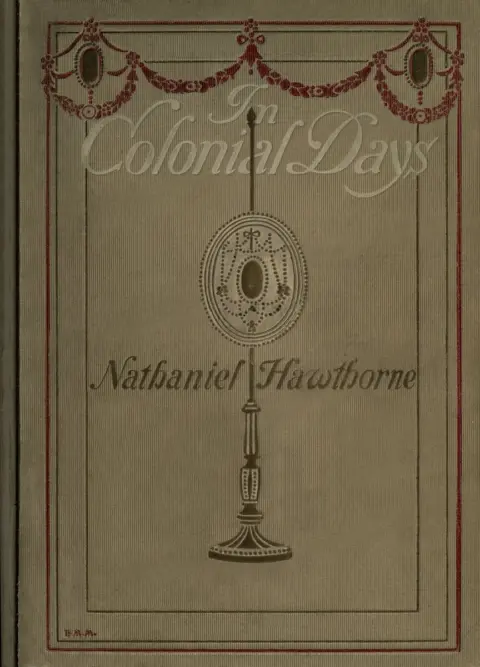
Nathaniel Hawthorne

Rebecca Harding Davis & Thomas De Quincey & Charles Dickens & Nathaniel Hawthorne & Edward Bulwer Lytton, Baron Lytton & Edgar Allan Poe & Harriet Elizabeth Prescott Spofford
BEHIND THE BOOK
This eBook is for the use of anyone anywhere in the United States and most other parts of the world at no cost and with almost no restrictions whatsoever. You may copy it, give it away or re-use it under the terms of the Project Gutenberg License included with this eBook or online at www.gutenberg.org. If you are not located in the United States, you will have to check the laws of the country where you are located before using this eBook. Read the source licence.
The original source file, including credits and licence, is retained by this library. Request an original-format copy at no charge. Please include the book title and Project Gutenberg identifier #37625.
KEEP YOUR CURIOSITY GOING
Wilfrid Scawen Blunt
Wilfrid Scawen Blunt

E. W. (Edgar Watson) Howe
Cécile Tormay

Moritz Busch
John L. Ransom