THE CLASSIC COLLECTION✦Love Letters of Nathaniel Hawthorne, Volume 2 (of 2)CLASSIC FREE BOOKS
Love Letters of Nathaniel Hawthorne, Volume 2 (of 2)
Nathaniel Hawthorne
THE CLASSIC COLLECTION · 1863
"Our Old Home: A Series of English Sketches" by Nathaniel Hawthorne is a collection of essays written in the mid-19th century that reflect on the author's experiences during his time as the American consul in Liverpool, England. The sketches convey Hawthorne's perceptions of English culture, scenery, and the contrasts between American and English national identities, revealing both admiration and critique of the English way of life. The opening of the text introduces the reader to Hawthorne's motivation for writing these sketches, capturing his feelings of nostalgia and ambivalence towards England as his "old home." He begins by expressing a personal dedication to a friend, Franklin Pierce, and explains the humble nature of these essays, which do not tackle grand political themes but rather focus on aesthetic observations of English life. Hawthorne shares vivid descriptions of his experiences at the consulate, depicting a chaotic environment filled with Americans seeking refuge or assistance, and illustrating his nuanced views on the English populace, ranging from admiration to a recognition of their perceived arrogance. Through these reflections, Hawthorne sets the tone for a series of explorations into the landscape and social fabric of England, revealing the complexities of identity and belonging for him as an American abroad.
Introduction adapted from the source catalogue; source summaries may be automatically generated.
Free to read · English · 115,855 words · No account needed
MAKE TIME FOR A GOOD BOOK
On by default. Untick to stop anonymous reading totals. Each page counts after 10 seconds in view. How this works.
Anonymous counting is on unless you have switched it off.
Hither, in the course of my incumbency, came a great variety of visitors, principally Americans, but including almost every other nationality on earth, especially the distressed and downfallen ones like those of Poland and Hungary. Italian bandits (for so they looked), proscribed conspirators from Old Spain, Spanish-Americans, Cubans who processed to have stood by Lopez and narrowly escaped his fate, scarred French soldiers of the Second Republic,--in a word, all sufferers, or pretended ones, in the cause of Liberty, all people homeless in the widest sense, those who never had a country or had lost it, those whom their native land had impatiently flung off for planning a better system of things than they were born to,--a multitude of these and, doubtless, an equal number of jail-birds, outwardly of the same feather, sought the American Consulate, in hopes of at least a bit of bread, and, perhaps, to beg a passage to the blessed shores of Freedom. In most cases there was nothing, and in any case distressingly little, to be done for them; neither was I of a proselyting disposition, nor desired to make my Consulate a nucleus for the vagrant discontents of other lands. And yet it was a proud thought, a forcible appeal to the sympathies of an American, that these unfortunates claimed the privileges of citizenship in our Republic on the strength of the very same noble misdemeanors that had rendered them outlaws to their native despotisms. So I gave them what small help I could. Methinks the true patriots and martyr-spirits of the whole world should have been conscious of a pang near the heart, when a deadly blow was aimed at the vitality of a country which they have felt to be their own in the last resort.
As for my countrymen, I grew better acquainted with many of our national characteristics during those four years than in all my preceding life. Whether brought more strikingly out by the contrast with English manners, or that my Yankee friends assumed an extra peculiarity from a sense of defiant patriotism, so it was that their tones, sentiments, and behavior, even their figures and cast of countenance, all seemed chiselled in sharper angles than ever I had imagined them to be at home. It impressed me with an odd idea of having somehow lost the property of my own person, when I occasionally heard one of them speaking of me as "my Consul"! They often came to the Consulate in parties of half a dozen or more, on no business whatever, but merely to subject their public servant to a rigid examination, and see how he was getting on with his duties. These interviews were rather formidable, being characterized by a certain stiffness which I felt to be sufficiently irksome at the moment, though it looks laughable enough in the retrospect. It is my firm belief that these fellow-citizens, possessing a native tendency to organization, generally halted outside of the door to elect a speaker, chairman, or moderator, and thus approached me with all the formalities of a deputation from the American people. After salutations on both sides,-- abrupt, awful, and severe on their part, and deprecatory on mine,--and the national ceremony of shaking hands being duly gone through with, the interview proceeded by a series of calm and well-considered questions or remarks from the spokesman (no other of the guests vouchsafing to utter a word), and diplomatic responses from the Consul, who sometimes found the investigation a little more searching than he liked. I flatter myself, however, that, by much practice, I attained considerable skill in this kind of intercourse, the art of which lies in passing off commonplaces for new and valuable truths, and talking trash and emptiness in such a way that a pretty acute auditor might mistake it for something solid. If there be any better method of dealing with such junctures,--when talk is to be created out of nothing, and within the scope of several minds at once, so that you cannot apply yourself to your interlocutor's individuality,--I have not learned it.
Your reading position is saved on this browser. Take it to another device with a library code. Reading pages adapt to text, rather than matching a printed edition.
Nathaniel Hawthorne
Nathaniel Hawthorne
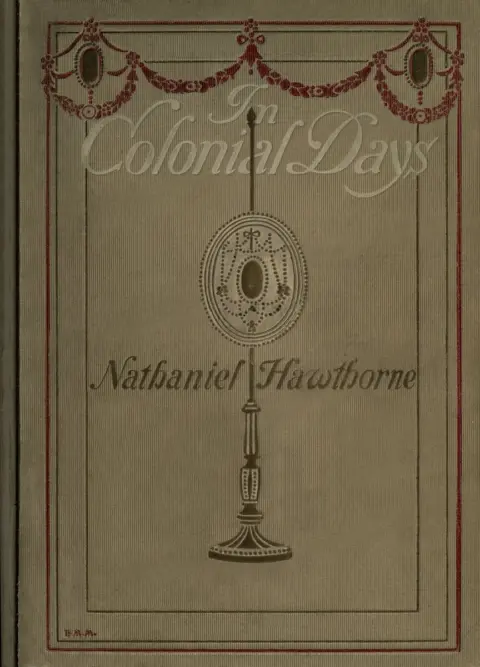
Nathaniel Hawthorne

Rebecca Harding Davis & Thomas De Quincey & Charles Dickens & Nathaniel Hawthorne & Edward Bulwer Lytton, Baron Lytton & Edgar Allan Poe & Harriet Elizabeth Prescott Spofford
BEHIND THE BOOK
This eBook is for the use of anyone anywhere in the United States and most other parts of the world at no cost and with almost no restrictions whatsoever. You may copy it, give it away or re-use it under the terms of the Project Gutenberg License included with this eBook or online at www.gutenberg.org. If you are not located in the United States, you will have to check the laws of the country where you are located before using this eBook. Read the source licence.
The original source file, including credits and licence, is retained by this library. Request an original-format copy at no charge. Please include the book title and Project Gutenberg identifier #8090.
KEEP YOUR CURIOSITY GOING
Wilfrid Scawen Blunt
Wilfrid Scawen Blunt

E. W. (Edgar Watson) Howe

David Patterson (Spirit) Hatch

David Patterson (Spirit) Hatch

David Patterson (Spirit) Hatch