THE CLASSIC COLLECTION✦Love Letters of Nathaniel Hawthorne, Volume 2 (of 2)CLASSIC FREE BOOKS
Love Letters of Nathaniel Hawthorne, Volume 2 (of 2)
Nathaniel Hawthorne
THE CLASSIC COLLECTION · 1863
"Our Old Home: A Series of English Sketches" by Nathaniel Hawthorne is a collection of essays written in the mid-19th century that reflect on the author's experiences during his time as the American consul in Liverpool, England. The sketches convey Hawthorne's perceptions of English culture, scenery, and the contrasts between American and English national identities, revealing both admiration and critique of the English way of life. The opening of the text introduces the reader to Hawthorne's motivation for writing these sketches, capturing his feelings of nostalgia and ambivalence towards England as his "old home." He begins by expressing a personal dedication to a friend, Franklin Pierce, and explains the humble nature of these essays, which do not tackle grand political themes but rather focus on aesthetic observations of English life. Hawthorne shares vivid descriptions of his experiences at the consulate, depicting a chaotic environment filled with Americans seeking refuge or assistance, and illustrating his nuanced views on the English populace, ranging from admiration to a recognition of their perceived arrogance. Through these reflections, Hawthorne sets the tone for a series of explorations into the landscape and social fabric of England, revealing the complexities of identity and belonging for him as an American abroad.
Introduction adapted from the source catalogue; source summaries may be automatically generated.
Free to read · English · 115,855 words · No account needed
MAKE TIME FOR A GOOD BOOK
On by default. Untick to stop anonymous reading totals. Each page counts after 10 seconds in view. How this works.
Anonymous counting is on unless you have switched it off.
The interior of the town wears a less old-fashioned aspect than the suburbs through which we approach it; and the High Street has shops with modern plate-glass, and buildings with stuccoed fronts, exhibiting as few projections to hang a thought or sentiment upon as if an architect of to-day had planned them. And, indeed, so far as their surface goes, they are perhaps new enough to stand unabashed in an American street; but behind these renovated faces, with their monotonous lack of expression, there is probably the substance of the same old town that wore a Gothic exterior in the Middle Ages. The street is an emblem of England itself. What seems new in it is chiefly a skilful and fortunate adaptation of what such a people as ourselves would destroy. The new things are based and supported on sturdy old things, and derive a massive strength from their deep and immemorial foundations, though with such limitations and impediments as only an Englishman could endure. But he likes to feel the weight of all the past upon his back; and, moreover, the antiquity that overburdens him has taken root in his being, and has grown to be rather a hump than a pack, so that there is no getting rid of it without tearing his whole structure to pieces. In my judgment, as he appears to be sufficiently comfortable under the mouldy accretion, he had better stumble on with it as long as he can. He presents a spectacle which is by no means without its charm for a disinterested and unencumbered observer.
When the old edifice, or the antiquated custom or institution, appears in its pristine form, without any attempt at intermarrying it with modern fashions, an American cannot but admire the picturesque effect produced by the sudden cropping up of an apparently dead-and-buried state of society into the actual present, of which he is himself a part. We need not go far in Warwick without encountering an instance of the kind. Proceeding westward through the town, we find ourselves confronted by a huge mass of natural rock, hewn into something like architectural shape, and penetrated by a vaulted passage, which may well have been one of King Cymbeline's original gateways; and on the top of the rock, over the archway, sits a small old church, communicating with an ancient edifice, or assemblage of edifices, that look down from a similar elevation on the side of the street. A range of trees half hides the latter establishment from the sun. It presents a curious and venerable specimen of the timber-and-plaster style of building, in which some of the finest old houses in England are constructed; the front projects into porticos and vestibules, and rises into many gables, some in a row, and others crowning semi-detached portions of the structure; the windows mostly open on hinges, but show a delightful irregularity of shape and position; a multiplicity of chimneys break through the roof at their own will, or, at least, without any settled purpose of the architect. The whole affair looks very old,--so old indeed that the front bulges forth, as if the timber framework were a little weary, at last, of standing erect so long; but the state of repair is so perfect, and there is such an indescribable aspect of continuous vitality within the system of this aged house, that you feel confident that there may be safe shelter yet, and perhaps for centuries to come, under its time-honored roof. And on a bench, sluggishly enjoying the sunshine, and looking into the street of Warwick as from a life apart, a few old men are generally to be seen, wrapped in long cloaks, on which you may detect the glistening of a silver badge representing the Bear and Ragged Staff. These decorated worthies are some of the twelve brethren of Leicester's Hospital,--a community which subsists to-day under the identical modes that were established for it in the reign of Queen Elizabeth, and of course retains many features of a social life that has vanished almost everywhere else.
Your reading position is saved on this browser. Take it to another device with a library code. Reading pages adapt to text, rather than matching a printed edition.
Nathaniel Hawthorne
Nathaniel Hawthorne
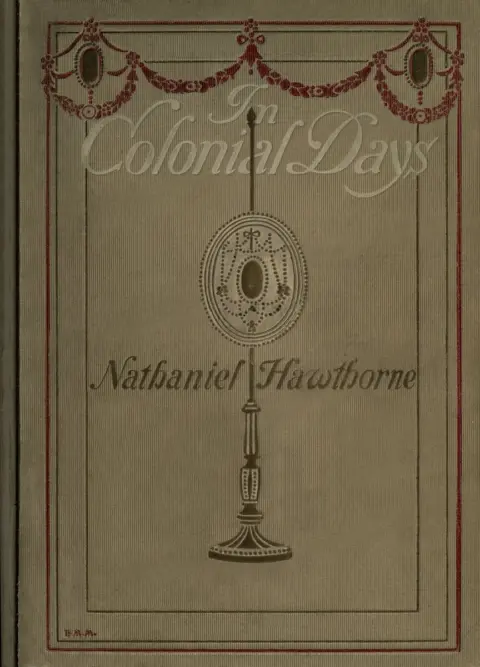
Nathaniel Hawthorne

Rebecca Harding Davis & Thomas De Quincey & Charles Dickens & Nathaniel Hawthorne & Edward Bulwer Lytton, Baron Lytton & Edgar Allan Poe & Harriet Elizabeth Prescott Spofford
BEHIND THE BOOK
This eBook is for the use of anyone anywhere in the United States and most other parts of the world at no cost and with almost no restrictions whatsoever. You may copy it, give it away or re-use it under the terms of the Project Gutenberg License included with this eBook or online at www.gutenberg.org. If you are not located in the United States, you will have to check the laws of the country where you are located before using this eBook. Read the source licence.
The original source file, including credits and licence, is retained by this library. Request an original-format copy at no charge. Please include the book title and Project Gutenberg identifier #8090.
KEEP YOUR CURIOSITY GOING
Wilfrid Scawen Blunt
Wilfrid Scawen Blunt

E. W. (Edgar Watson) Howe

David Patterson (Spirit) Hatch

David Patterson (Spirit) Hatch

David Patterson (Spirit) Hatch