THE CLASSIC COLLECTION✦Love Letters of Nathaniel Hawthorne, Volume 2 (of 2)CLASSIC FREE BOOKS
Love Letters of Nathaniel Hawthorne, Volume 2 (of 2)
Nathaniel Hawthorne
THE CLASSIC COLLECTION · 1863
"Our Old Home: A Series of English Sketches" by Nathaniel Hawthorne is a collection of essays written in the mid-19th century that reflect on the author's experiences during his time as the American consul in Liverpool, England. The sketches convey Hawthorne's perceptions of English culture, scenery, and the contrasts between American and English national identities, revealing both admiration and critique of the English way of life. The opening of the text introduces the reader to Hawthorne's motivation for writing these sketches, capturing his feelings of nostalgia and ambivalence towards England as his "old home." He begins by expressing a personal dedication to a friend, Franklin Pierce, and explains the humble nature of these essays, which do not tackle grand political themes but rather focus on aesthetic observations of English life. Hawthorne shares vivid descriptions of his experiences at the consulate, depicting a chaotic environment filled with Americans seeking refuge or assistance, and illustrating his nuanced views on the English populace, ranging from admiration to a recognition of their perceived arrogance. Through these reflections, Hawthorne sets the tone for a series of explorations into the landscape and social fabric of England, revealing the complexities of identity and belonging for him as an American abroad.
Introduction adapted from the source catalogue; source summaries may be automatically generated.
Free to read · English · 115,855 words · No account needed
MAKE TIME FOR A GOOD BOOK
On by default. Untick to stop anonymous reading totals. Each page counts after 10 seconds in view. How this works.
Anonymous counting is on unless you have switched it off.
As we departed, a character came under our notice which I have met with in all almshouses, whether of the city or village, or in England or America. It was the familiar simpleton, who shuffled across the court-yard, clattering his wooden-soled shoes, to greet us with a howl or a laugh, I hardly know which, holding out his hand for a penny, and chuckling grossly when it was given him. All under-witted persons, so far as my experience goes, have this craving for copper coin, and appear to estimate its value by a miraculous instinct, which is one of the earliest gleams of human intelligence while the nobler faculties are yet in abeyance. There may come a time, even in this world, when we shall all understand that our tendency to the individual appropriation of gold and broad acres, fine houses, and such good and beautiful things as are equally enjoyable by a multitude, is but a trait of imperfectly developed intelligence, like the simpleton's cupidity of a penny. When that day dawns,--and probably not till then,--I imagine that there will be no more poor streets nor need of almshouses.
I was once present at the wedding of some poor English people, and was deeply impressed by the spectacle, though by no means with such proud and delightful emotions as seem to have affected all England on the recent occasion of the marriage of its Prince. It was in the Cathedral at Manchester, a particularly black and grim old structure, into which I had stepped to examine some ancient and curious wood-carvings within the choir. The woman in attendance greeted me with a smile (which always glimmers forth on the feminine visage, I know not why, when a wedding is in question), and asked me to take a seat in the nave till some poor parties were married, it being the Easter holidays, and a good time for them to marry, because no fees would be demanded by the clergyman. I sat down accordingly, and soon the parson and his clerk appeared at the altar, and a considerable crowd of people made their entrance at a side-door, and ranged themselves in a long, huddled line across the chancel. They were my acquaintances of the poor streets, or persons in a precisely similar condition of life, and were now come to their marriage-ceremony in just such garbs as I had always seen them wear: the men in their loafers' coats, out at elbows, or their laborers' jackets, defaced with grimy toil; the women drawing their shabby shawls tighter about their shoulders, to hide the raggedness beneath; all of them unbrushed, unshaven, unwashed, uncombed, and wrinkled with penury and care; nothing virgin-like in the brides, nor hopeful or energetic in the bridegrooms;--they were, in short, the mere rags and tatters of the human race, whom some east-wind of evil omen, howling along the streets, had chanced to sweep together into an unfragrant heap. Each and all of them, conscious of his or her individual misery, had blundered into the strange miscalculation of supposing that they could lessen the sum of it by multiplying it into the misery of another person. All the couples (and it was difficult, in such a confused crowd, to compute exactly their number) stood up at once, and had execution done upon them in the lump, the clergyman addressing only small parts of the service to each individual pair, but so managing the larger portion as to include the whole company without the trouble of repetition. By this compendious contrivance, one would apprehend, he came dangerously near making every man and woman the husband or wife of every other; nor, perhaps, would he have perpetrated much additional mischief by the mistake; but, after receiving a benediction in common, they assorted themselves in their own fashion, as they only knew how, and departed to the garrets, or the cellars, or the unsheltered street-corners, where their honeymoon and subsequent lives were to be spent. The parson smiled decorously, the clerk and the sexton grinned broadly, the female attendant tittered almost aloud, and even the married parties seemed to see something exceedingly funny in the affair; but for my part, though generally apt enough to be tickled by a joke, I laid it away in my memory as one of the saddest sights I ever looked upon.
Your reading position is saved on this browser. Take it to another device with a library code. Reading pages adapt to text, rather than matching a printed edition.
Nathaniel Hawthorne
Nathaniel Hawthorne
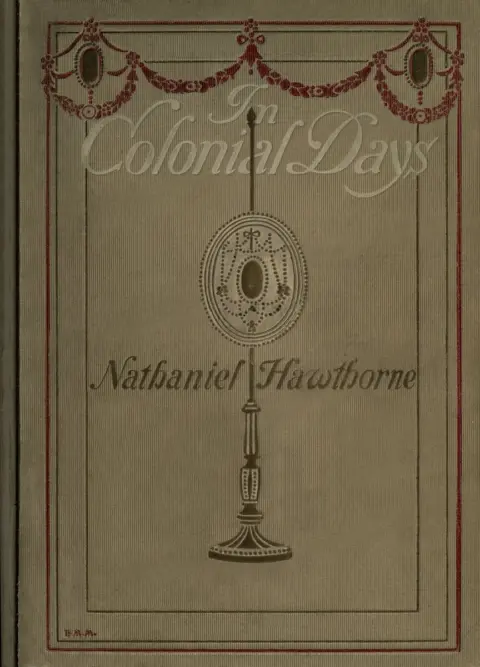
Nathaniel Hawthorne

Rebecca Harding Davis & Thomas De Quincey & Charles Dickens & Nathaniel Hawthorne & Edward Bulwer Lytton, Baron Lytton & Edgar Allan Poe & Harriet Elizabeth Prescott Spofford
BEHIND THE BOOK
This eBook is for the use of anyone anywhere in the United States and most other parts of the world at no cost and with almost no restrictions whatsoever. You may copy it, give it away or re-use it under the terms of the Project Gutenberg License included with this eBook or online at www.gutenberg.org. If you are not located in the United States, you will have to check the laws of the country where you are located before using this eBook. Read the source licence.
The original source file, including credits and licence, is retained by this library. Request an original-format copy at no charge. Please include the book title and Project Gutenberg identifier #8090.
KEEP YOUR CURIOSITY GOING
Wilfrid Scawen Blunt
Wilfrid Scawen Blunt

E. W. (Edgar Watson) Howe

David Patterson (Spirit) Hatch

David Patterson (Spirit) Hatch

David Patterson (Spirit) Hatch