THE CLASSIC COLLECTION✦Love Letters of Nathaniel Hawthorne, Volume 2 (of 2)CLASSIC FREE BOOKS
Love Letters of Nathaniel Hawthorne, Volume 2 (of 2)
Nathaniel Hawthorne
THE CLASSIC COLLECTION · 1863
"Our Old Home: A Series of English Sketches" by Nathaniel Hawthorne is a collection of essays written in the mid-19th century that reflect on the author's experiences during his time as the American consul in Liverpool, England. The sketches convey Hawthorne's perceptions of English culture, scenery, and the contrasts between American and English national identities, revealing both admiration and critique of the English way of life. The opening of the text introduces the reader to Hawthorne's motivation for writing these sketches, capturing his feelings of nostalgia and ambivalence towards England as his "old home." He begins by expressing a personal dedication to a friend, Franklin Pierce, and explains the humble nature of these essays, which do not tackle grand political themes but rather focus on aesthetic observations of English life. Hawthorne shares vivid descriptions of his experiences at the consulate, depicting a chaotic environment filled with Americans seeking refuge or assistance, and illustrating his nuanced views on the English populace, ranging from admiration to a recognition of their perceived arrogance. Through these reflections, Hawthorne sets the tone for a series of explorations into the landscape and social fabric of England, revealing the complexities of identity and belonging for him as an American abroad.
Introduction adapted from the source catalogue; source summaries may be automatically generated.
Free to read · English · 115,855 words · No account needed
MAKE TIME FOR A GOOD BOOK
On by default. Untick to stop anonymous reading totals. Each page counts after 10 seconds in view. How this works.
Anonymous counting is on unless you have switched it off.
In these streets the belted and blue-coated policeman appears seldom in comparison with the frequency of his occurrence in more reputable thoroughfares. I used to think that the inhabitants would have ample time to murder one another, or any stranger, like myself, who might violate the filthy sanctities of the place; before the law could bring up its lumbering assistance. Nevertheless, there is a supervision; nor does the watchfulness of authority permit the populace to be tempted to any outbreak. Once, in a time of dearth I noticed a ballad-singer going through the street hoarsely chanting some discordant strain in a provincial dialect, of which I could only make out that it addressed the sensibilities of the auditors on the score of starvation; but by his side stalked the policeman, offering no interference, but watchful to hear what this rough minstrel said or sang, and silence him, if his effusion threatened to prove too soul-stirring. In my judgment, however, there is little or no danger of that kind: they starve patiently, sicken patiently, die patiently, not through resignation, but a diseased flaccidity of hope. If ever they should do mischief to those above them, it will probably be by the communication of some destructive pestilence; for, so the medical men affirm, they suffer all the ordinary diseases with a degree of virulence elsewhere unknown, and keep among themselves traditionary plagues that have long ceased to afflict more fortunate societies. Charity herself gathers her robe about her to avoid their contact. It would be a dire revenge, indeed, if they were to prove their claims to be reckoned of one blood and nature with the noblest and wealthiest by compelling them to inhale death through the diffusion of their own poverty-poisoned atmosphere.
A true Englishman is a kind man at heart, but has an unconquerable dislike to poverty and beggary. Beggars have heretofore been so strange to an American that he is apt to become their prey, being recognized through his national peculiarities, and beset by them in the streets. The English smile at him, and say that there are ample public arrangements for every pauper's possible need, that street-charity promotes idleness and vice, and that yonder personification of misery on the pavement will lay up a good day's profit, besides supping more luxuriously than the dupe who gives him a shilling. By and by the stranger adopts their theory and begins to practise upon it, much to his own temporary freedom from annoyance, but not entirely without moral detriment or sometimes a too late contrition. Years afterwards, it may be, his memory is still haunted by some vindictive wretch whose cheeks were pale and hunger-pinched, whose rags fluttered in the east-wind, whose right arm was paralyzed and his left leg shrivelled into a mere nerveless stick, but whom he passed by remorselessly because an Englishman chose to say that the fellow's misery looked too perfect, was too artistically got up, to be genuine. Even allowing this to be true (as, a hundred chances to one, it was), it would still have been a clear case of economy to buy him off with a little loose silver, so that his lamentable figure should not limp at the heels of your conscience all over the world. To own the truth, I provided myself with several such imaginary persecutors in England, and recruited their number with at least one sickly-looking wretch whose acquaintance I first made at Assisi, in Italy, and, taking a dislike to something sinister in his aspect, permitted him to beg early and late, and all day long, without getting a single baiocco. At my latest glimpse of him, the villain avenged himself, not by a volley of horrible curses, as any other Italian beggar would, but by taking an expression so grief-stricken, want-wrung, hopeless, and withal resigned, that I could paint his lifelike portrait at this moment. Were I to go over the same ground again, I would listen to no man's theories, but buy the little luxury of beneficence at a cheap rate, instead of doing myself a moral mischief by exuding a stony incrustation over whatever natural sensibility I might possess.
Your reading position is saved on this browser. Take it to another device with a library code. Reading pages adapt to text, rather than matching a printed edition.
Nathaniel Hawthorne
Nathaniel Hawthorne
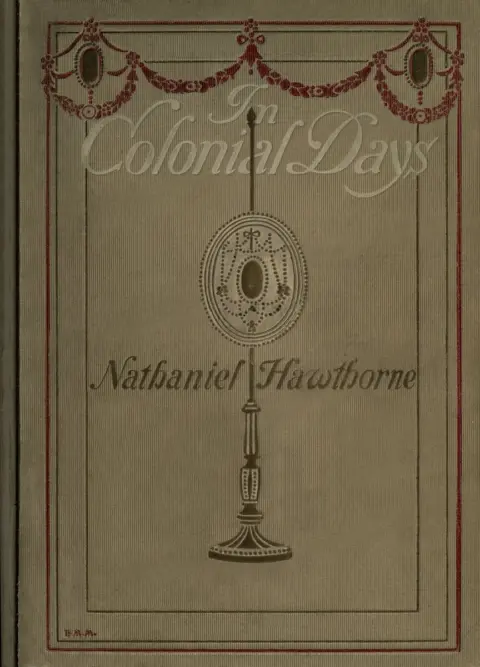
Nathaniel Hawthorne

Rebecca Harding Davis & Thomas De Quincey & Charles Dickens & Nathaniel Hawthorne & Edward Bulwer Lytton, Baron Lytton & Edgar Allan Poe & Harriet Elizabeth Prescott Spofford
BEHIND THE BOOK
This eBook is for the use of anyone anywhere in the United States and most other parts of the world at no cost and with almost no restrictions whatsoever. You may copy it, give it away or re-use it under the terms of the Project Gutenberg License included with this eBook or online at www.gutenberg.org. If you are not located in the United States, you will have to check the laws of the country where you are located before using this eBook. Read the source licence.
The original source file, including credits and licence, is retained by this library. Request an original-format copy at no charge. Please include the book title and Project Gutenberg identifier #8090.
KEEP YOUR CURIOSITY GOING
Wilfrid Scawen Blunt
Wilfrid Scawen Blunt

E. W. (Edgar Watson) Howe

David Patterson (Spirit) Hatch

David Patterson (Spirit) Hatch

David Patterson (Spirit) Hatch