THE CLASSIC COLLECTION✦Love Letters of Nathaniel Hawthorne, Volume 2 (of 2)CLASSIC FREE BOOKS
Love Letters of Nathaniel Hawthorne, Volume 2 (of 2)
Nathaniel Hawthorne
THE CLASSIC COLLECTION · 1863
"Our Old Home: A Series of English Sketches" by Nathaniel Hawthorne is a collection of essays written in the mid-19th century that reflect on the author's experiences during his time as the American consul in Liverpool, England. The sketches convey Hawthorne's perceptions of English culture, scenery, and the contrasts between American and English national identities, revealing both admiration and critique of the English way of life. The opening of the text introduces the reader to Hawthorne's motivation for writing these sketches, capturing his feelings of nostalgia and ambivalence towards England as his "old home." He begins by expressing a personal dedication to a friend, Franklin Pierce, and explains the humble nature of these essays, which do not tackle grand political themes but rather focus on aesthetic observations of English life. Hawthorne shares vivid descriptions of his experiences at the consulate, depicting a chaotic environment filled with Americans seeking refuge or assistance, and illustrating his nuanced views on the English populace, ranging from admiration to a recognition of their perceived arrogance. Through these reflections, Hawthorne sets the tone for a series of explorations into the landscape and social fabric of England, revealing the complexities of identity and belonging for him as an American abroad.
Introduction adapted from the source catalogue; source summaries may be automatically generated.
Free to read · English · 115,855 words · No account needed
MAKE TIME FOR A GOOD BOOK
On by default. Untick to stop anonymous reading totals. Each page counts after 10 seconds in view. How this works.
Anonymous counting is on unless you have switched it off.
The Methodists are probably the first and only Englishmen who have worshipped in the open air since the ancient Britons listened to the preaching of the Druids; and it reminded me of that old priesthood, to see certain memorials of their dusky epoch--not religious, however, but warlike--in the neighborhood of the spot where the Methodist was holding forth. These were some ancient barrows, beneath or within which are supposed to be buried the slain of a forgotten or doubtfully remembered battle, fought on the site of Greenwich Park as long ago as two or three centuries after the birth of Christ. Whatever may once have been their height and magnitude, they have now scarcely more prominence in the actual scene than the battle of which they are the sole monuments retains in history,--being only a few mounds side by side, elevated a little above the surface of the ground, ten or twelve feet in diameter, with a shallow depression in their summits. When one of them was opened, not long since, no bones, nor armor, nor weapons were discovered, nothing but some small jewels, and a tuft of hair,--perhaps from the head of a valiant general, who, dying on the field of his victory, bequeathed this lock, together with his indestructible fame, to after ages. The hair and jewels are probably in the British Museum, where the potsherds and rubbish of innumerable generations make the visitor wish that each passing century could carry off all its fragments and relics along with it, instead of adding them to the continually accumulating burden which human knowledge is compelled to lug upon its back. As for the fame, I know not what has become of it.
After traversing the Park, we come into the neighborhood of Greenwich Hospital, and will pass through one of its spacious gateways for the sake of glancing at an establishment which does more honor to the heart of England than anything else that I am acquainted with, of a public nature. It is very seldom that we can be sensible of anything like kindliness in the acts or relations of such an artificial thing as a National Government. Our own government, I should conceive, is too much an abstraction ever to feel any sympathy for its maimed sailors and soldiers, though it will doubtless do then a severe kind of justice, as chilling as the touch of steel. But it seemed to me that the Greenwich pensioners are the petted children of the nation, and that the government is their dry-nurse, and that the old men themselves have a childlike consciousness of their position. Very likely, a better sort of life might have been arranged, and a wiser care bestowed on them; but, such as it is, it enables them to spend a sluggish, careless, comfortable old age, grumbling, growling, gruff, as if all the foul weather of their past years were pent up within them, yet not much more discontented than such weather-beaten and battle-battered fragments of human kind must inevitably be. Their home, in its outward form, is on a very magnificent plan. Its germ was a royal palace, the full expansion of which has resulted in a series of edifices externally more beautiful than any English palace that I have seen, consisting of several quadrangles of stately architecture, united by colonnades and gravel-walks, and enclosing grassy squares, with statues in the centre, the whole extending along the Thames. It is built of marble, or very light-colored stone, in the classic style, with pillars and porticos, which (to my own taste, and, I fancy, to that of the old sailors) produce but a cold and shivery effect in the English climate. Had I been the architect, I would have studied the characters, habits, and predilections of nautical people in Wapping, Hotherhithe, and the neighborhood of the Tower (places which I visited in affectionate remembrance of Captain Lemuel Gulliver, and other actual or mythological navigators), and would have built the hospital in a kind of ethereal similitude to the narrow, dark, ugly, and inconvenient, but snug and cosey homeliness of the sailor boarding-houses there. There can be no question that all the above attributes, or enough of then to satisfy an old sailor's heart, might be reconciled with architectural beauty and the wholesome contrivances of modern dwellings, and thus a novel and genuine style of building be given to the world.
Your reading position is saved on this browser. Take it to another device with a library code. Reading pages adapt to text, rather than matching a printed edition.
Nathaniel Hawthorne
Nathaniel Hawthorne
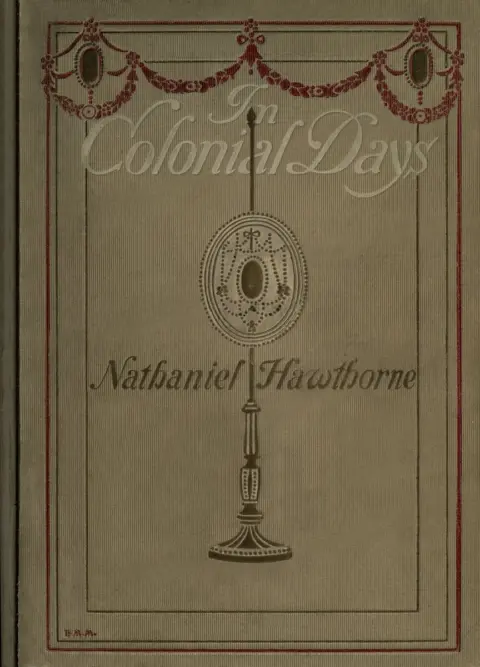
Nathaniel Hawthorne

Rebecca Harding Davis & Thomas De Quincey & Charles Dickens & Nathaniel Hawthorne & Edward Bulwer Lytton, Baron Lytton & Edgar Allan Poe & Harriet Elizabeth Prescott Spofford
BEHIND THE BOOK
This eBook is for the use of anyone anywhere in the United States and most other parts of the world at no cost and with almost no restrictions whatsoever. You may copy it, give it away or re-use it under the terms of the Project Gutenberg License included with this eBook or online at www.gutenberg.org. If you are not located in the United States, you will have to check the laws of the country where you are located before using this eBook. Read the source licence.
The original source file, including credits and licence, is retained by this library. Request an original-format copy at no charge. Please include the book title and Project Gutenberg identifier #8090.
KEEP YOUR CURIOSITY GOING
Wilfrid Scawen Blunt
Wilfrid Scawen Blunt

E. W. (Edgar Watson) Howe

David Patterson (Spirit) Hatch

David Patterson (Spirit) Hatch

David Patterson (Spirit) Hatch